The sun was rising as we arrived in Argostoli harbor on Kefalonia. We lost an hour a few days prior when we left Italy and sailed east to Greece. Sunrise was now closer to 7:30 a.m. and the city lights were still on as we tied up to the dock.
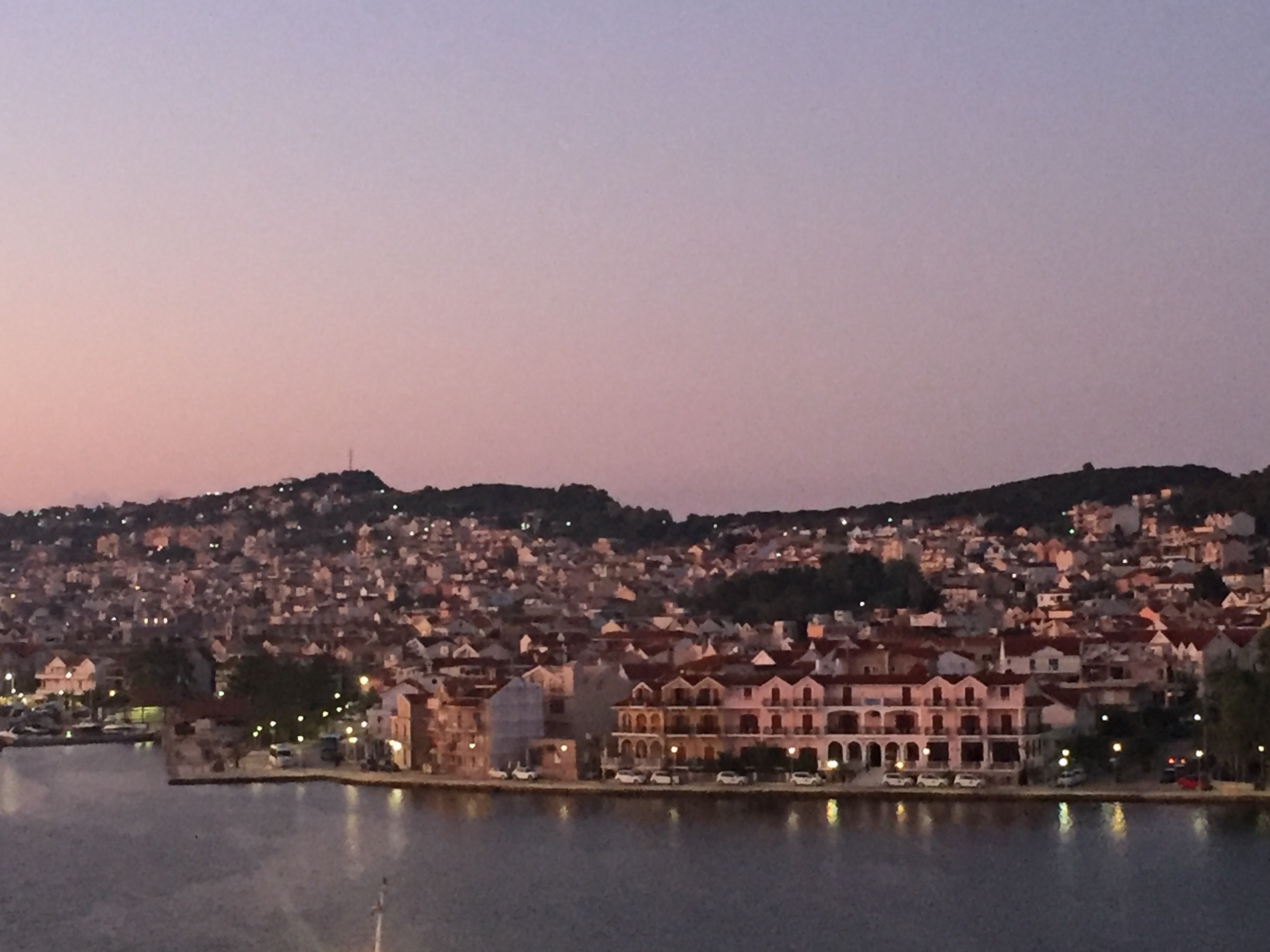
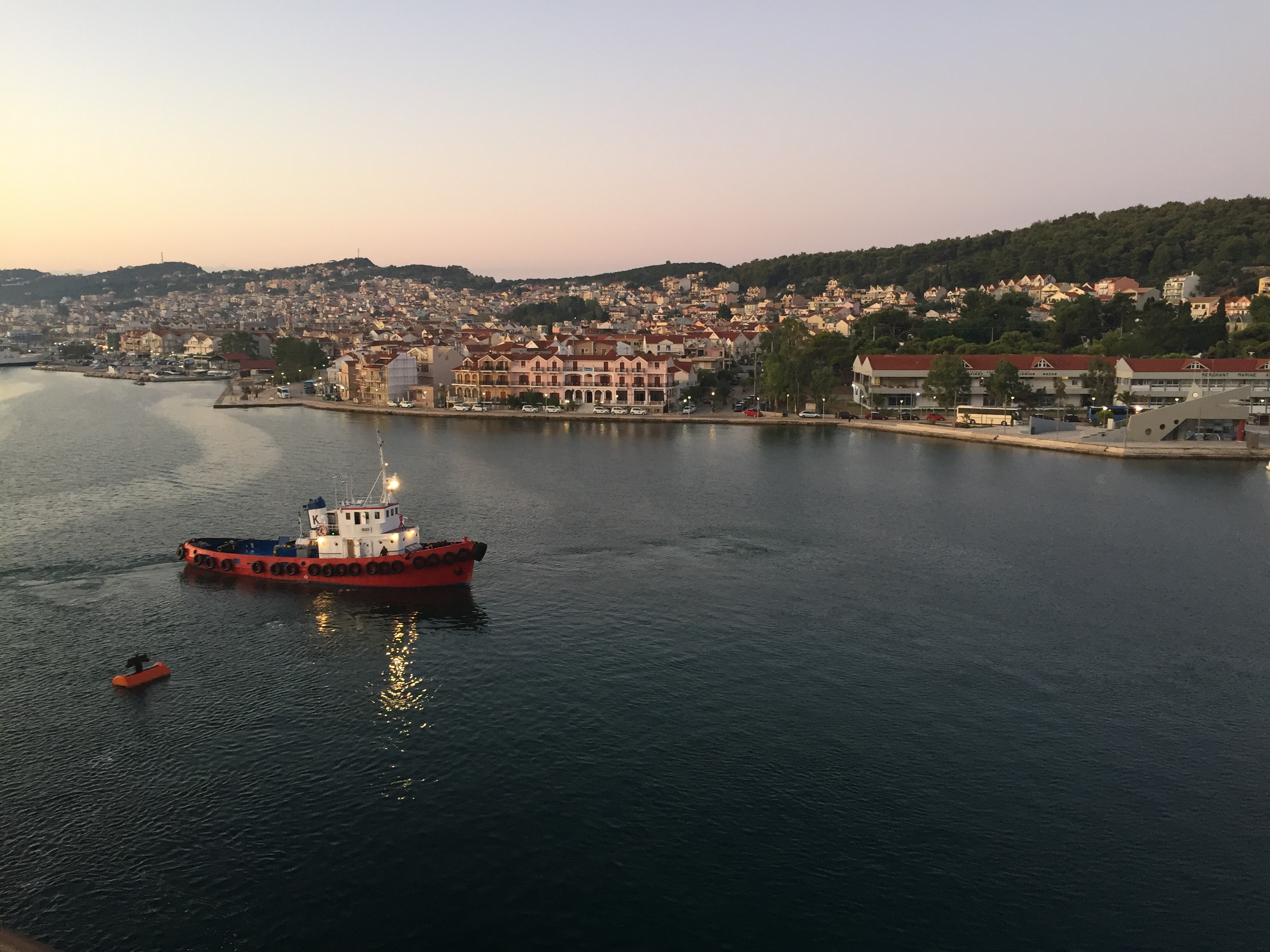
The first thing you noticed when you arrived was both the architecture and the landscape. No white, classic Greek houses but instead houses with pitched, red tiled roofs painted in the soft palate of Southern Italy. And trees, lots of them, creating a beautiful urban landscape.
Today we were scheduled on a ship sponsored tour of the island including the Drogarati Caves and Myrtos Beach. We were a small group of 18, both German and English speaking and our guide (a Greek) moved flawlessly between the two languages as she narrated our journey.
We learned that a 1953 earthquake demolished more than 2/3 of the houses on the island. As the rebuilding began the houses were simple square boxes with flat roofs. The local government demanded the pitched, red tile roofs. There was pushback (flat roofs were a great place to hang laundry after all) but the city withheld electrical hookup until the owner complied.
The 1953 earthquake on the heels of WWII and a Greek Civil War had many inhabitants leaving Kefalonia for either the mainland or other destinations in Europe or the US. The population plummeted from 75,000 to 35,000. Tourism didn’t begin on the island until the mid-1980’s but it did and continues to help their economy.
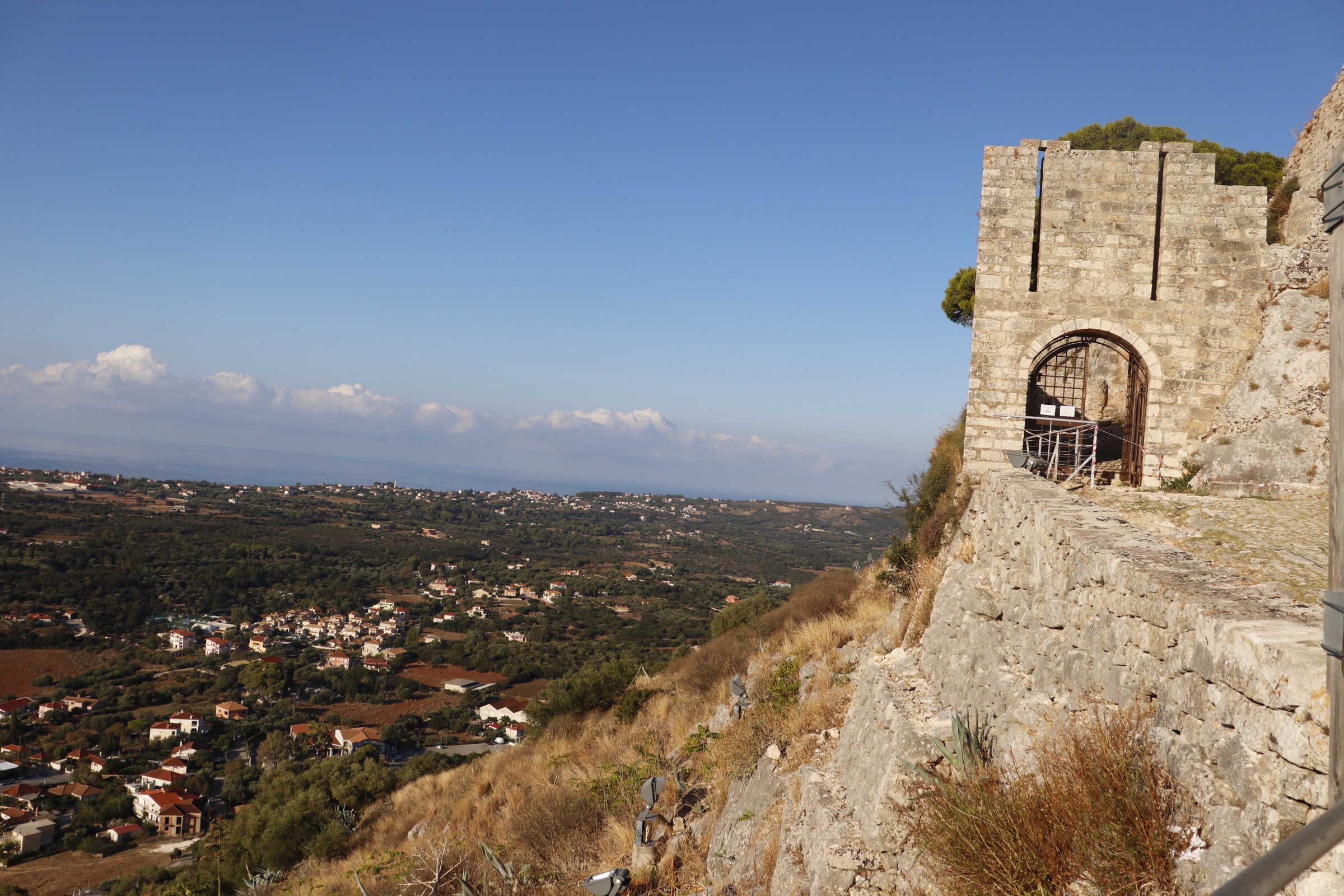
Our first stop was the Venetian fortress known as St. George’s Castle. Built in the 13th century by the Byzantines, it was the Venetians who took it over in 1504 and gave it its importance to the port of Argostoli and the protection of the whole area. Today, little remains of the once prominent fortress but your imagination can fill in the holes. The views in all directions are commanding and you can see how it’s location was important.
We continued over the spine of the island toward the harbor of Sami. This is a major harbor for ferry transportation to other Ionian Islands and mainland Greece. Our destination was the Drogarati Caves. The caves have been in existence for millions (?) of years but only became accessible after the 1953 earthquake when a piece of the mountain collapsed exposing the caves.
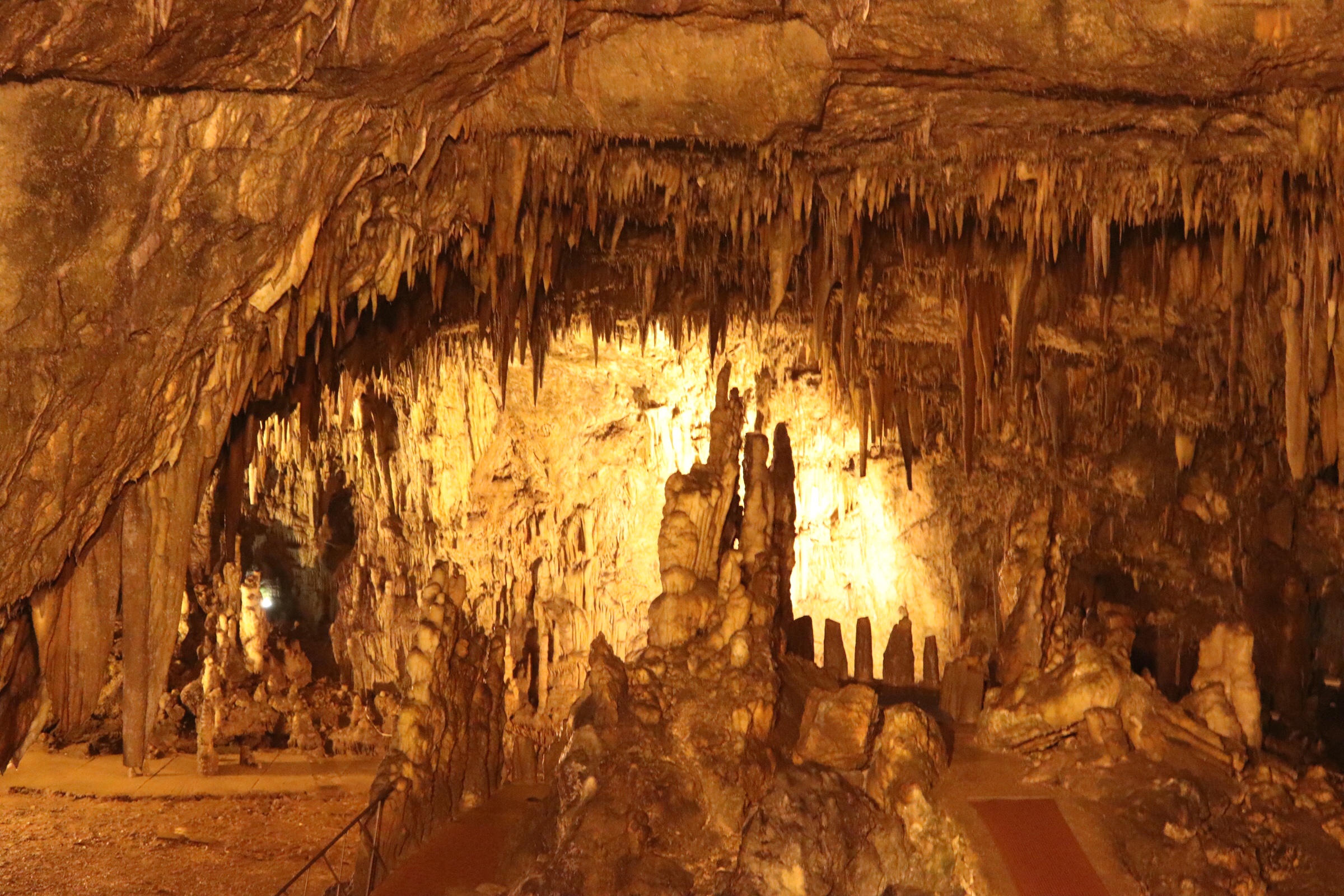
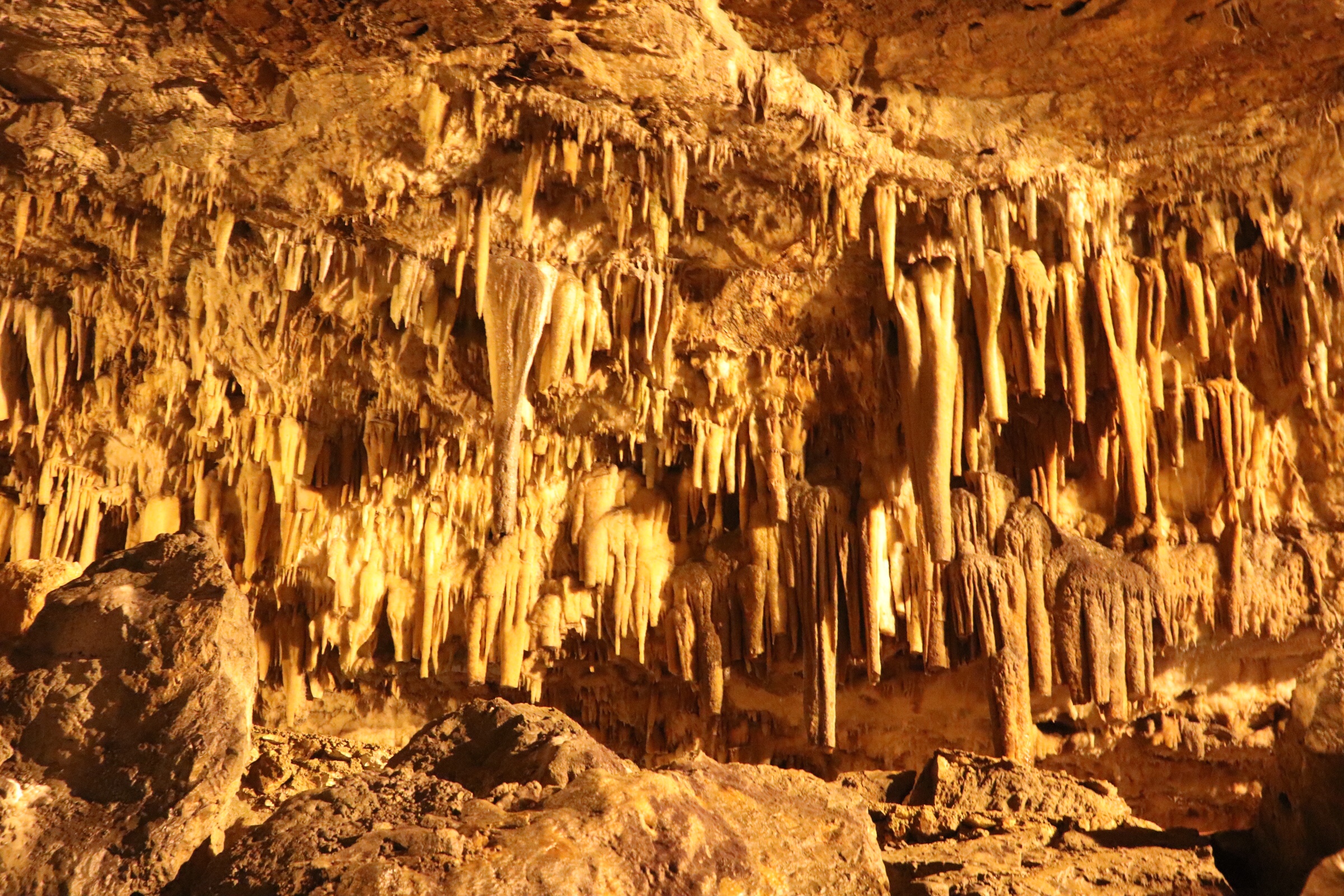
The caves today are accessible by a stairway and well maintained walkways. You have to remind yourself that they (stalactites and mites) only grow 1 cm. in 100 years!! These specimens were old!
We enjoyed a refreshment break there before reboarding the bus for the trip onward. Again, the landscape is so different from either Santorini or Crete. We could have been in Southern California – – oleander bushes, sycamores and plane trees, olive trees and bougainvillea flourished.
Our next stop was a small harbor town, Agia Efimia, about 45 minutes northwest of Sami. So picturesque and quaint you wanted to move there immediately. We have learned that we are at the tail end of ‘the season’ and soon the regularly scheduled flights from Kefalonia to Europe will end and there will be just ferry service and flights to Athens.
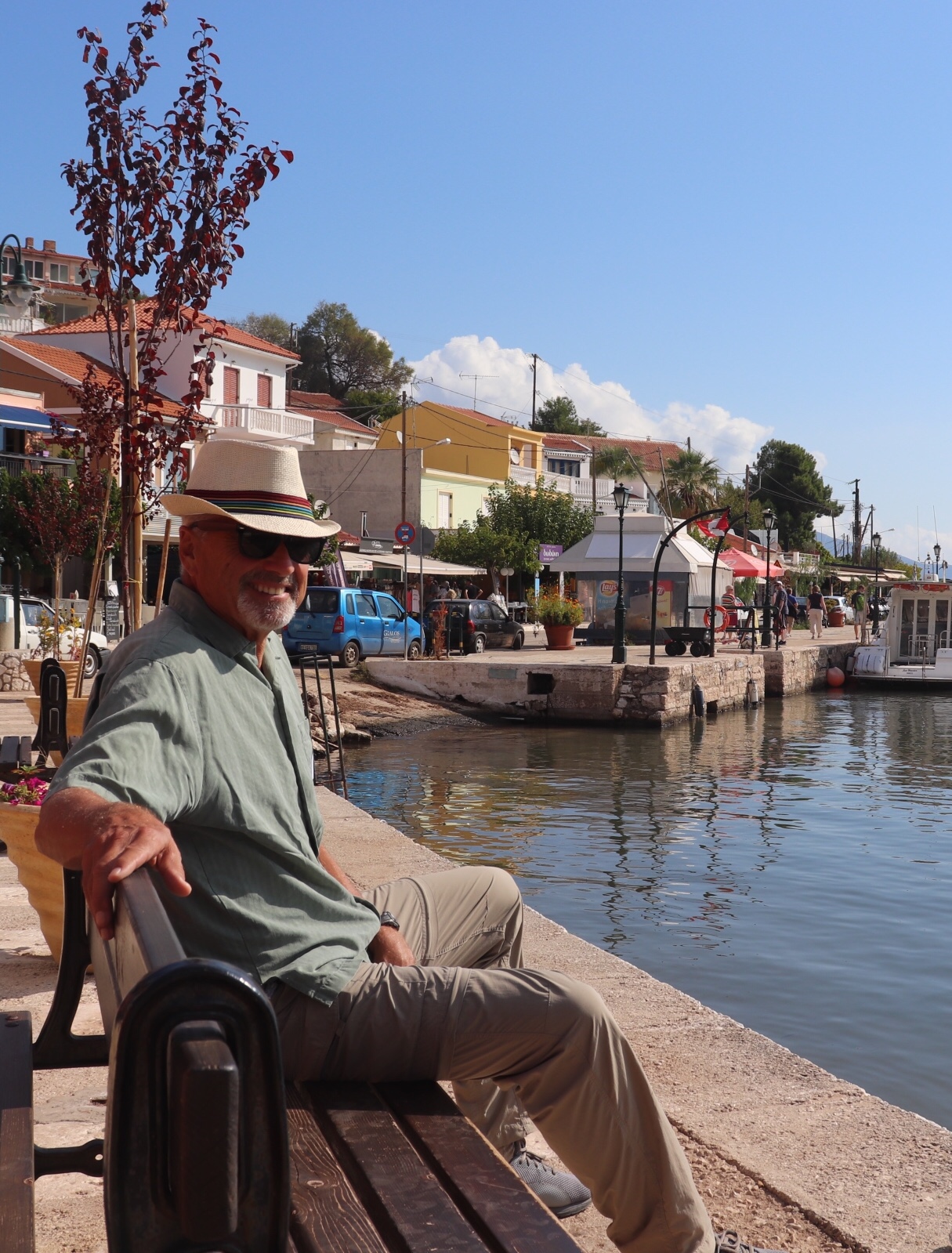
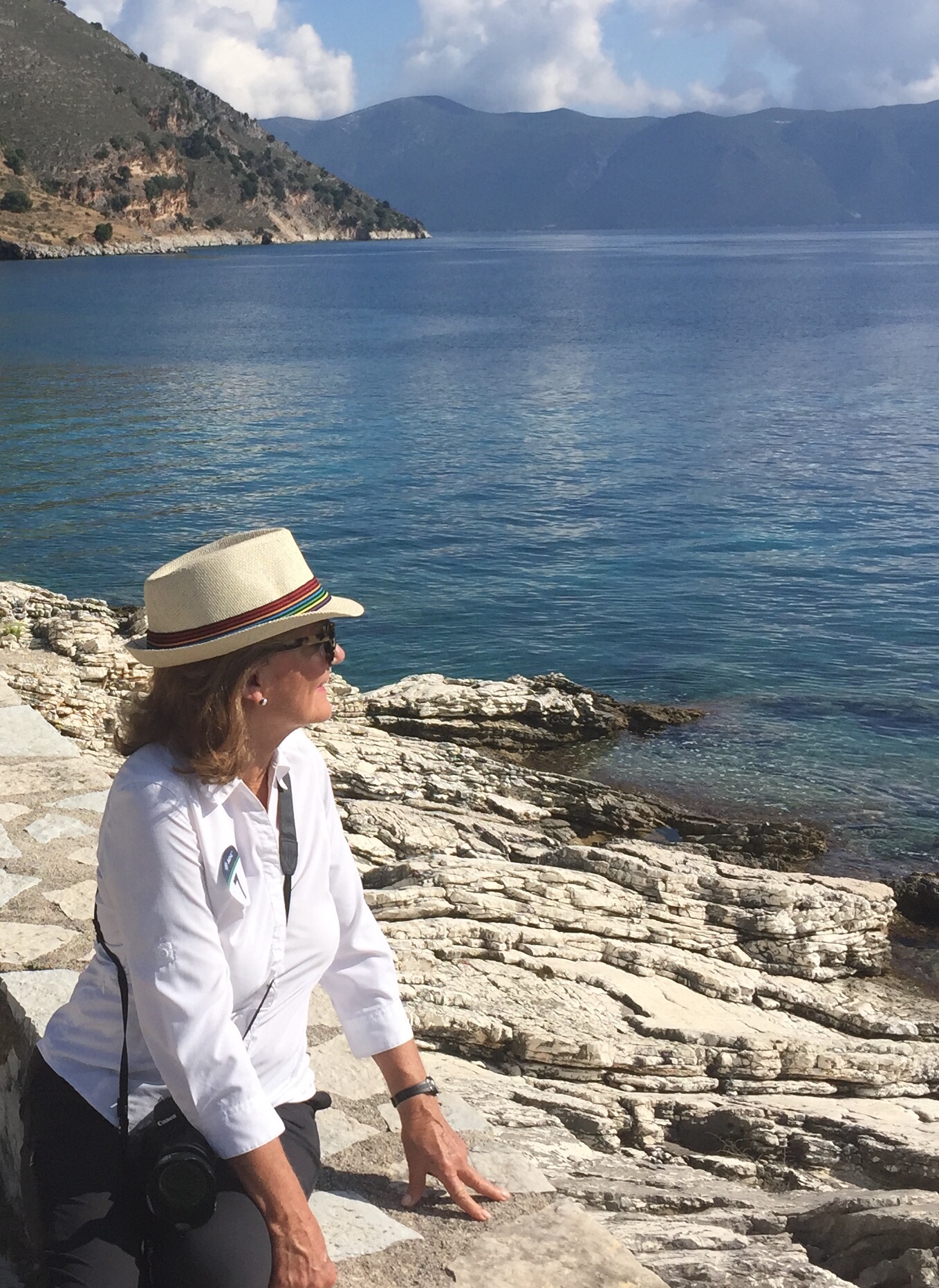
The island of Ithaka, made famous by Homer in the Iliad and The Odyssey can be seen over my shoulder. Home to only 3,000 residents and accessible only by ferry, it is one of the smaller Ionian islands.
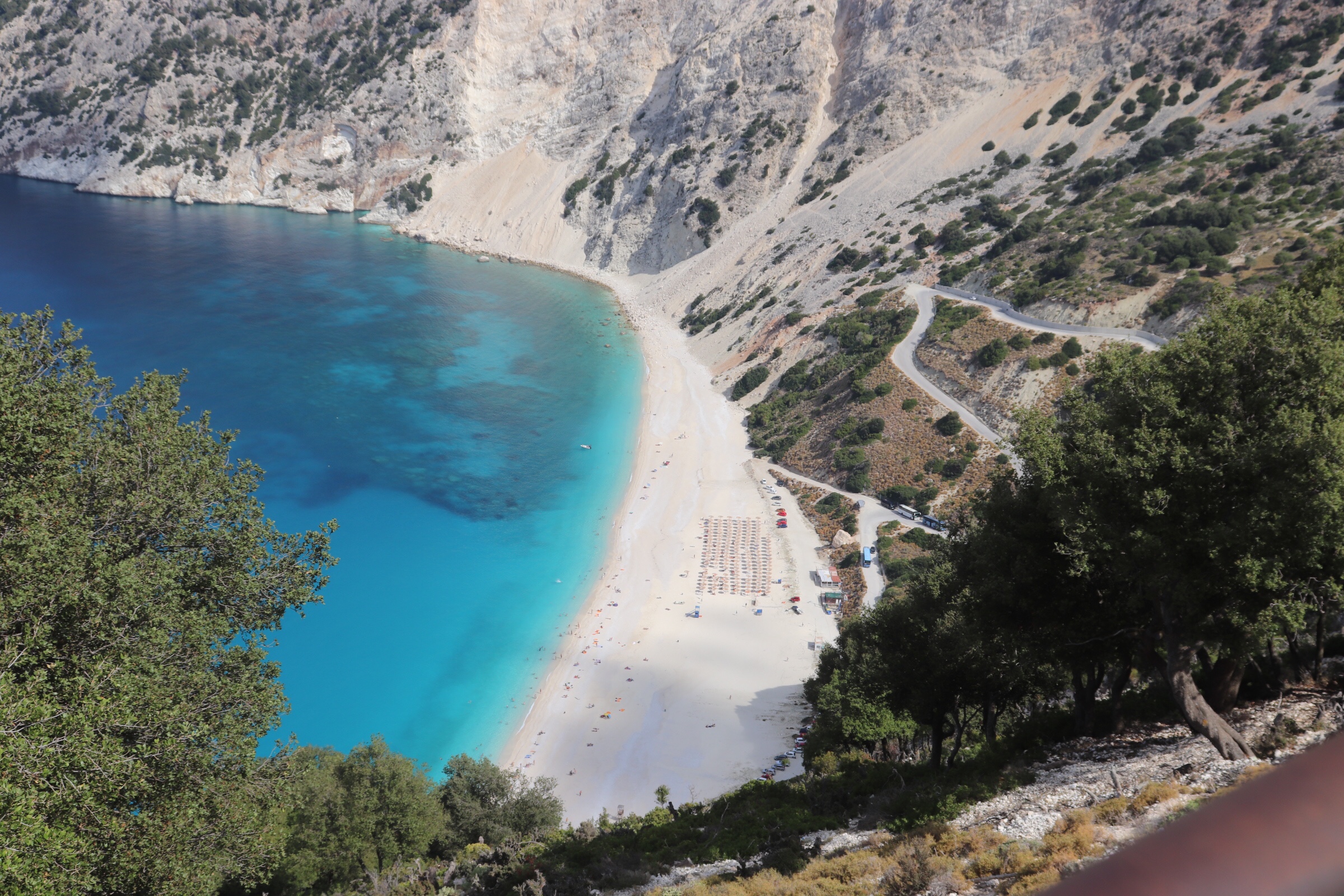
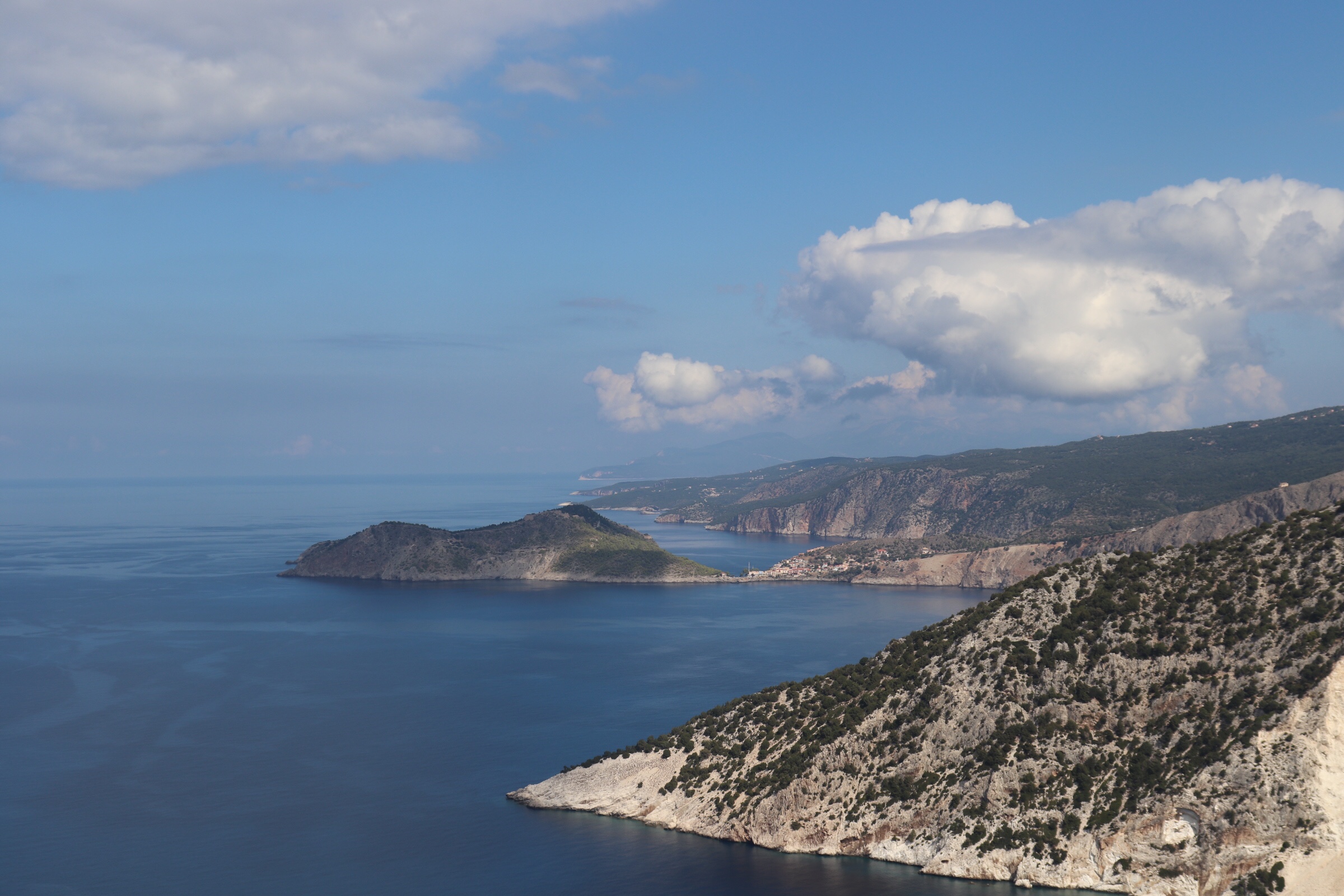
Our tour took us west over a narrow pass on the island. Next stop Myrtos Beach, and this only for the photo op! Myrtos Beach is the most photographed beach in Greece and used extensively in travel advertising. It did, indeed, look lovely and on another day would have been nice to occupy a chaise and partake of the crystal clear waters. But not today.
On the 45 minute trip back to the harbor and our ship we learned more about the history of Kefalonia especially during WWII. It was occupied by Italy who, in 1941 was allied with Germany. Many Germans and Italians were stationed here and shared barracks. With the fall of Mussolini in 1943, and Italy’s alignment with the Allies, the Italians stationed here were then considered traitors by the Germans. About 6,000 Italians were executed on Greece by the Germans during this time. There was a Civil War following WWII that we didn’t learn much about, then the 1953 earthquake! No wonder there was mass migration.
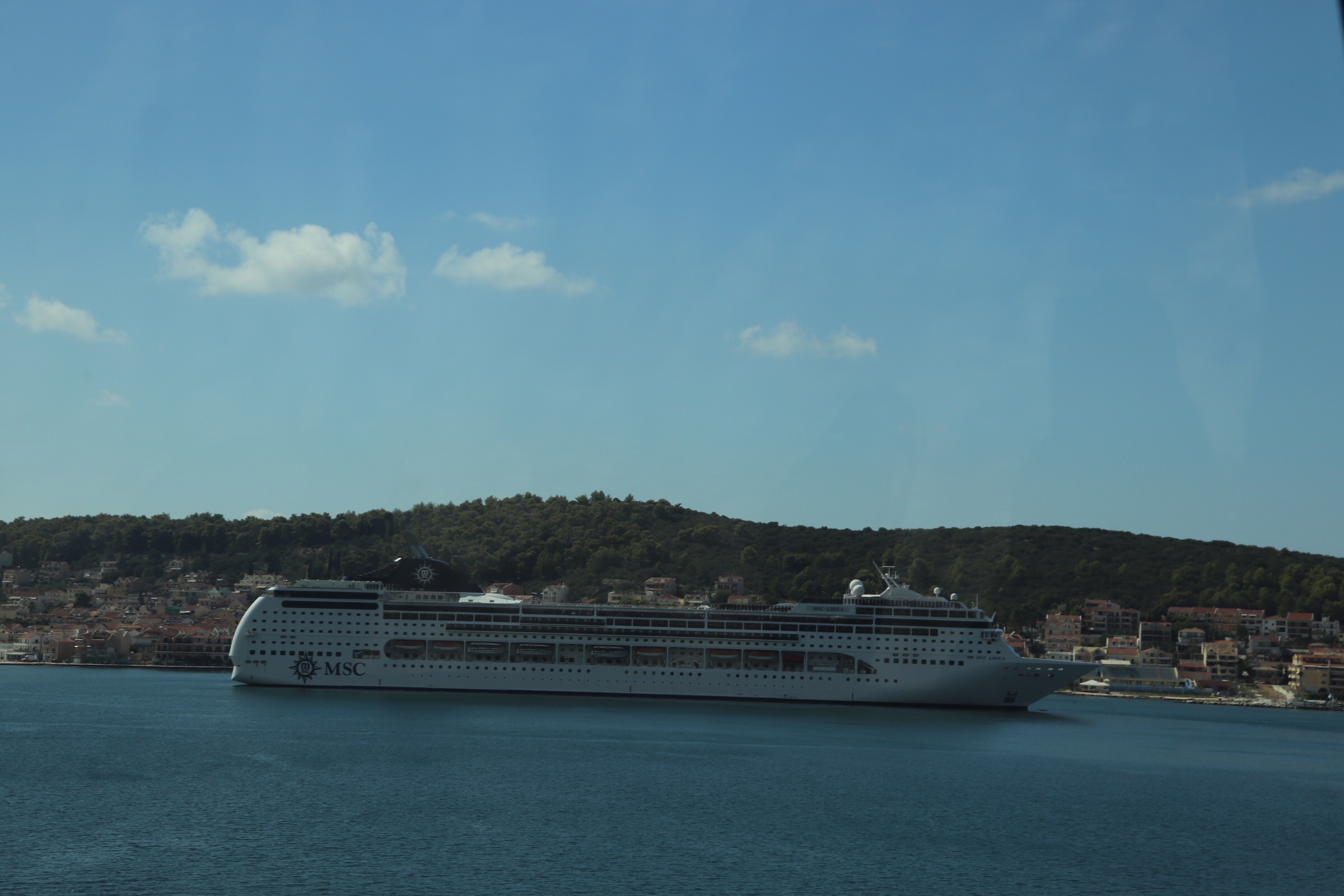
We returned to the ship for a much anticipated late lunch. The food was abundant and delicious. We found a new dining room that we enjoyed very much. Too bad we are only on board another day and a half.
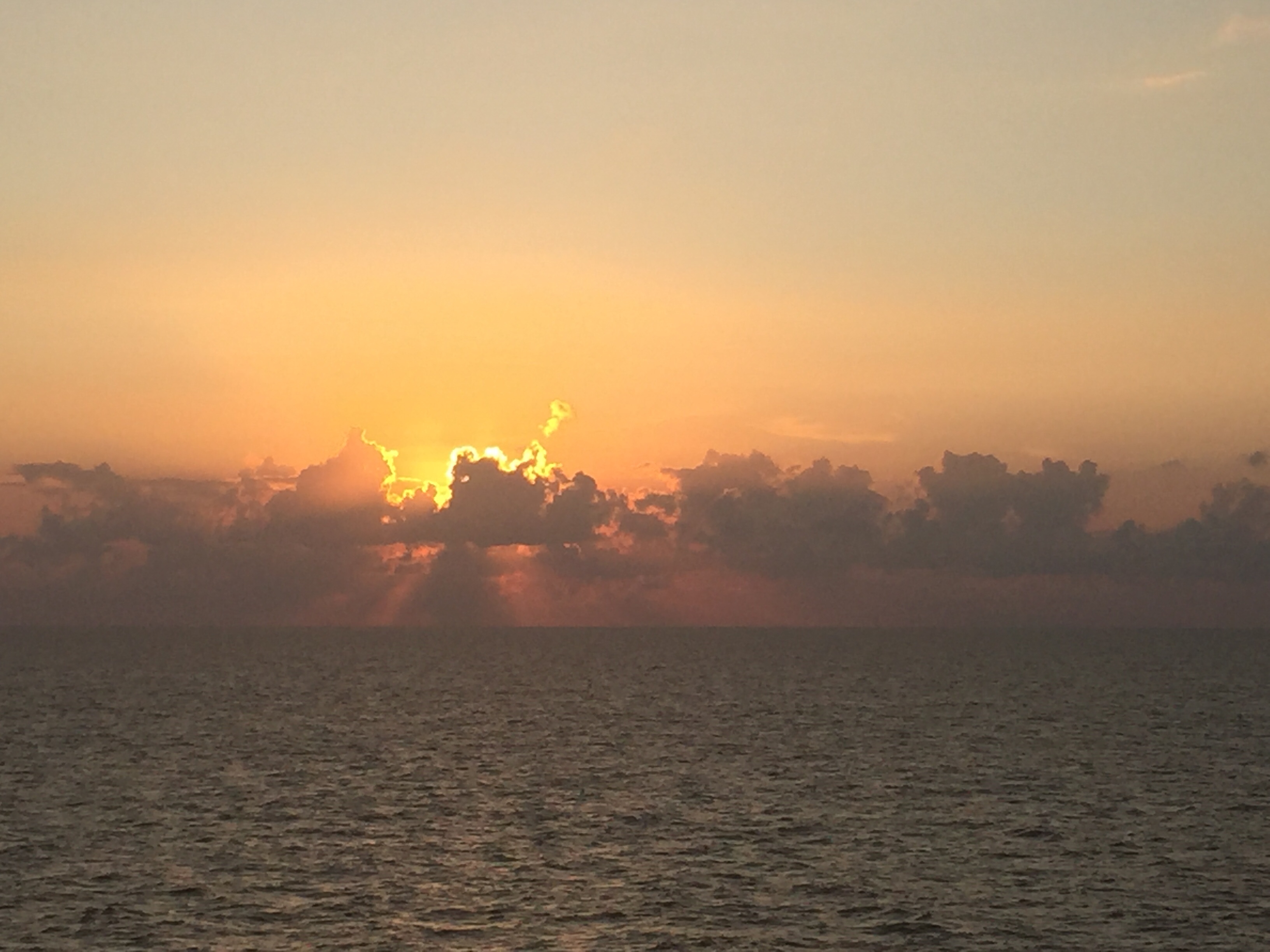
We skipped dinner and went to the theater show at 8 p.m. Walked the top deck afterwards and watched the clouds and lightening in the distance. We were sailing into a storm.
 ¡Ciao America!