The Long Journey Home

We were jolted awake at 4:45 a.m. It’s jarring to get that alarm even when you’re expecting it. We had a little bit of recycling to do (they are very serious about their recycling and the sorting of items) which had to be out in the hall when we left.

Final packing, a splash to the face and teeth brushing and we were on our way. We had about a 20 minute walk to the bus station where we would catch the bus to Marco Polo Airport.

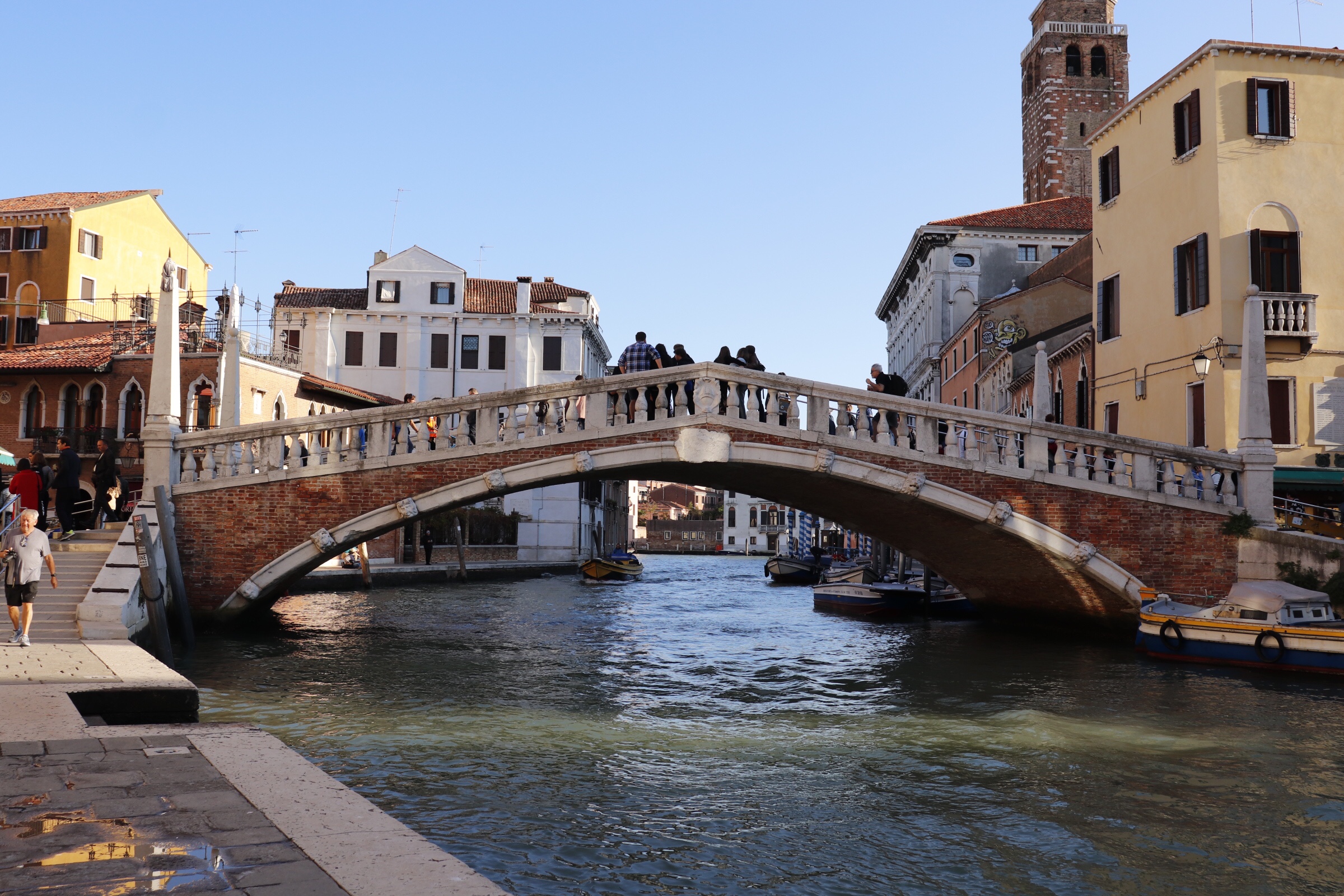
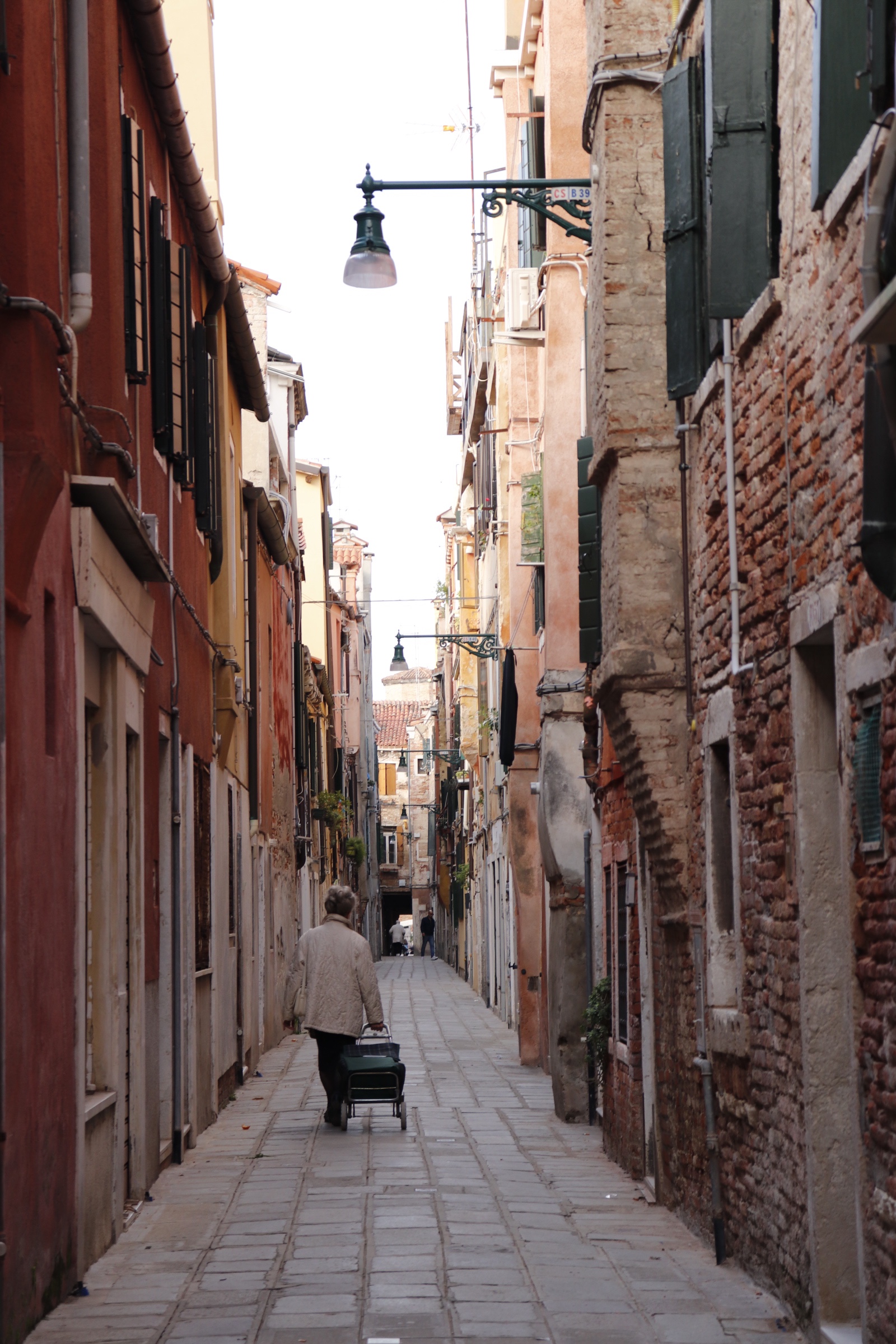
This was indeed the best time to walk the streets of Venice!! Hardly a soul on the streets but there was the early morning inner workings that one rarely sees. The deliveries coming by barge on the canals, the laundry being picked up at the hotels, crates and boxes of goods left at the doors of shops anticipating the arrival of the owners. It takes a lot to run any city, but Venice has her unique challenges.

There was a small queue for the bus when we arrived at the station. The bus arrived promptly at 5:40 a.m. and we were at Marco Polo by 6:00. Check in and bag drop, passport control and we were at our gate with time to spare. We were witness to a beautiful red sunrise over the water. Venice putting on her final spectacular show.
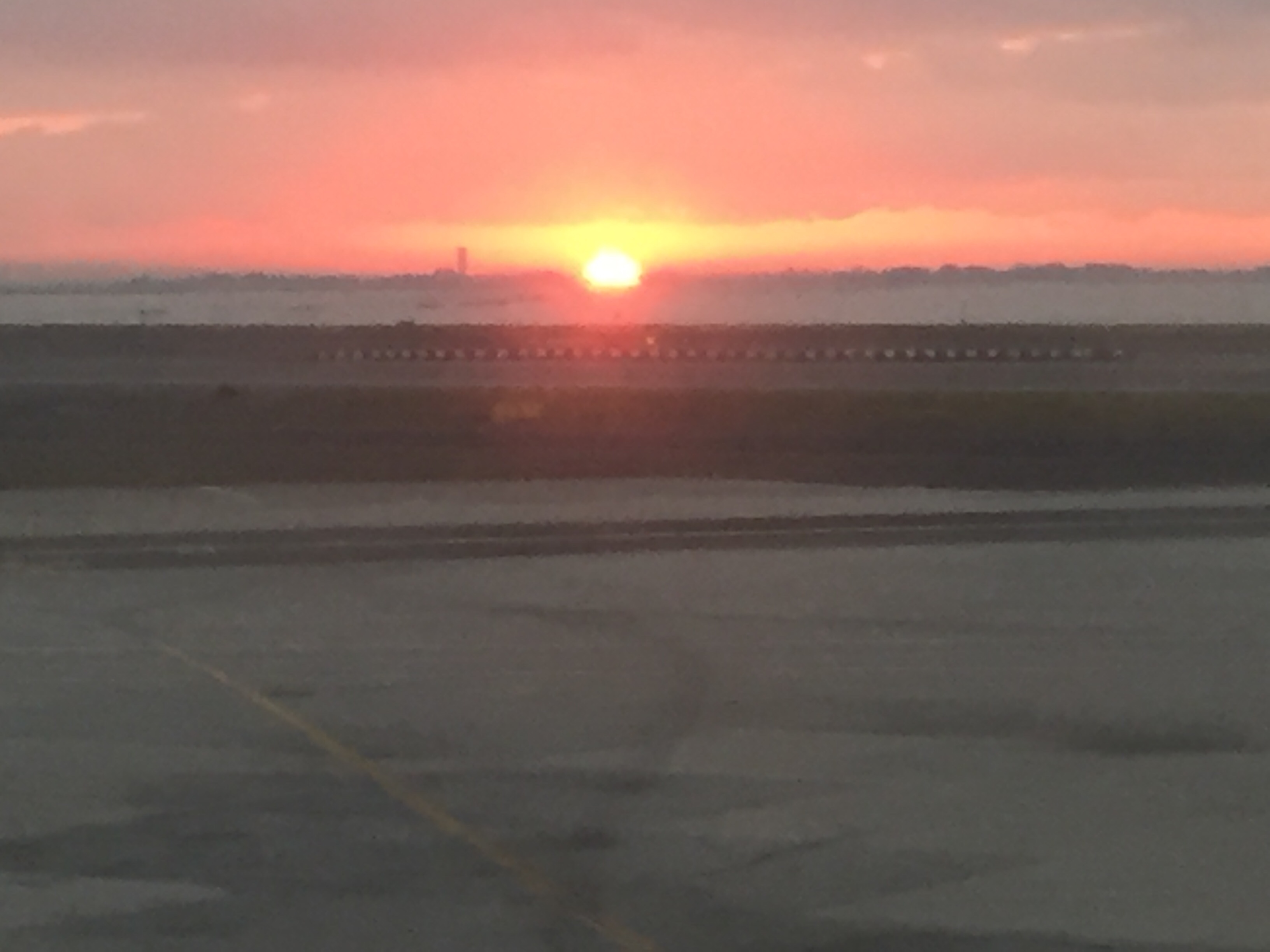
Sunrise in Venice

It’s less than a two hour flight to London and I actually napped for some of it. We arrived in London as scheduled. We made a terminal change, another passport control before making the long walk to our gate. We figured with all of the sitting we would be doing today a good walk was in order.

We boarded our 777 and were surprised and pleased that it was not a full flight, allowing us to each have an entire row!
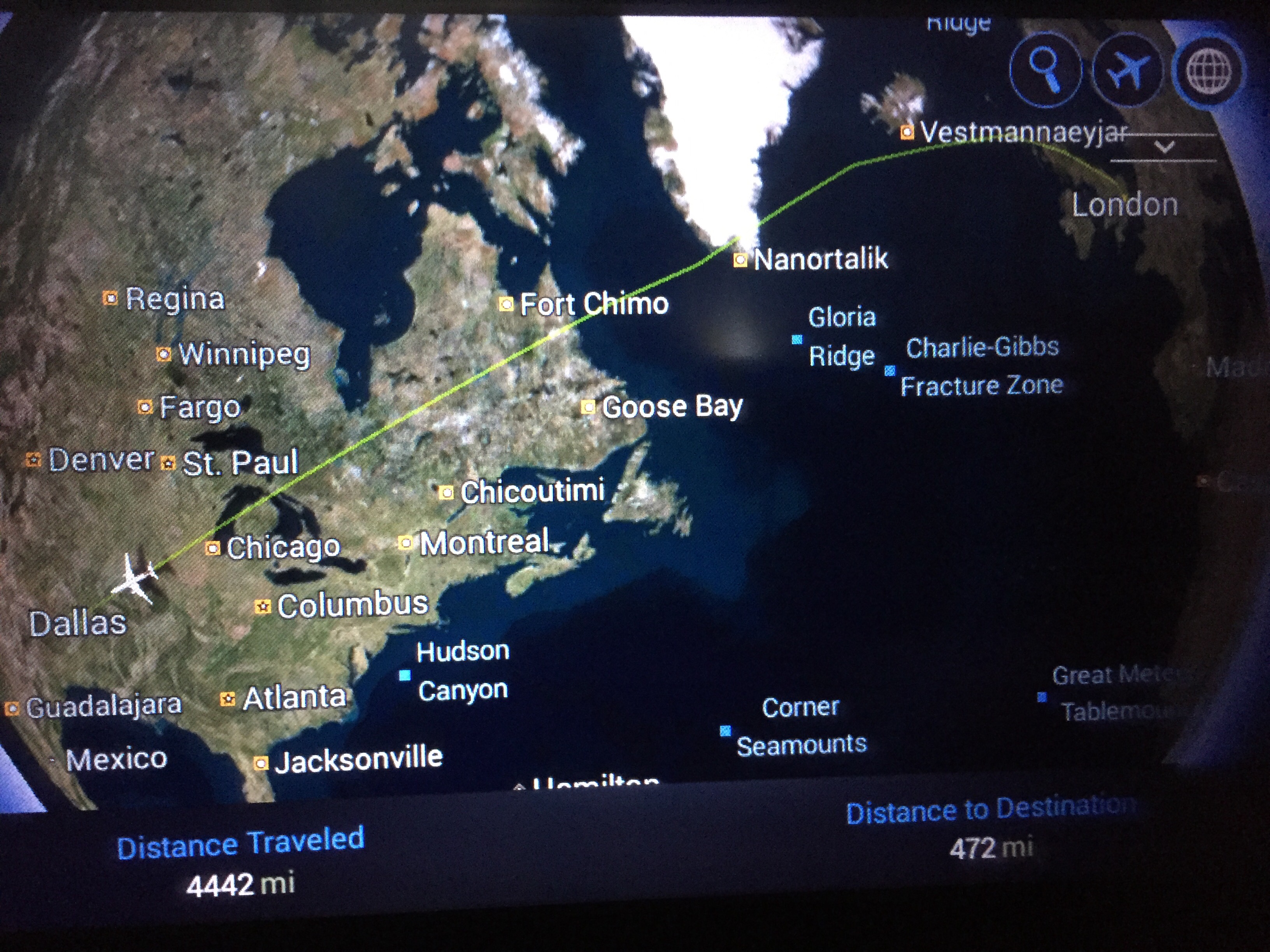
Our flight path
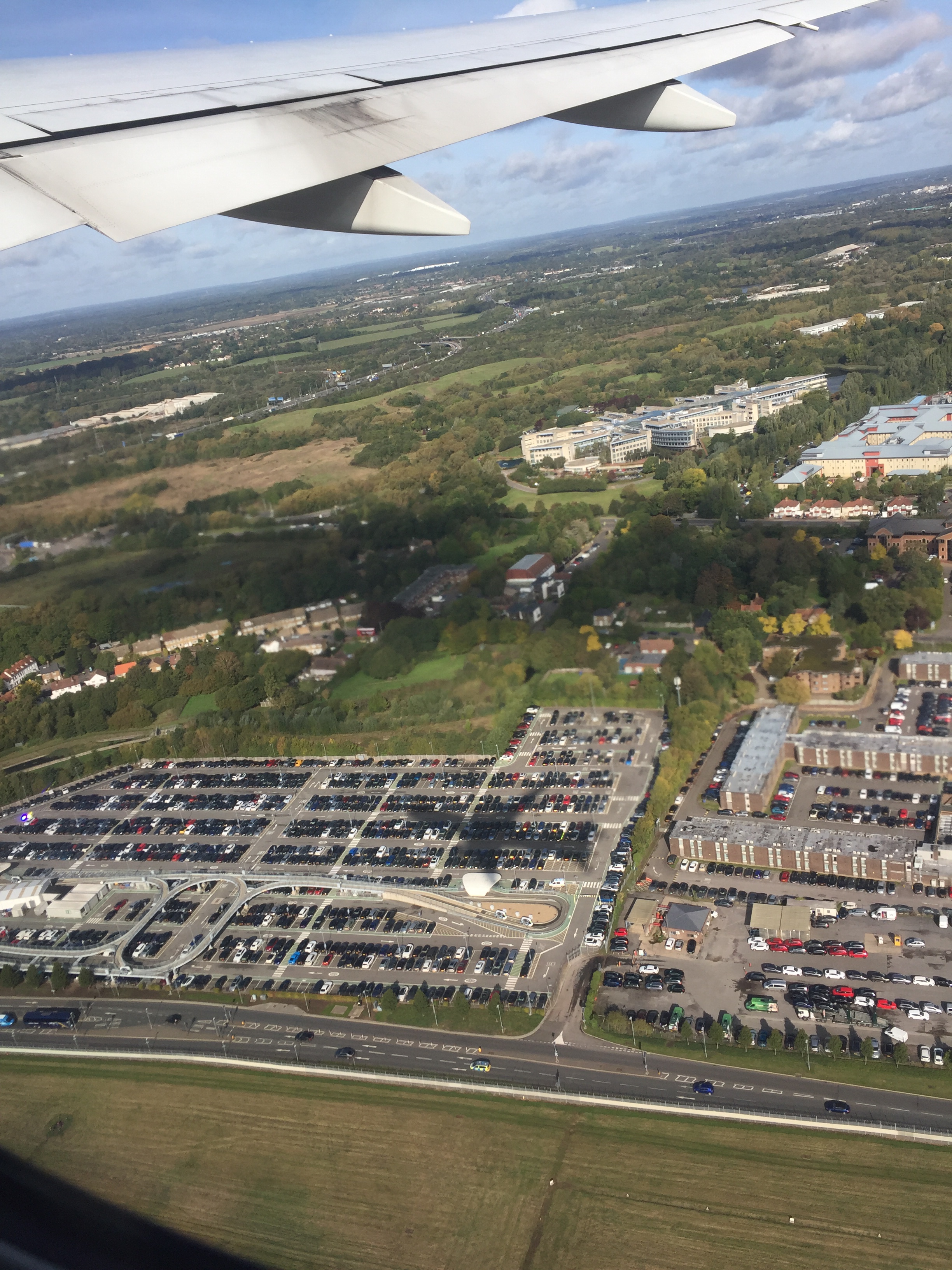
Leaving Heathrow

After the meal service and with the aid of wine and a Tylenol PM I settled in for the long flight to Dallas. I woke up to the smell of the “snack” promised about 90 minutes out of DFW! Can’t remember when I’ve slept that long on a flight.

We had a three hour layover in Dallas, much of which was taken up with collecting and rechecking luggage, passport control, customs and a terminal change (DFW revivals LHR for size!). I texted girls to let them know of our homeward progress and also Natalie across the street who had volunteered to open up the house for us prior to our arrival. It was during these texts that we realized James, her husband, would be on our flight to SB. Not twenty minutes later he spotted us close to our gate. What a sweet coincidence and early homecoming.
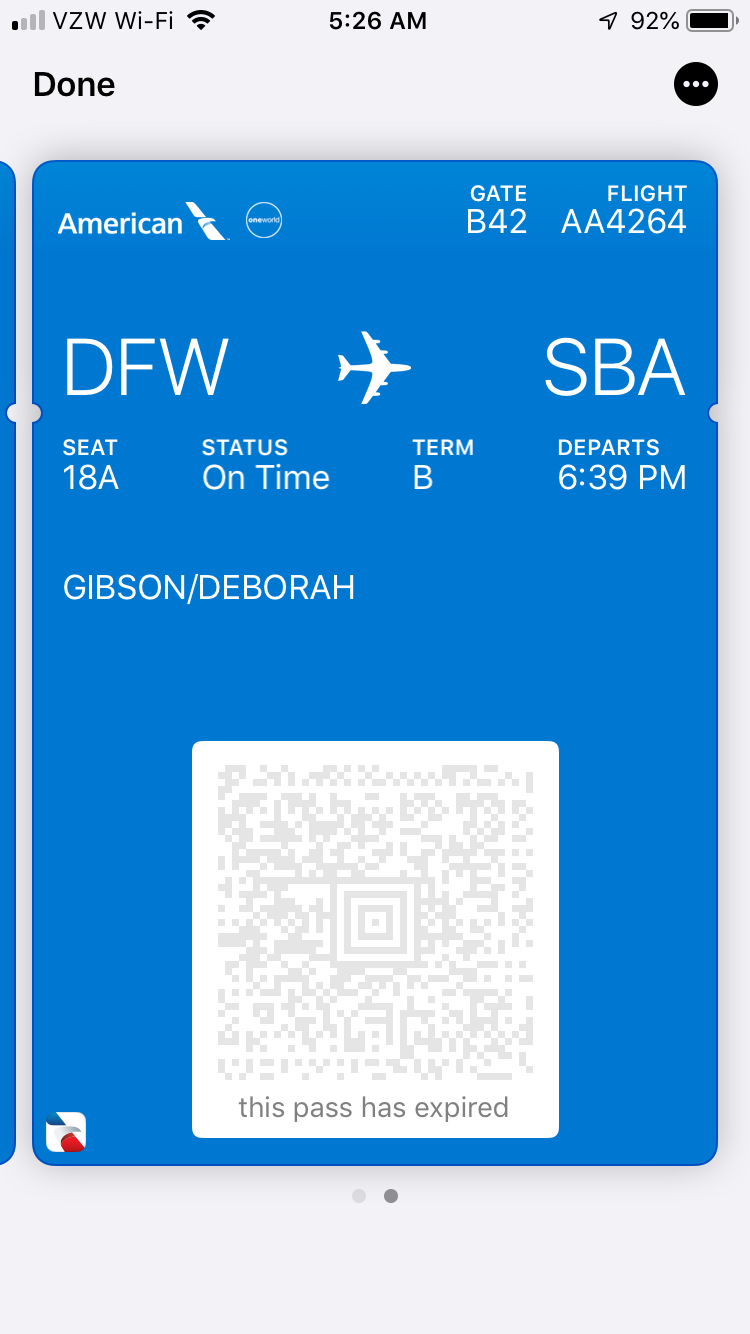
Last leg

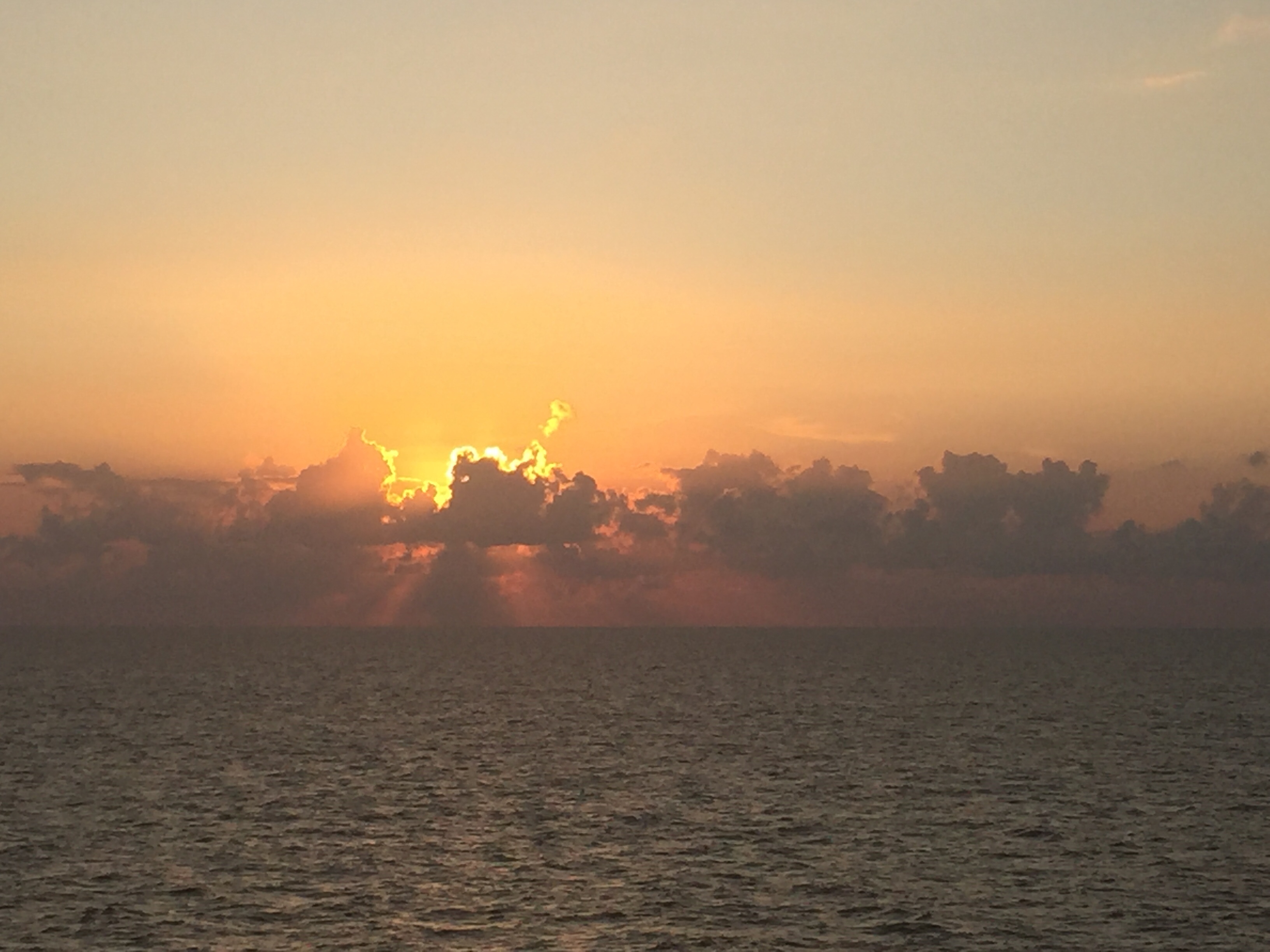
We chased the sunset all the way home as we flew west. A fitting ending to another amazing journey. We are grateful and thankful for all that comes into play to make these ventures possible – – – time, miles, money, but above all our health. The long flights and many of the things we choose to do require stamina and good joints.
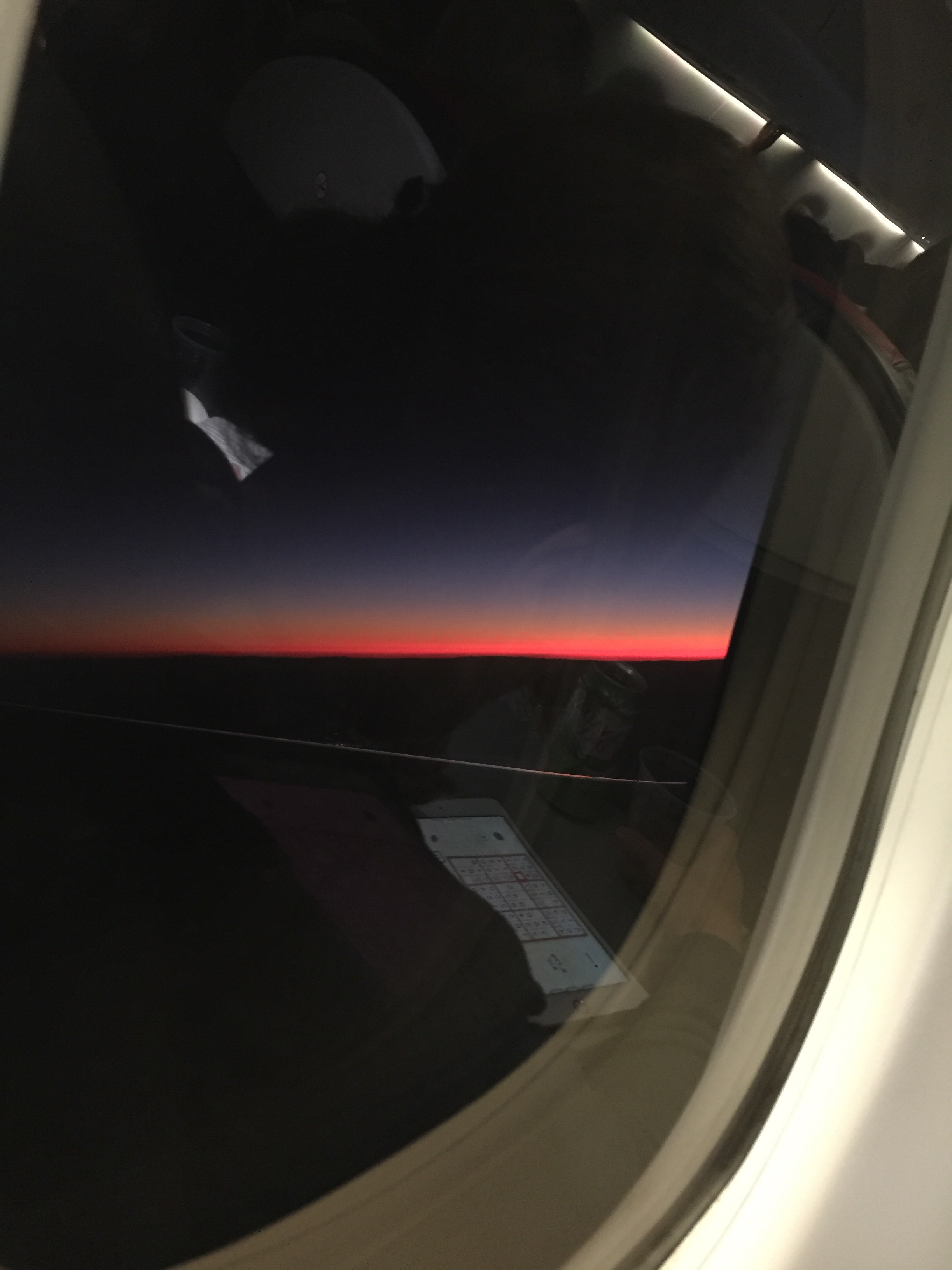
The flight home

My mother, who we called Gypsy, pulled over at every historical marker and roadside stop when she traveled. My ‘roadside attractions’ may be international, but I share her curiosity, wonder and enthusiasm for learning about it all, with or without boloney and onion sandwiches (inside family reference!). May the journey continue.
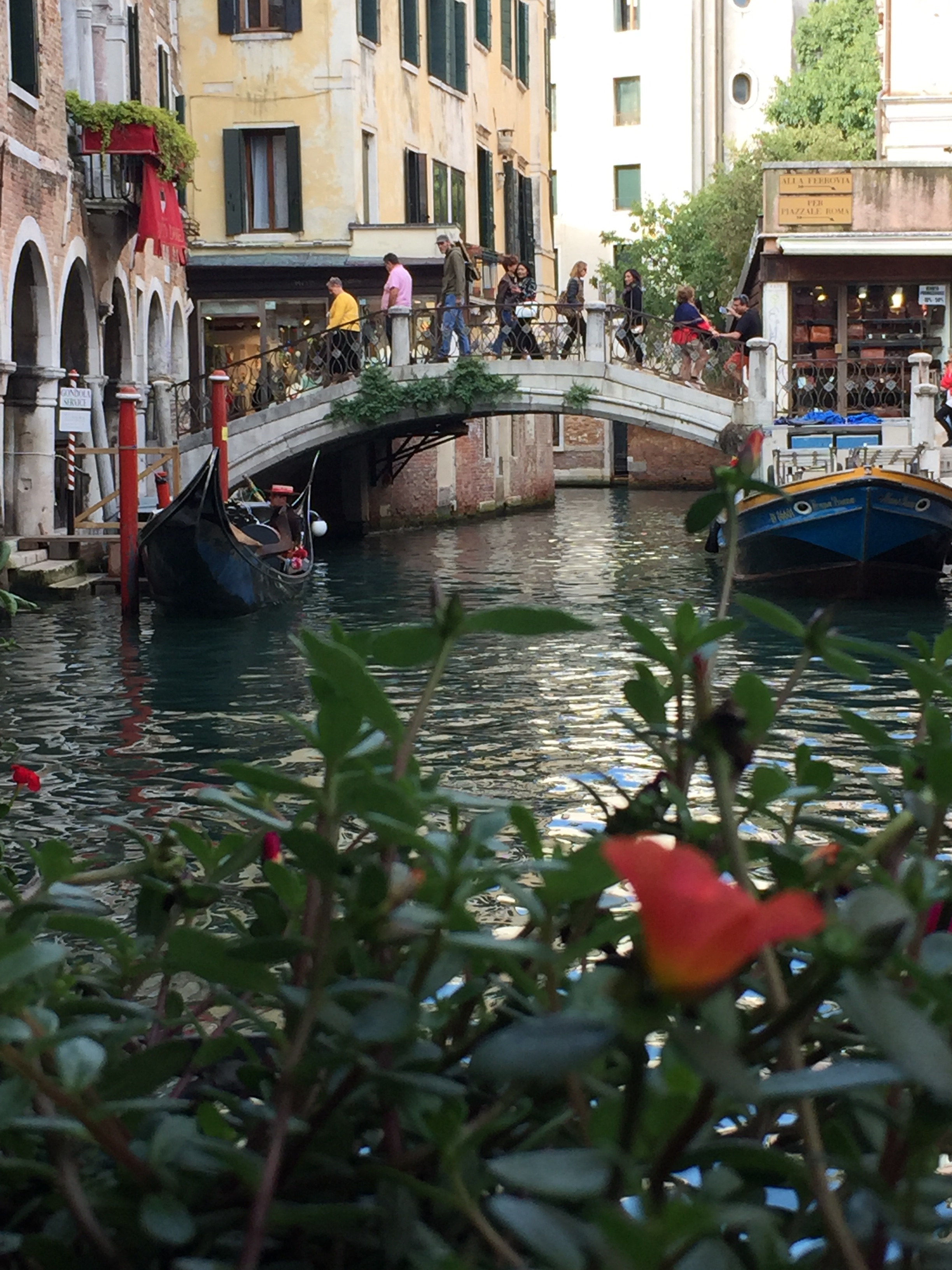
Last Day in Venice

The day had no plan save for a Vivaldi concert at 8:30 p.m. The rest of the day was ours to do with as we wanted. Both still harboring some lingering coughs, we slept fitfully and were happy for the freedom of no schedule.
We were in search of a gift for the gracious neighbor who has been fetching our mail and newspaper in our absence. We had been on the lookout all along but there was nothing that wasn’t cliché or available at home. Search continued.
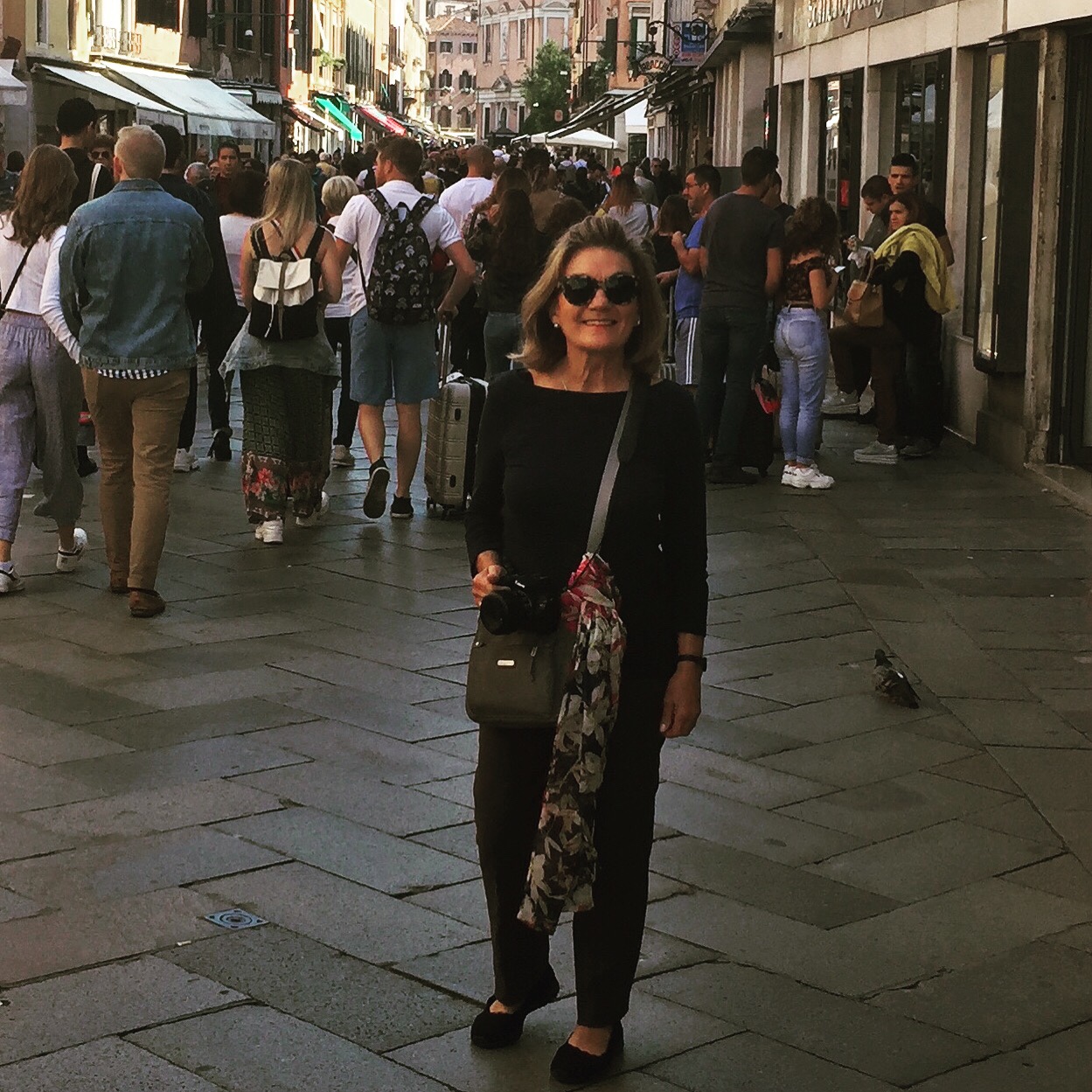
Street Scenes

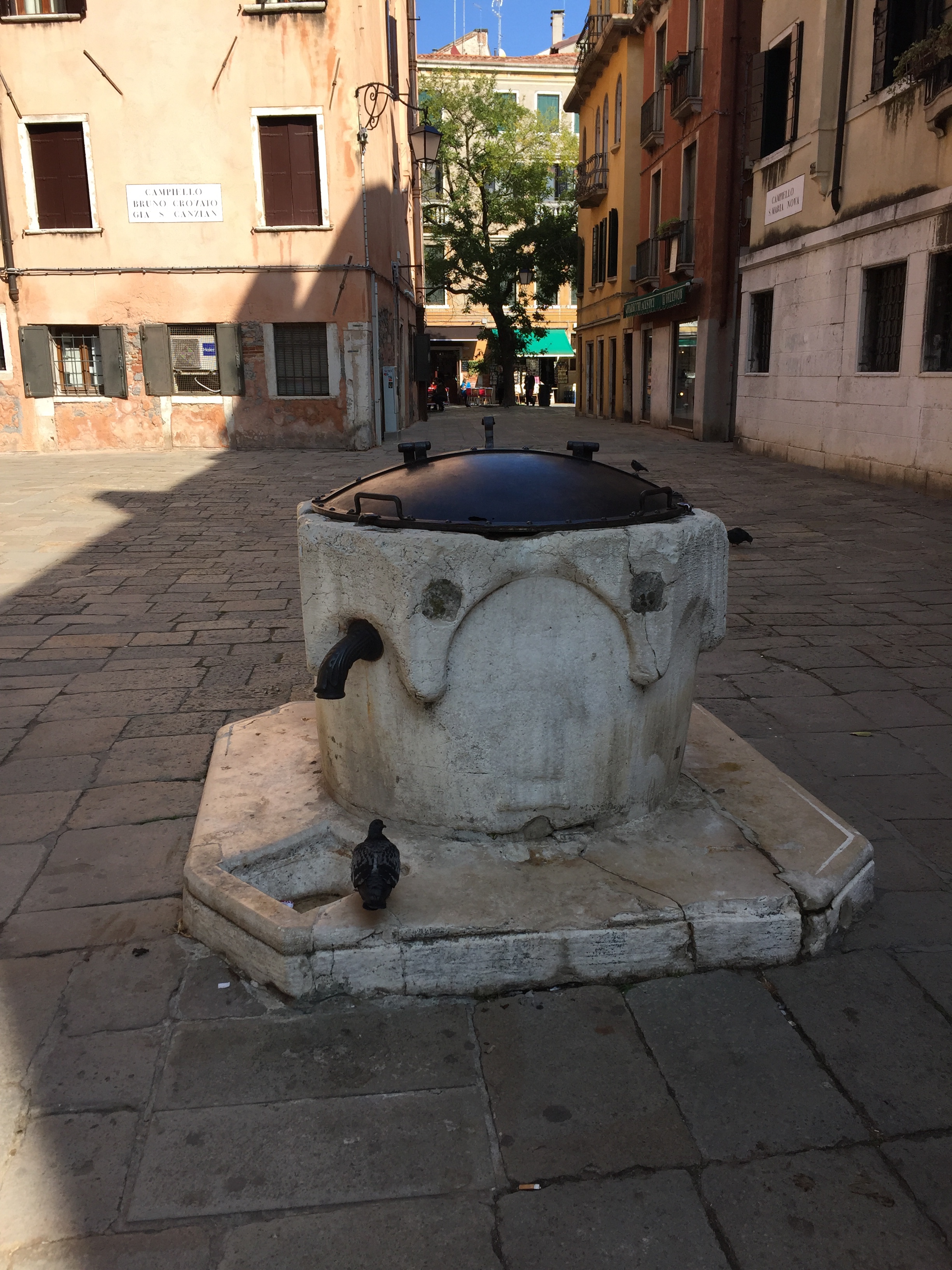
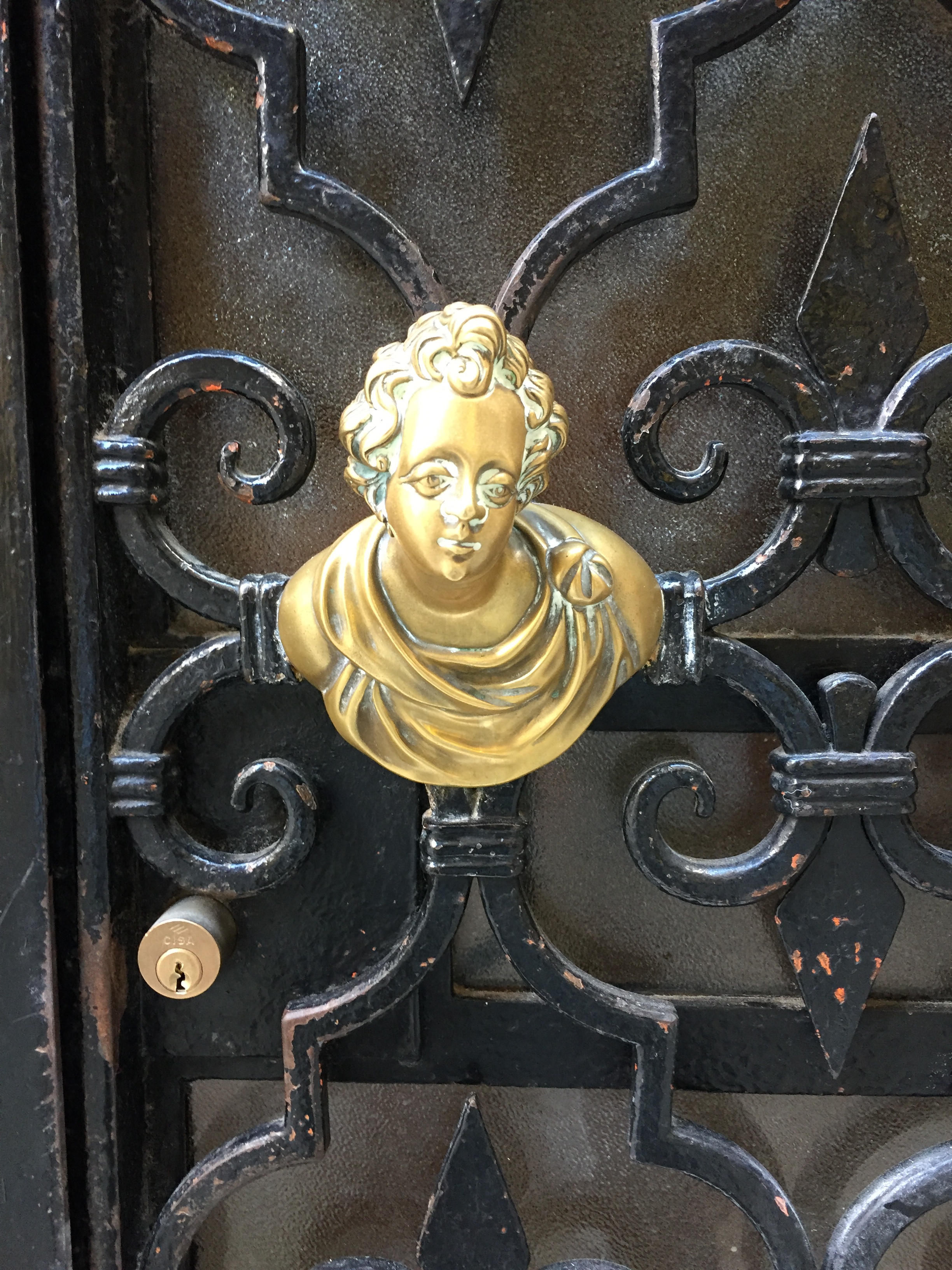
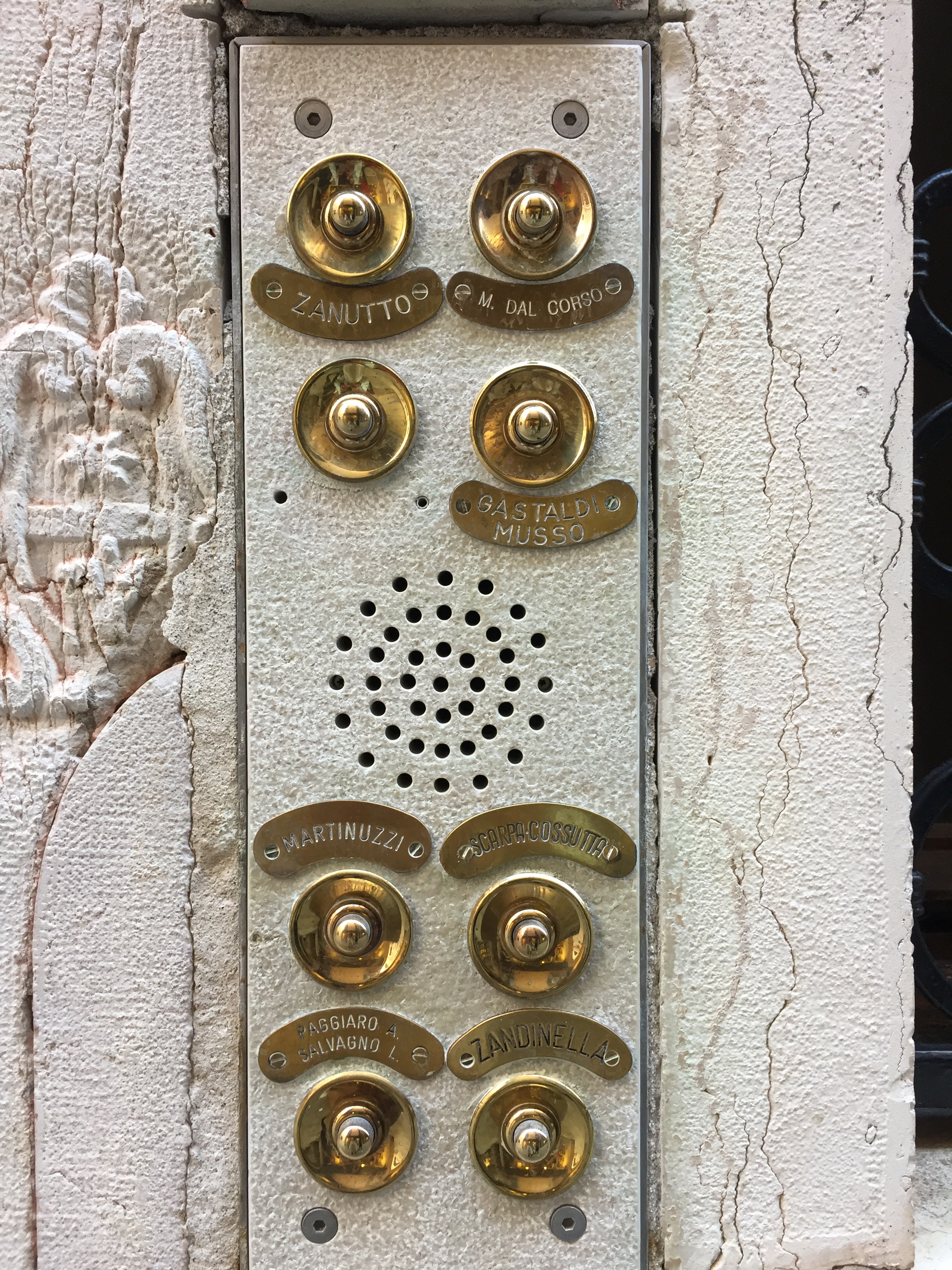
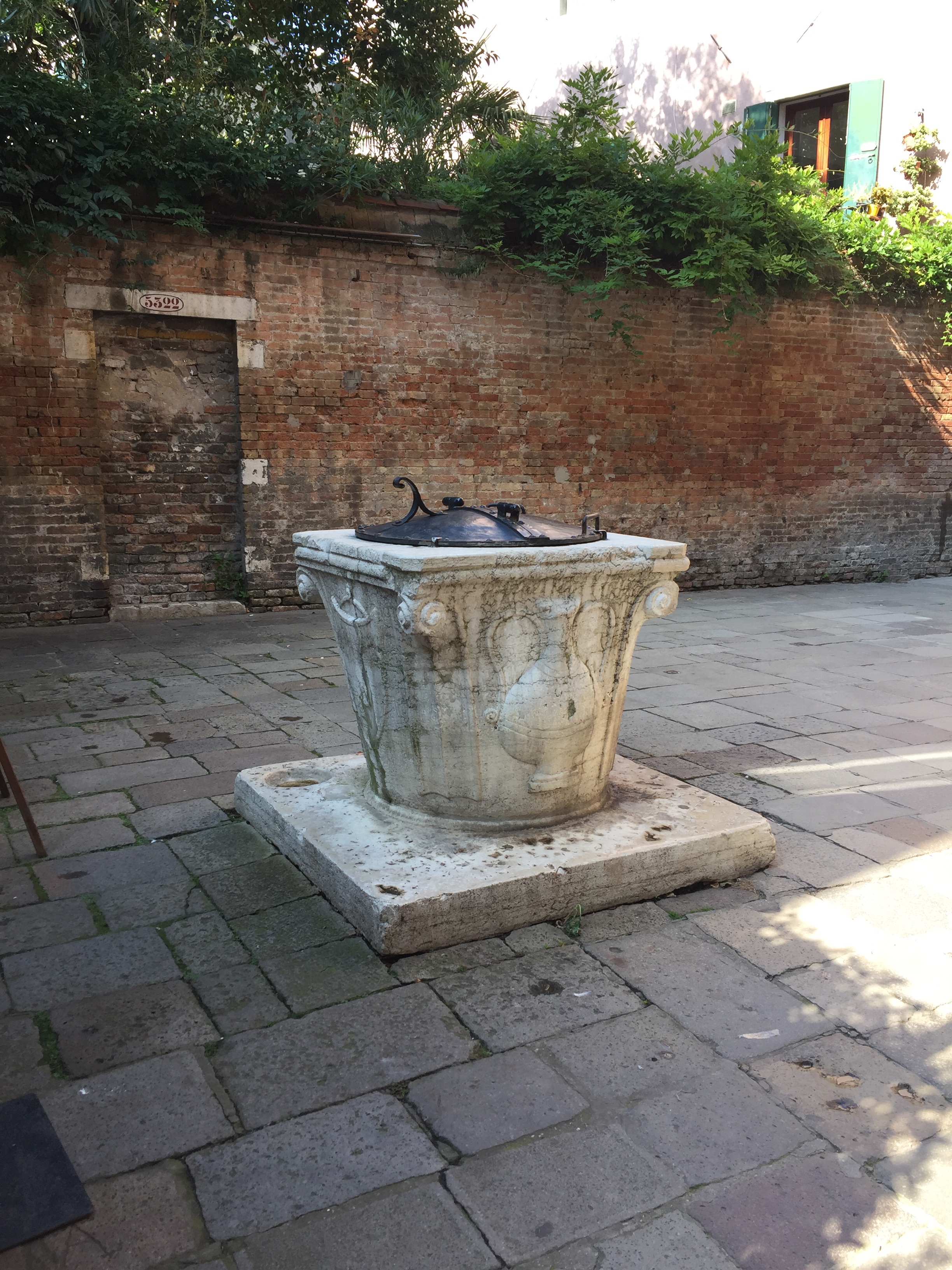
We took the the streets at a leisurely pace trying to imprint this city into our being. I will miss being here. I am obsessed with three things – – well heads, doorknobs and doorbells. I have an abundance of photos of each but will share just a few.

Well Head
Well Head (and pigeon)
Door Knob
Door Bell

The well heads are my favorite story because they really are not wells but rather cisterns. Too difficult to drill to water table for water, the Venetians depended on capturing rain water. The cisterns are an elaborate design to capture, filter and store fresh water. The ‘wells’ were opened twice a day for water retrieval, signaled by the tolling of church bells. About 600 of the well heads remain today (I have photographed maybe 50!)

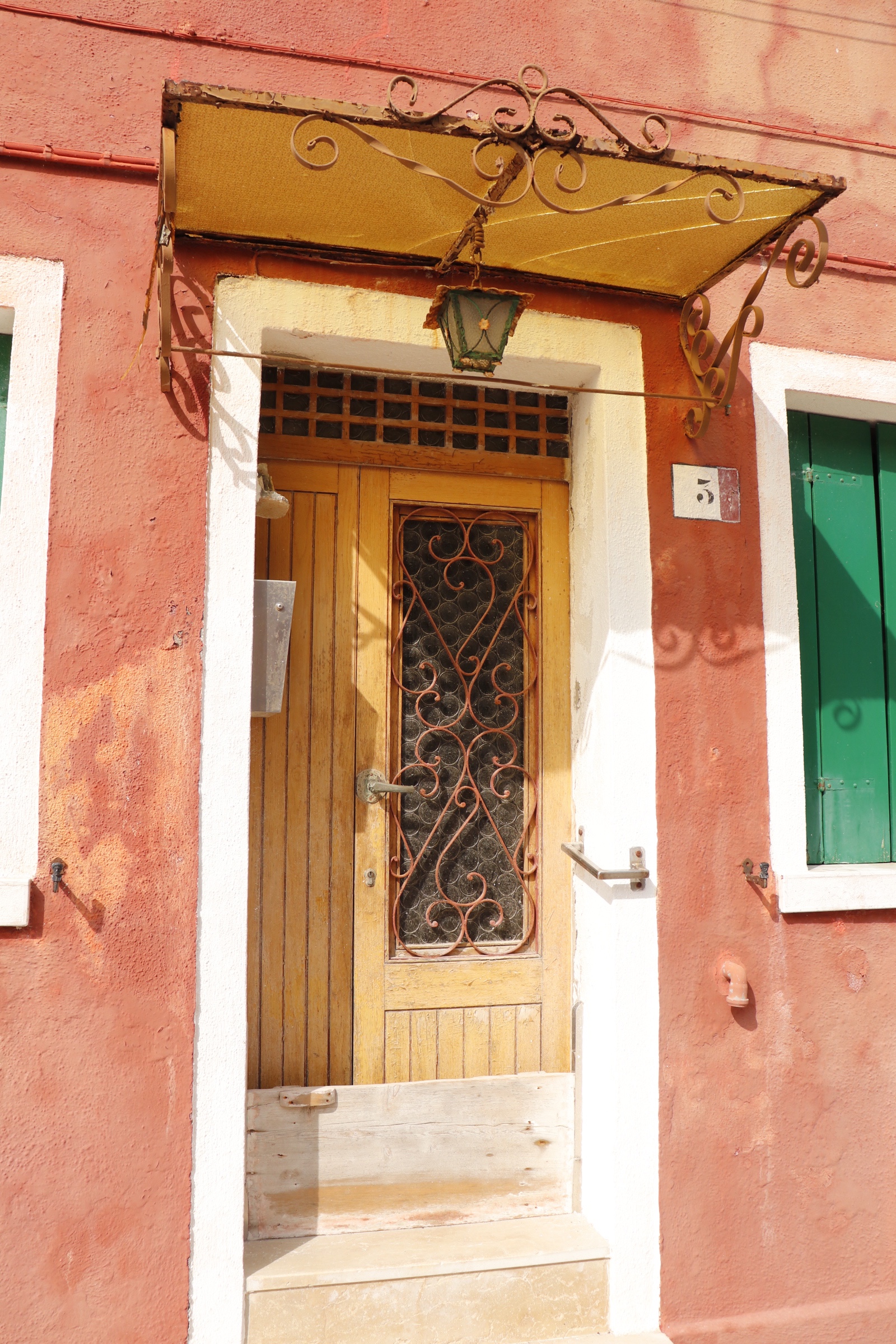
The doorknobs and doorbells are also unique and beautiful. Poor Tom, a walk with me through the streets of Venice is a lesson in patience!

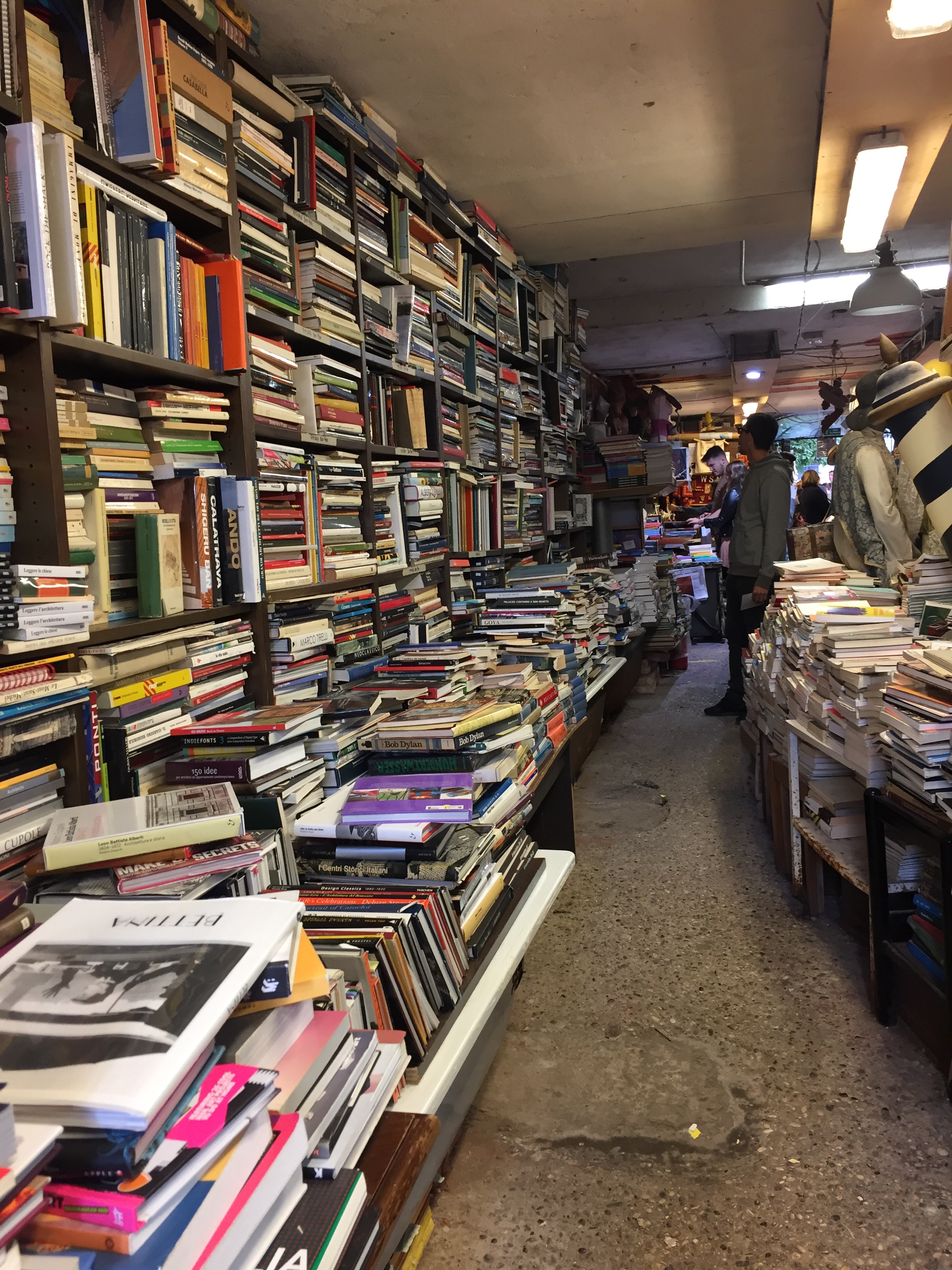
Although we thought we were navigationally savvy, we got lost! There is absolutely NO sense of direction in Venice because you have no vantage point. But lucky us, we stumbled onto Libreria Acqua Alta (High Water Library). We had been told about this amazing place by Sara, our photographer guide. Hard to describe this eclectic bookstore but it was wonderful.

Libreria Acqua Alta

You could spend months in here and never surface. Vintage books, magazines, postcards as well as current books and news. Such fun!

We stopped for a gelato on our way home, which again, turned out to be a circuitous route, thank goodness for the gift of time.

I was ready for a nap when we returned to the apartment. Plan was nap, late lunch, pack, concert, bed. All went according to plan until we walked across two sestiere to find out we had the date wrong for the concert!! It had been last night (European dates!) oh well. As Tom said, if this is the worst that happens to us on this trip, we’re good!

We had a lovely vaporetto ride home and jumped off a few stops short of our home stop to enjoy a ‘passeggiata’ on our last night.

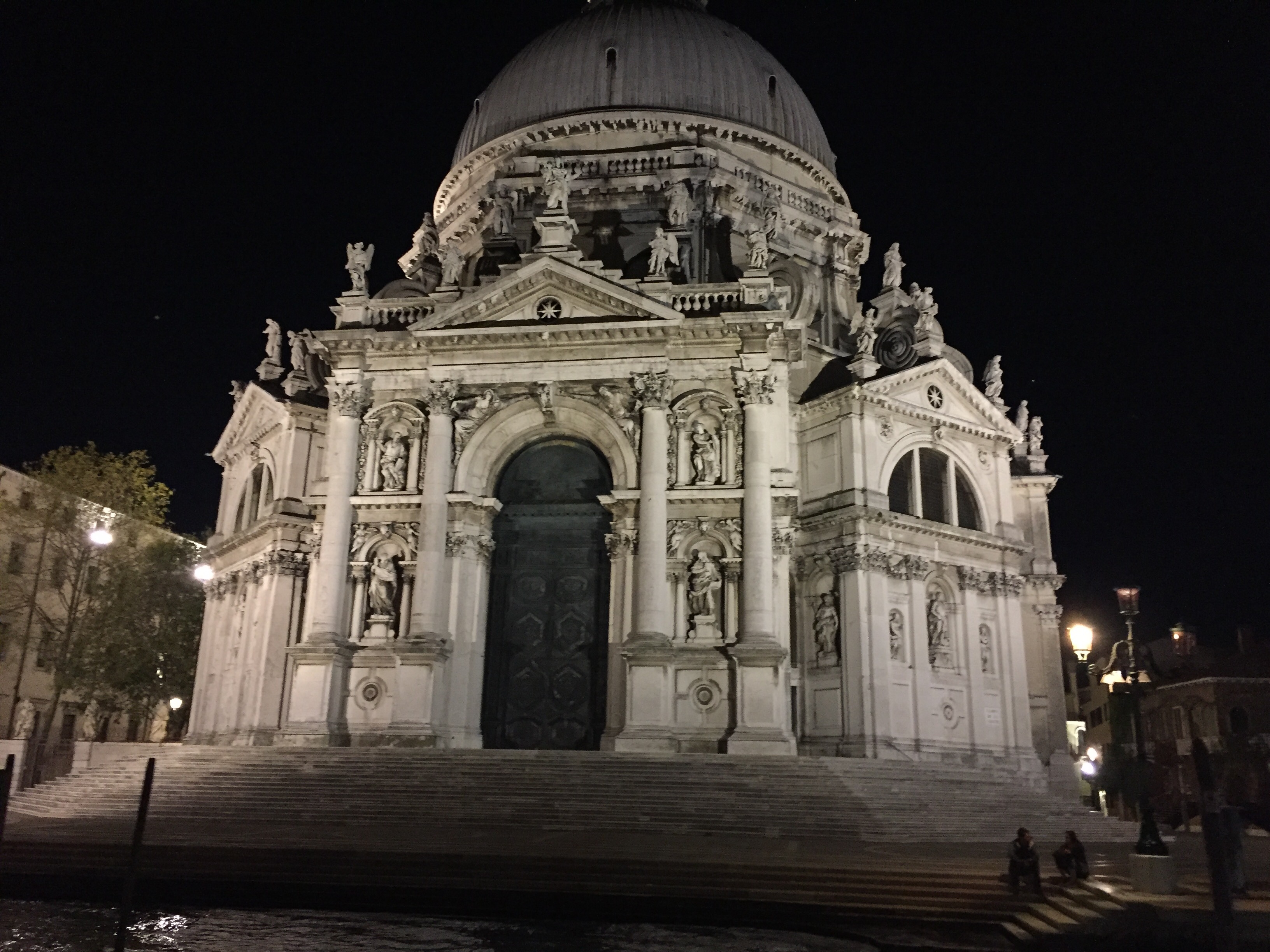
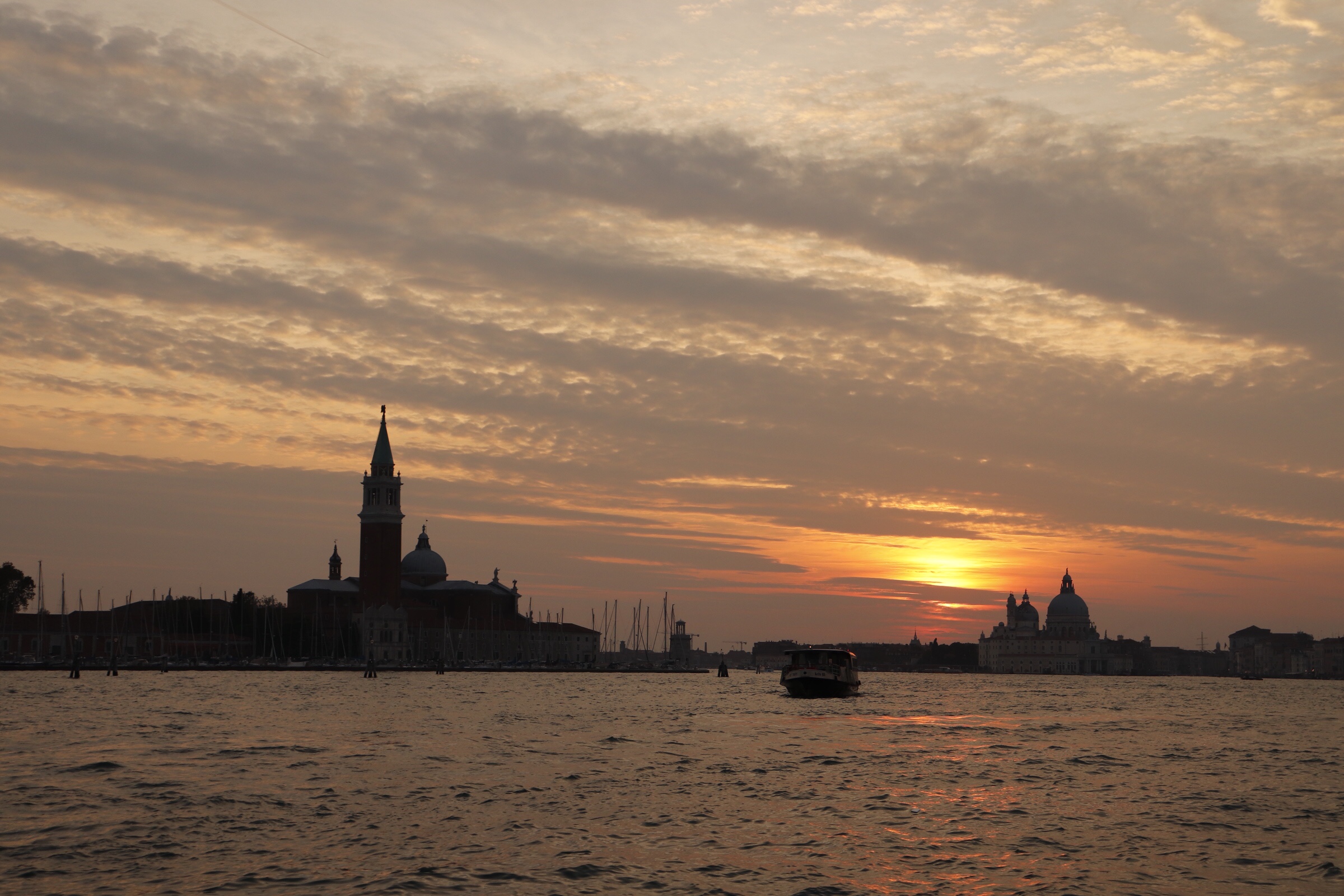
The Salute at night
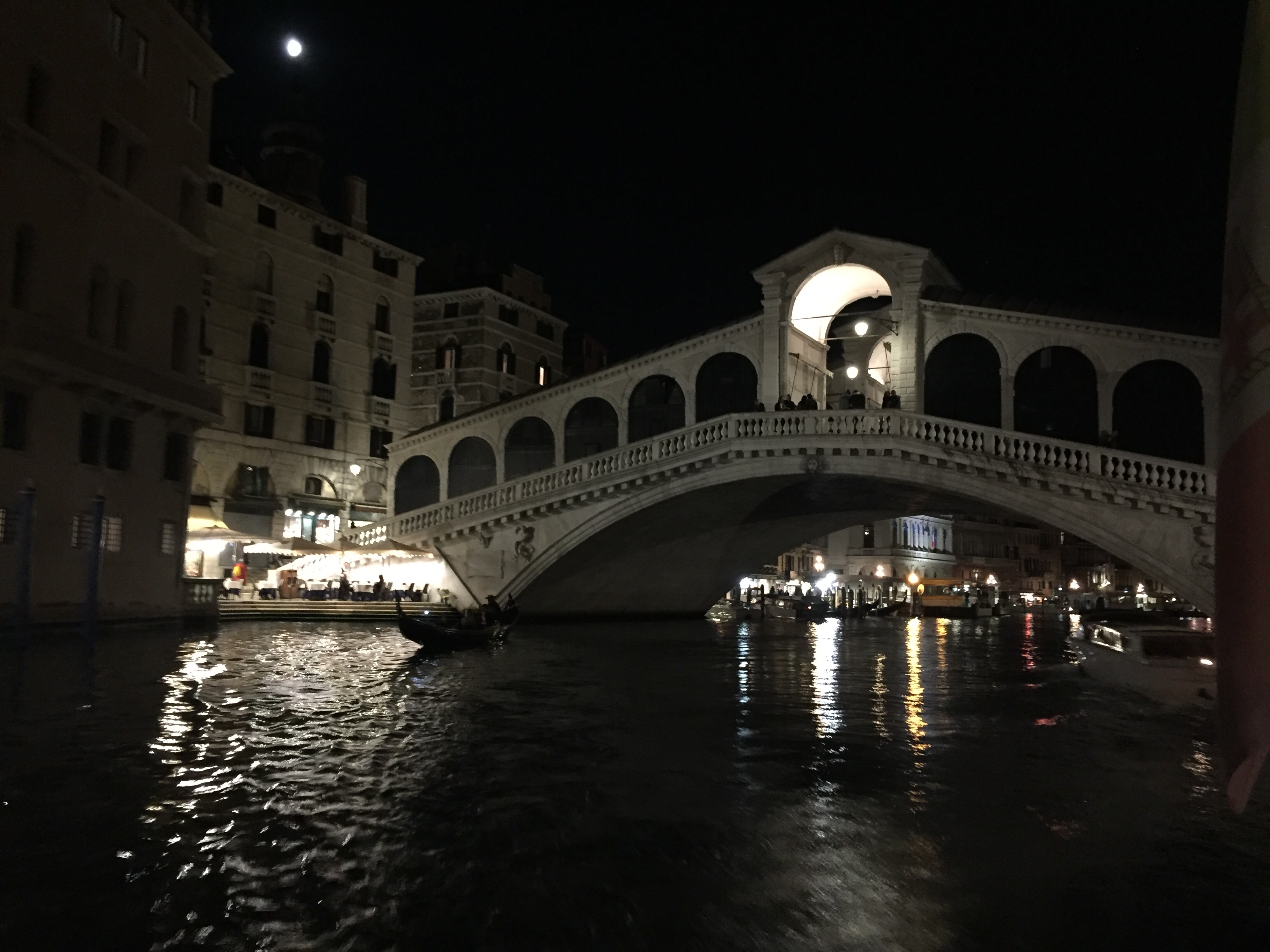
The Rialto

We did pack and set alarms for a very early departure.

¡Arrivederci Venezia!

Venice and beyond

Fall is definitely in the air as we woke to a cooler morning and a change in the light. Fall is probably my favorite season so I look forward to the changes.

I am glad we have been in Venice before and have checked off ✅ the requisite sites – – St. Mark’s Square, the Doge’s Palace, Peggy Guggenheim Museum, Harry’s and Murano. It has allowed us more freedom this trip in terms of time and destinations.

Today we headed to Burano, one of the three islands (Murano & Torcello being the other two) north of the city of Venice, a 45-minute vaporetto ride from our district. We found the vaporetto stop without much problem only to find there was no ticket machine! We wandered back into the streets in search of a tobacco shop where we knew we could buy tickets.

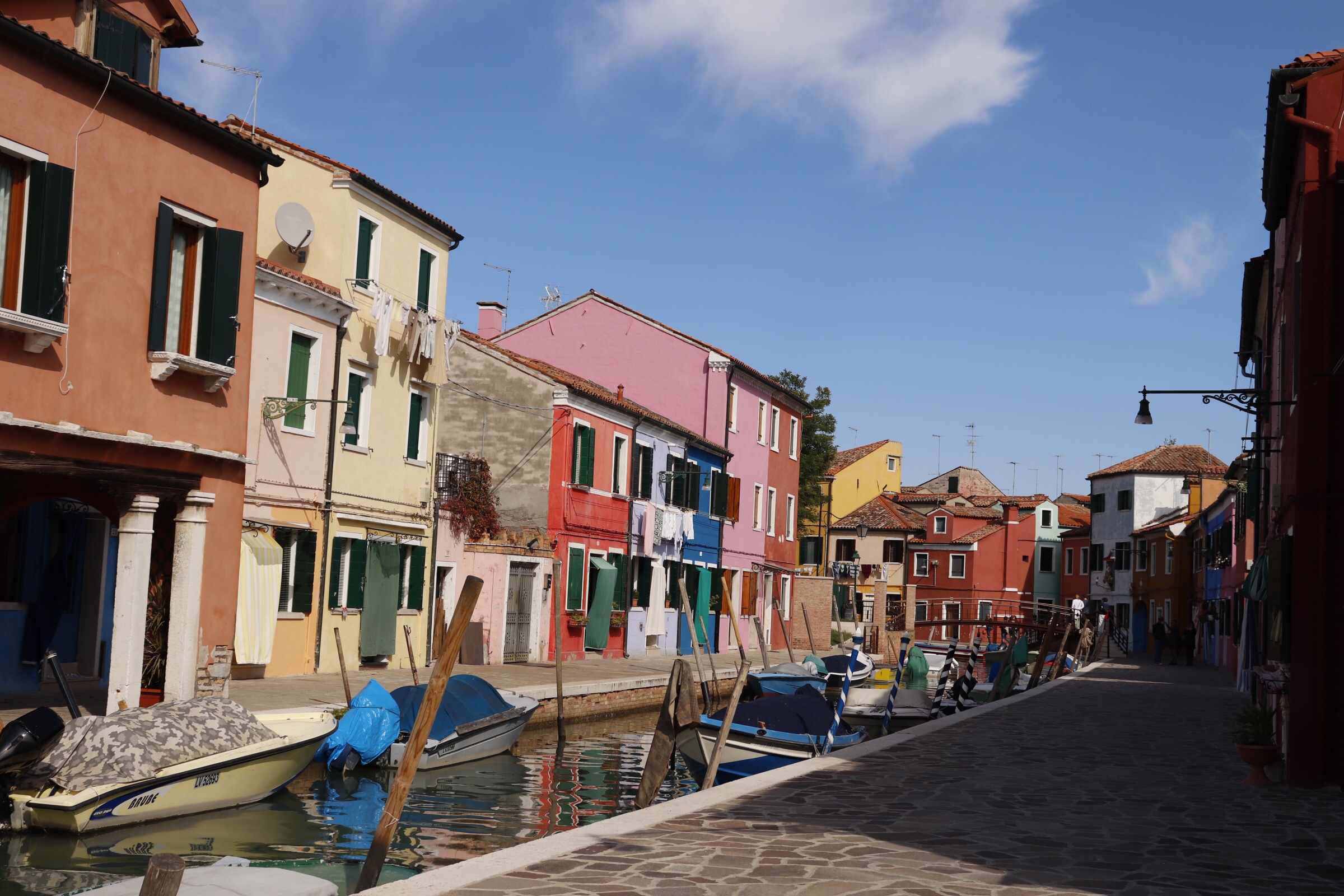
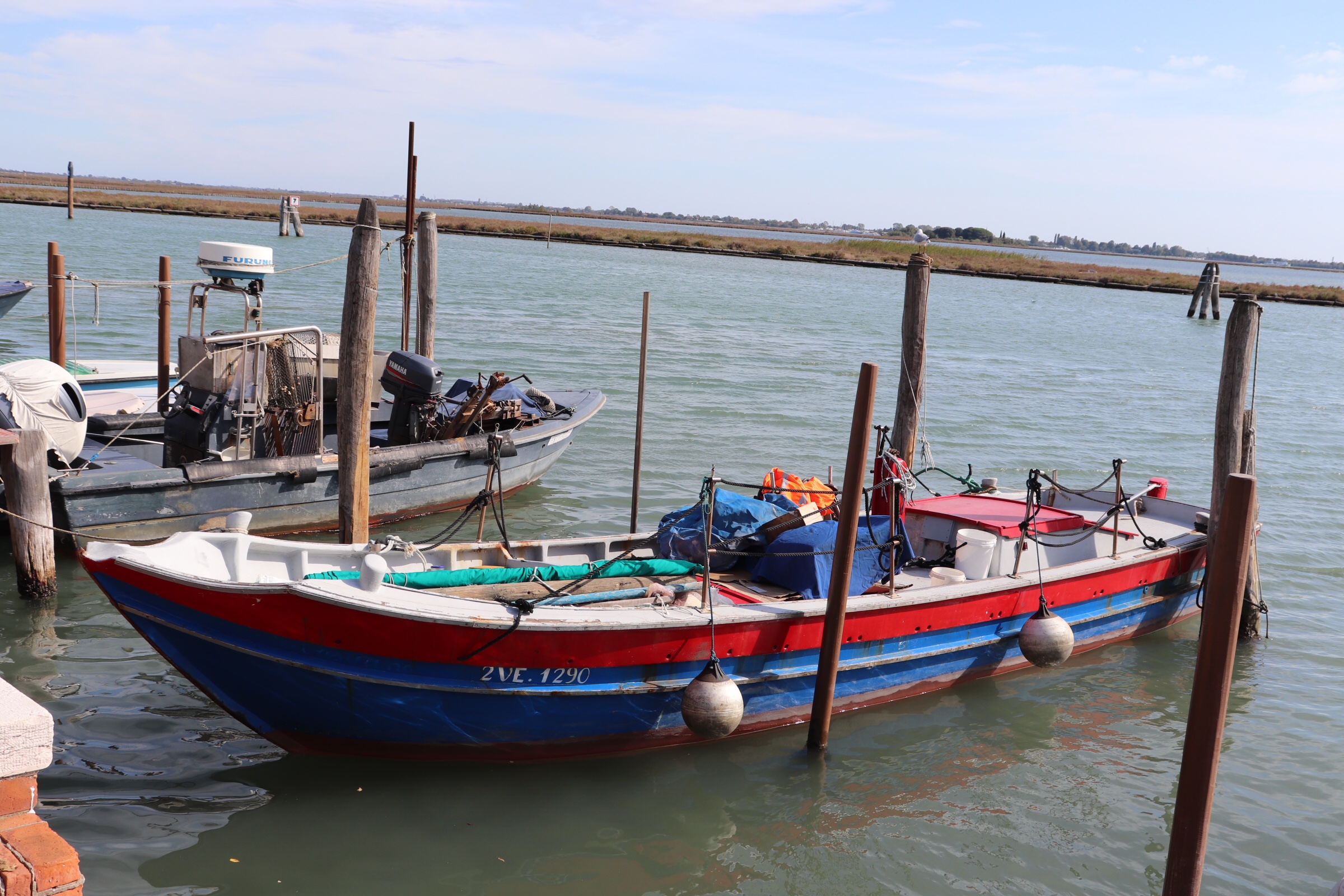
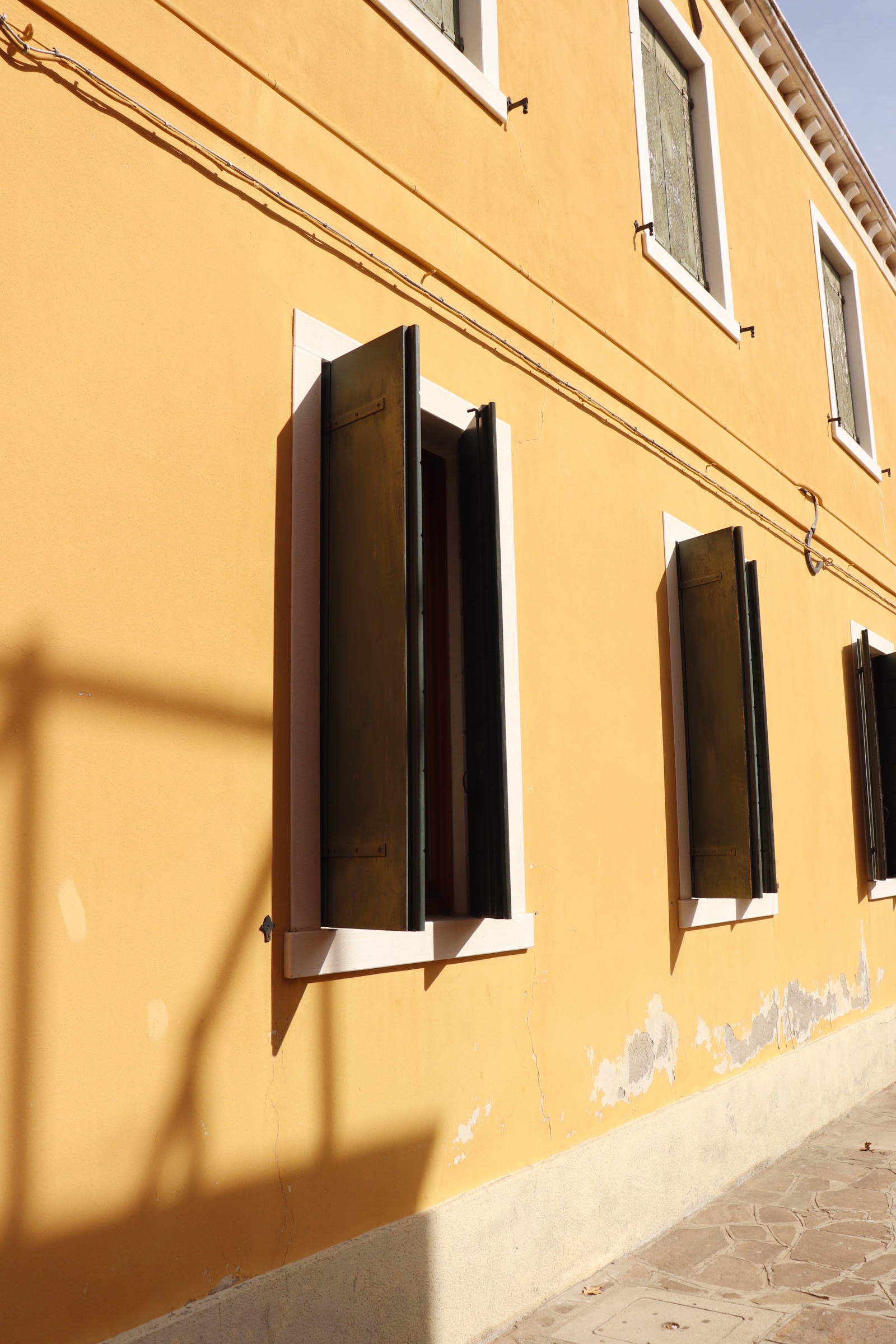
Burano is home to the fisherman who bring their catch daily to the Rialto market on the main island. Legend has it, that because of frequent fog and low visibility, each one painted their house a bright and distinct color to find their way home. Today I think it’s more for us.

The many colors of Burano
Burano is about fishing

We got off the vaporetto with a crowd and walked until the mass thinned and we were away from the shops and the restaurants. We would find a place later for lunch. Being there made you wonder what it was like to live so remotely and on an island with the ever encroaching sea. All over Venice, and here as well, you see the preparation for the high tides and the rising water levels. House doors are equipped with railings from the threshold to about 18” up where a metal guard will slide in to protect the property from taking water in.

Waiting for the rising waters

And there are the temporary elevated walkways stacked in piazzas and courtyards waiting to be assembled when the waters come as they do with the high tides and rains. They say Venice is sinking 8 inches every hundred years.

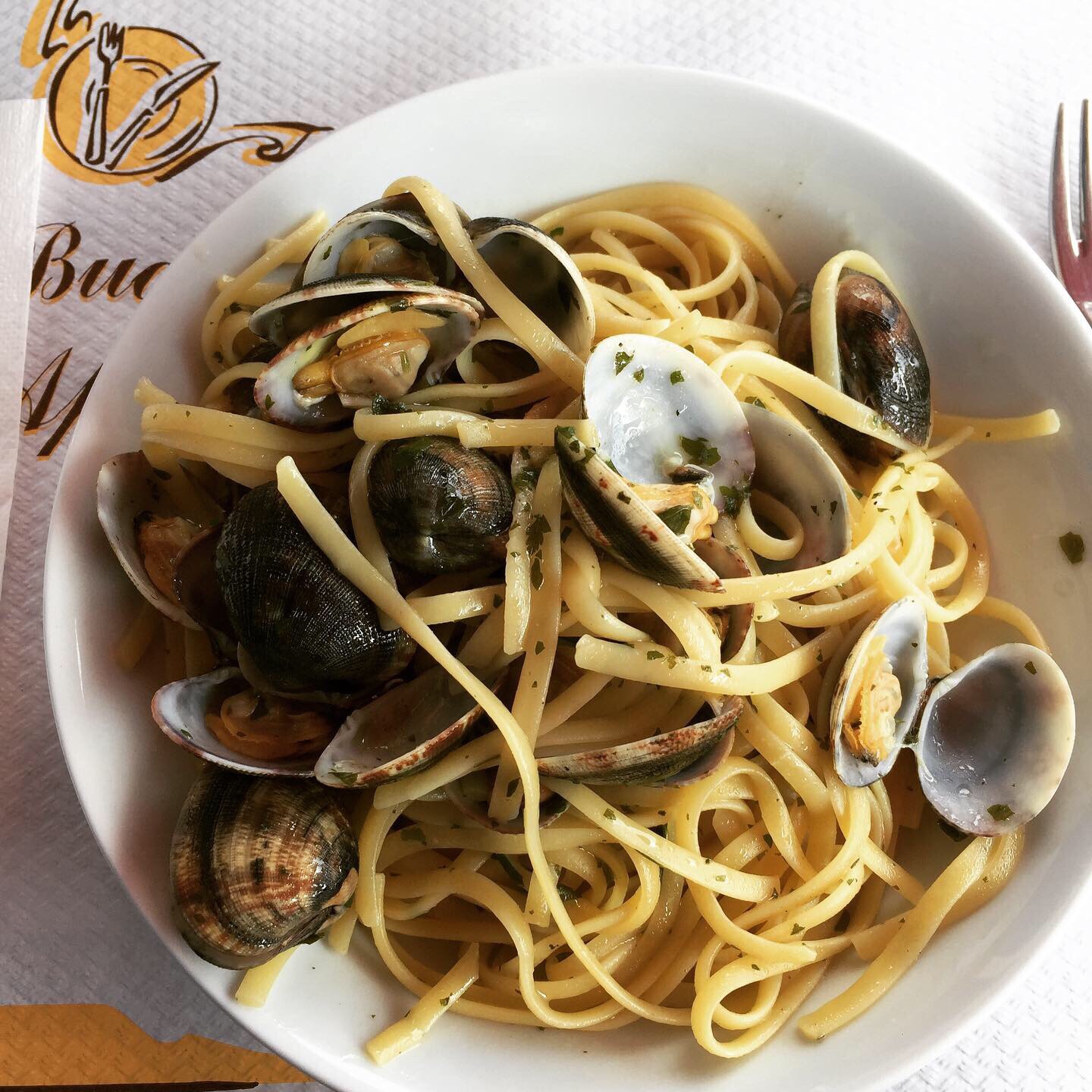
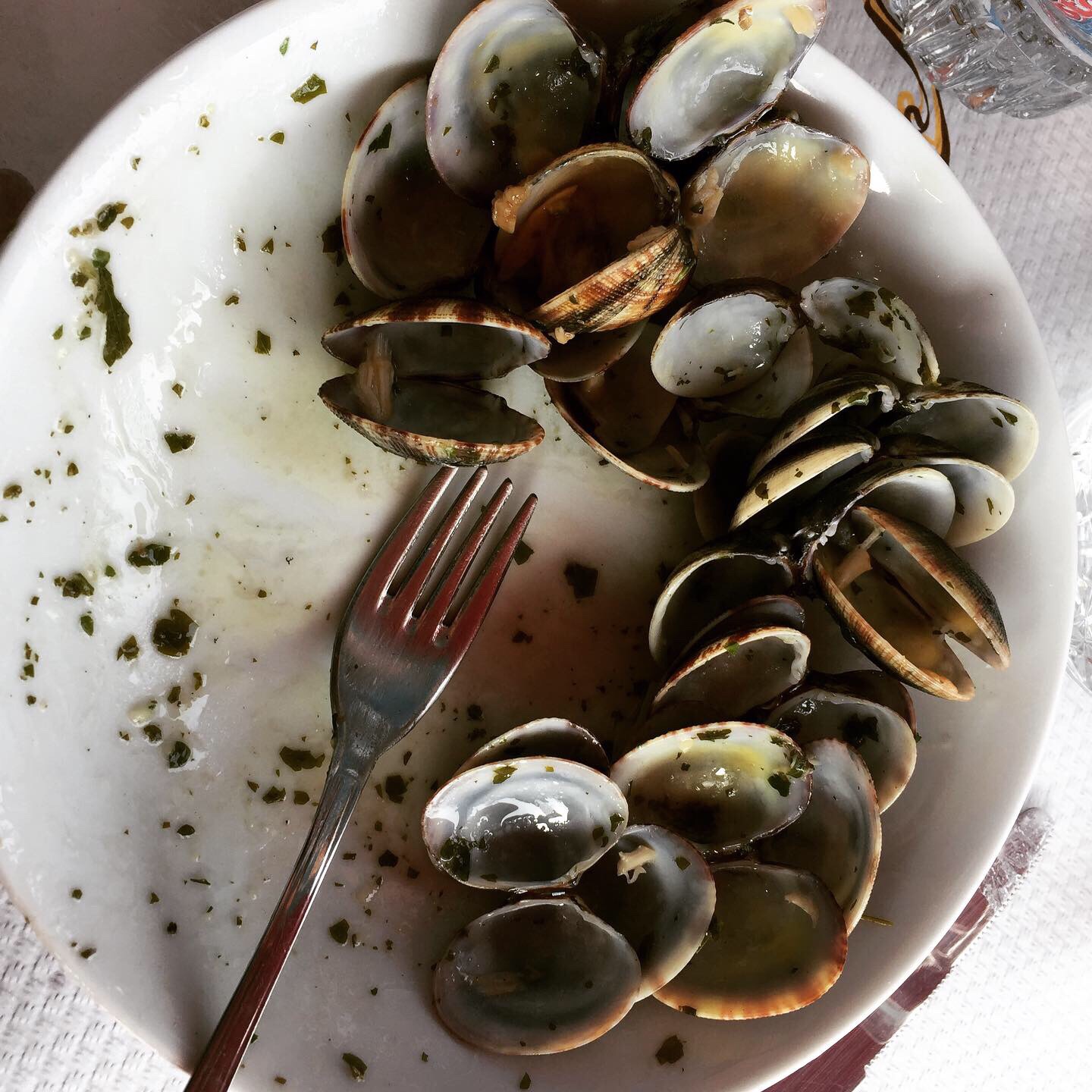
We did indeed find a small cafe for lunch and seafood was the featured fare. Who can resist fresh linguine and clams? Not me!

Before
And after

We continued to walk the back streets after lunch taking in the local flavor and colors.

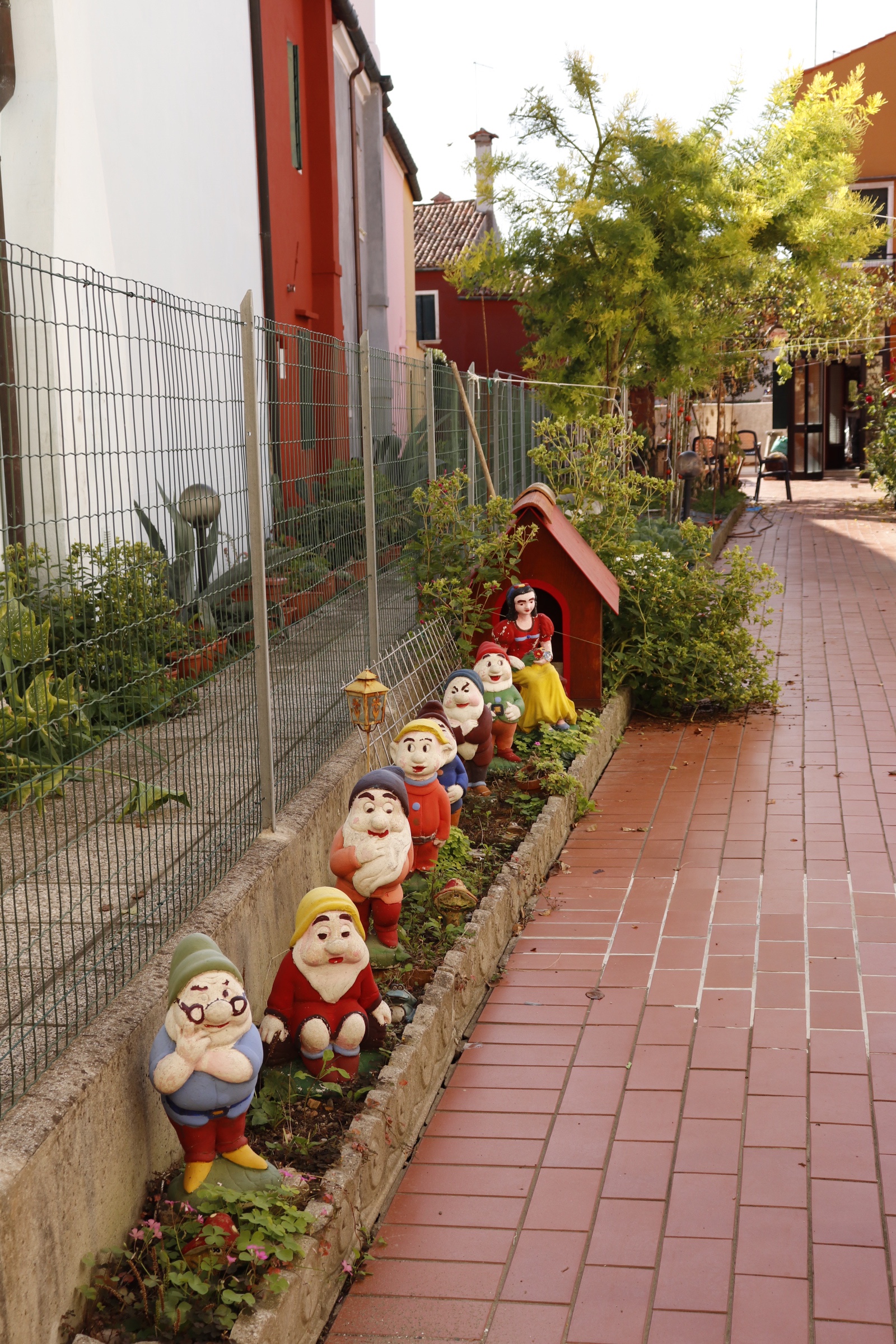
Snow White and the Seven Dwarfs live here
The colors and the light
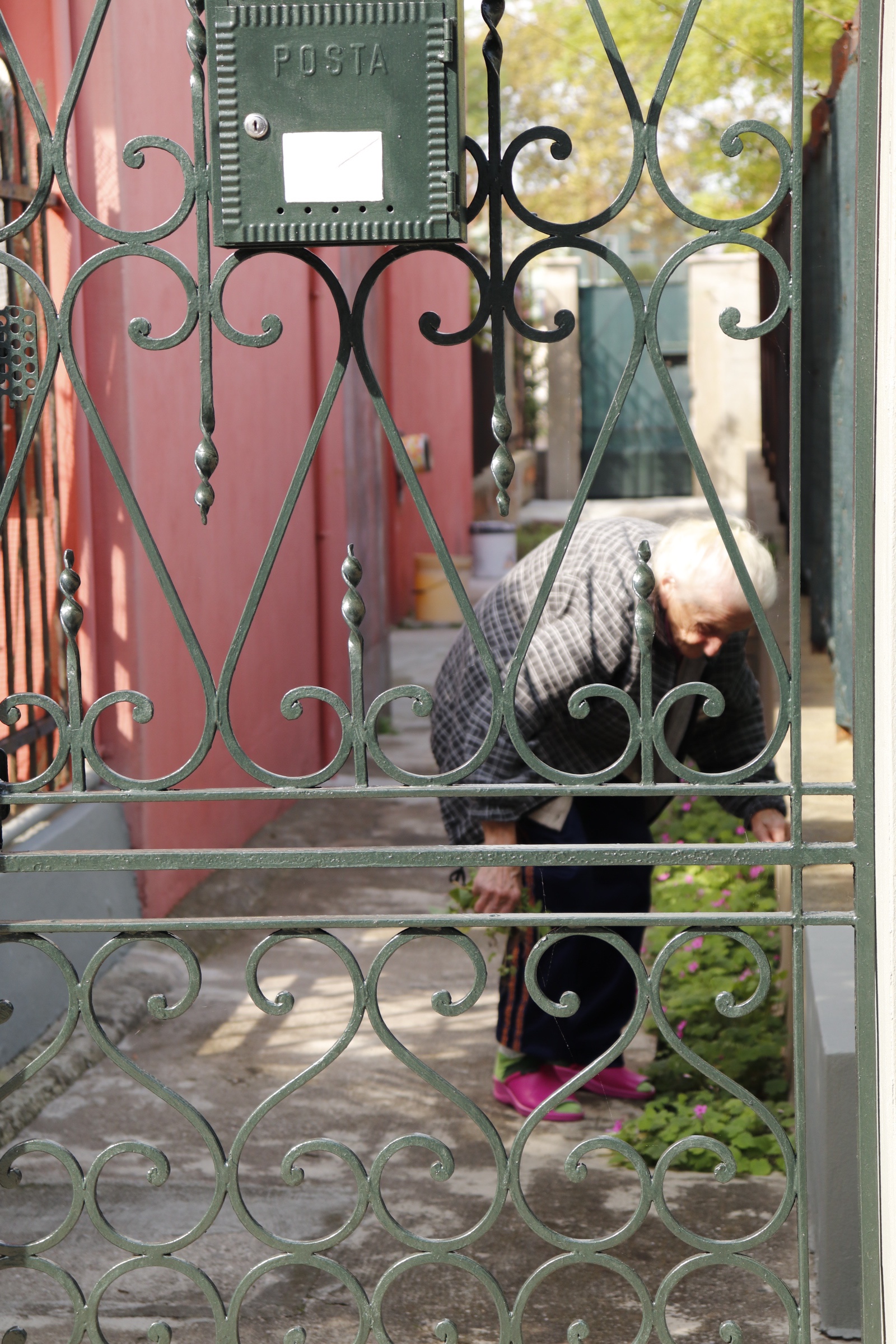
A Nonna tending her garden

It was s beautiful visit.

We caught the vaporetto back to the main island, stopped at the apartment to unload jackets and then headed out to find the Jewish Ghetto. This area of the Cannaregio was home to the Jews of Venice from the 16th to the 18th century. Once the location of a foundry, it was impoverished and overpopulated. The height of the buildings in this area speaks to the population and the word ‘ghetto’ as we now know and understand it was coined here. It’s quiet and without the shops and souvenirs. There is still a small Jewish population here and five active synagogues.

In the Ghetto
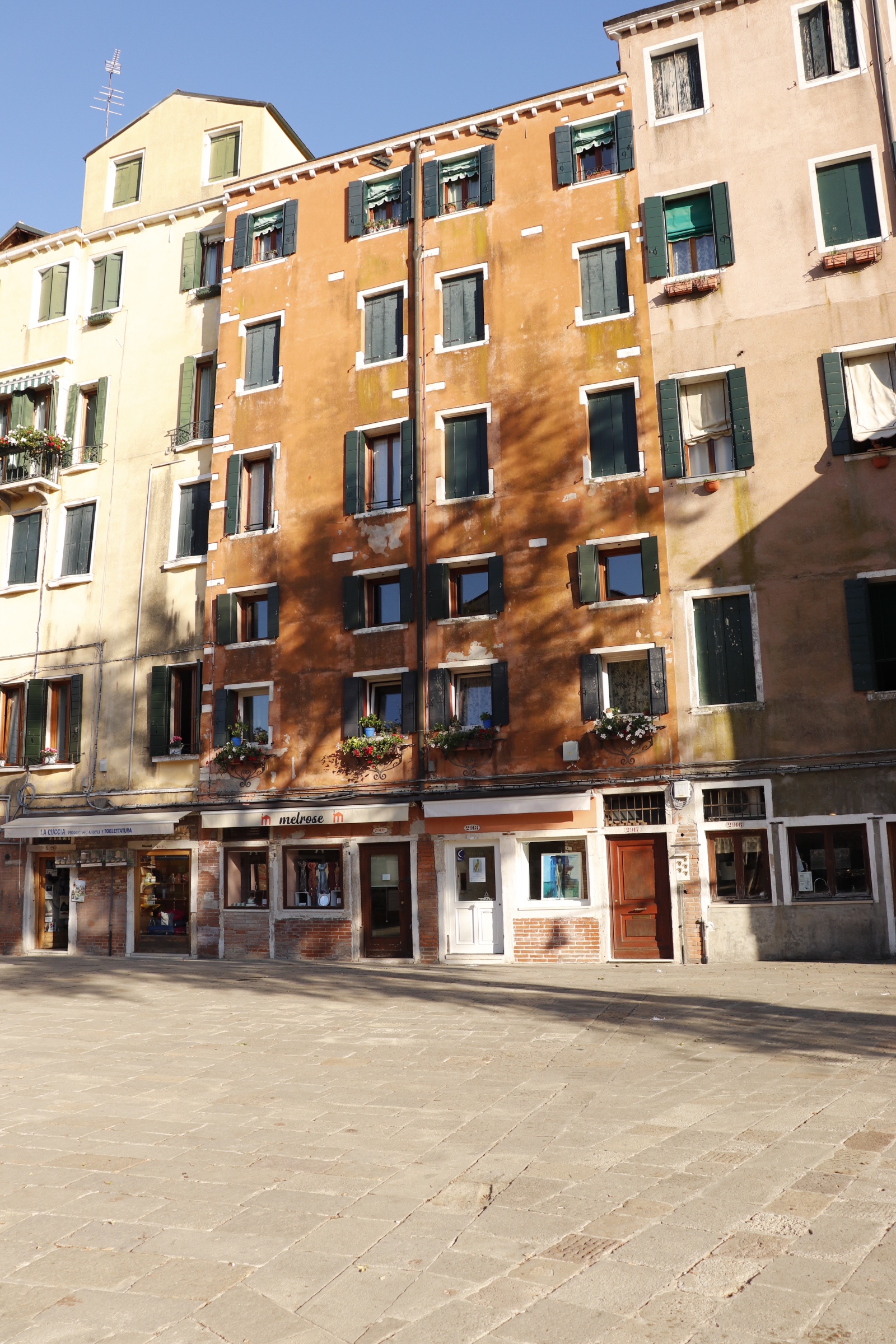
Buildings in the Ghetto

We have come to believe we can find our way around (maybe a misguided belief) and so ventured on. There is so much to see, digest, understand, that you could just wander the streets for hours observing.

We found ourselves near the chaos of the train station close to sunset. The light was so beautiful on the water and the city. A few last photos before heading home.

It doesn’t get old

We ate in, caught up on email and timed a conversation with Ali.

Ciao for now.

More Venice

We woke to a cooler and cloudier day. Often times better for walking. We had a 10 a.m. Free Walking Tour scheduled that met, of course, in another district (Dorsoduro). Our plan was to take the vaporetto, but we still allowed plenty of time. Vaporetto plan failed because the ticket vending machine required a ‘pin’ for our chip credit cards (a problem we have run into before with our ‘signature required’ cards).

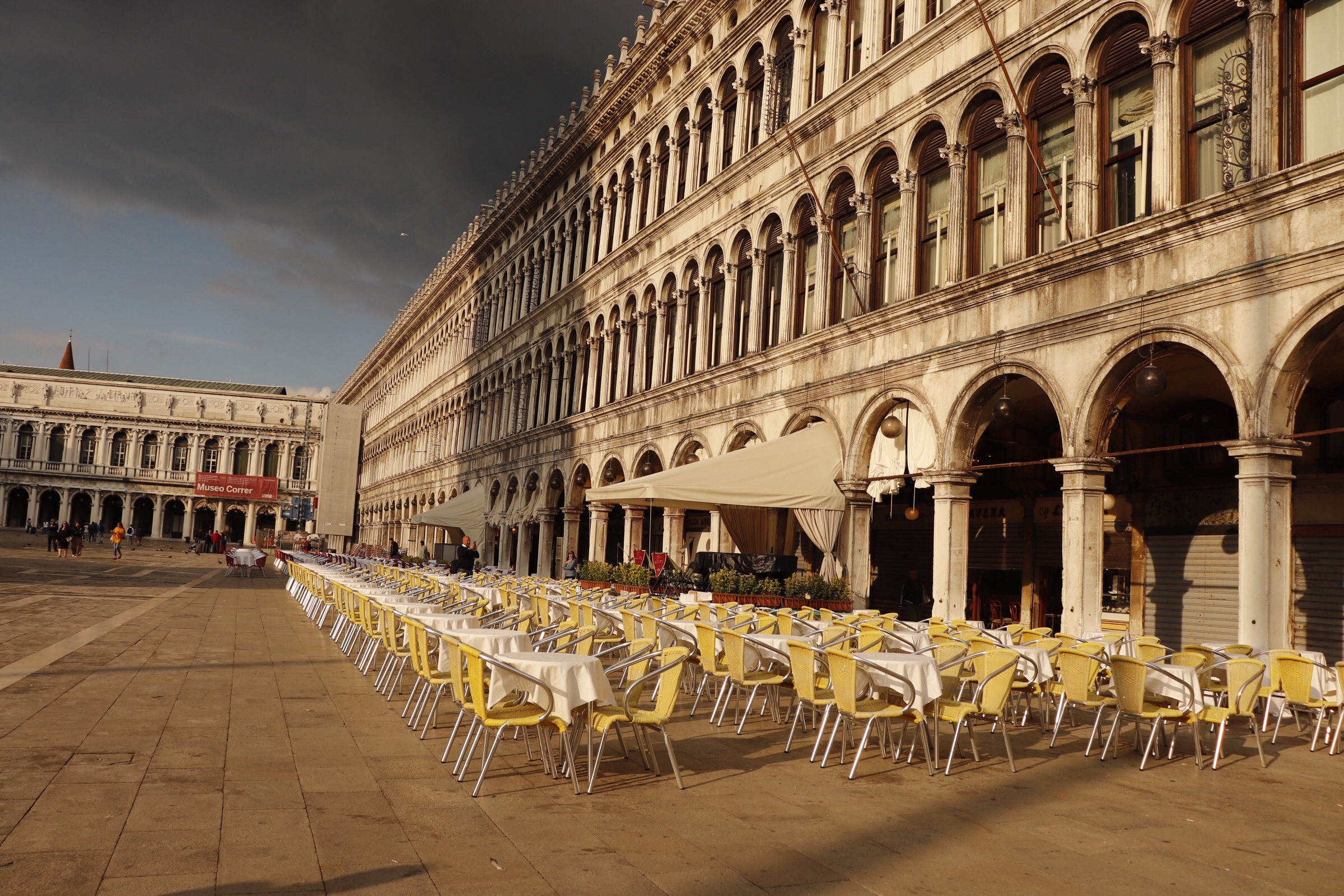
We scoured the map for the most straightforward walking route and decided going back to St. Mark’s (directional signs well placed) was our best bet. 8:45 a.m. on Sunday is definitely the time to be in St. Mark’s!

Waiting for customers

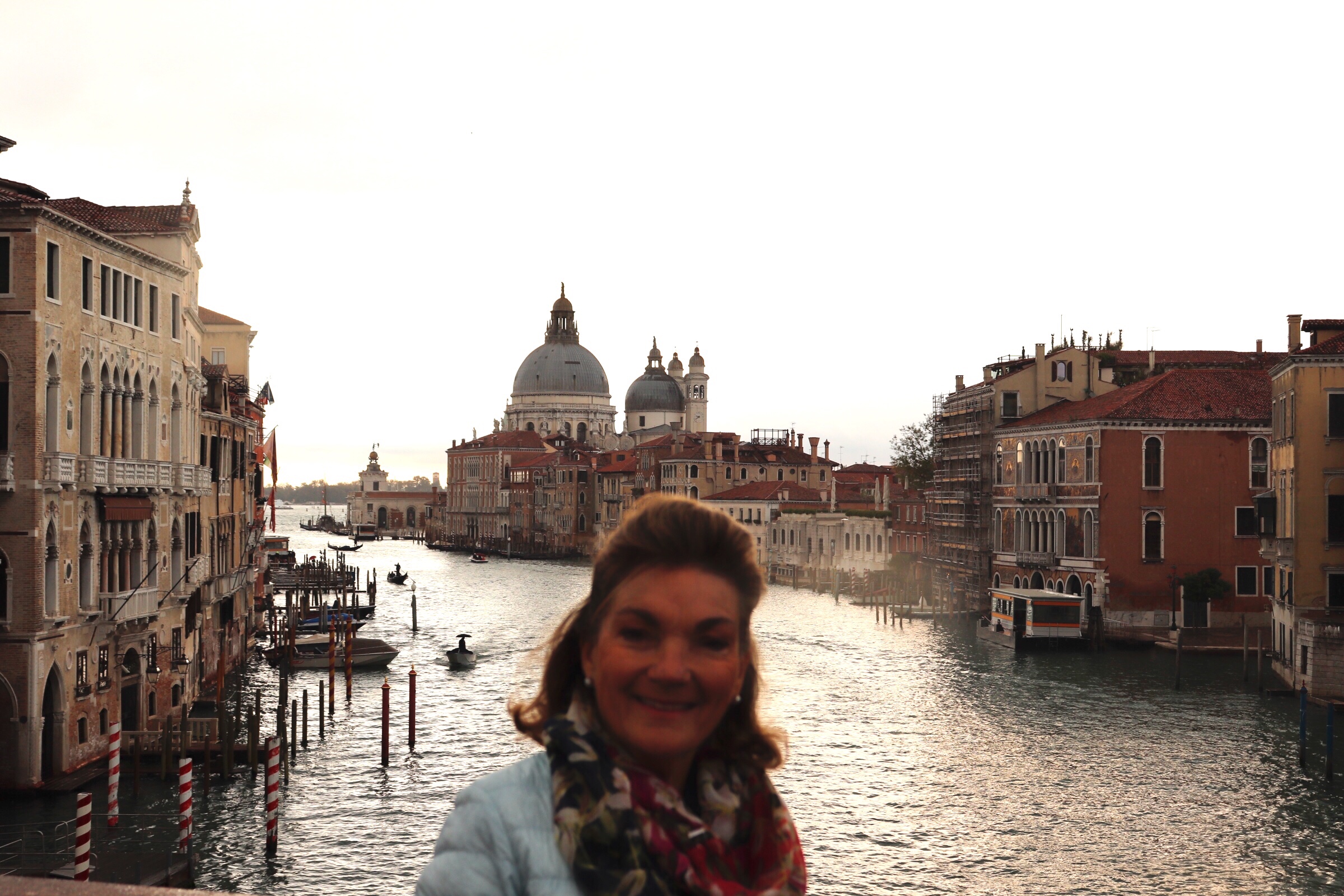
From here we used our newly minted navigational skills to get us to the Accademia bridge. Full confession, there were some signs for the Accademia posted on buildings too, but we still relied on the map and finding streets and campos to guide us there and were truly ‘fist bumping’ proud when we found it!!

Atop the bridge

The tour took us through the Dorsoduro district on the southern end of the island flanked by the Grand and the Giudecca Canals.

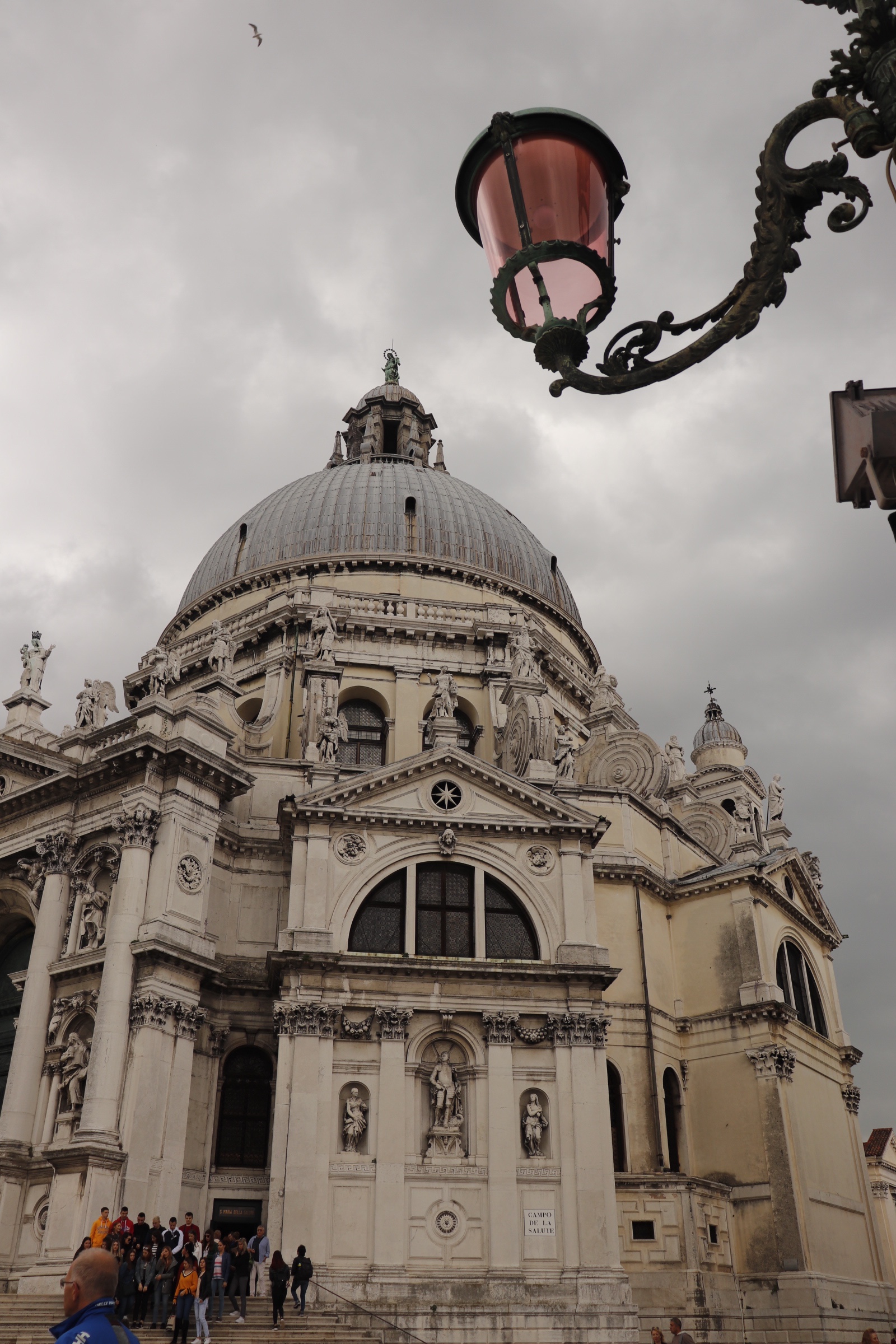
One of the first stops was the Basilica of Santa Maria della Salute (health) built in gratitude to the Virgin Mary for saving Venice from the plague in the 1600’s. Every year, on November 21, there is the Feast of the Presentation of the Virgin, where city officials and the faithful parade from San Marcos to the Salute over a temporary bridge built for the occasion.

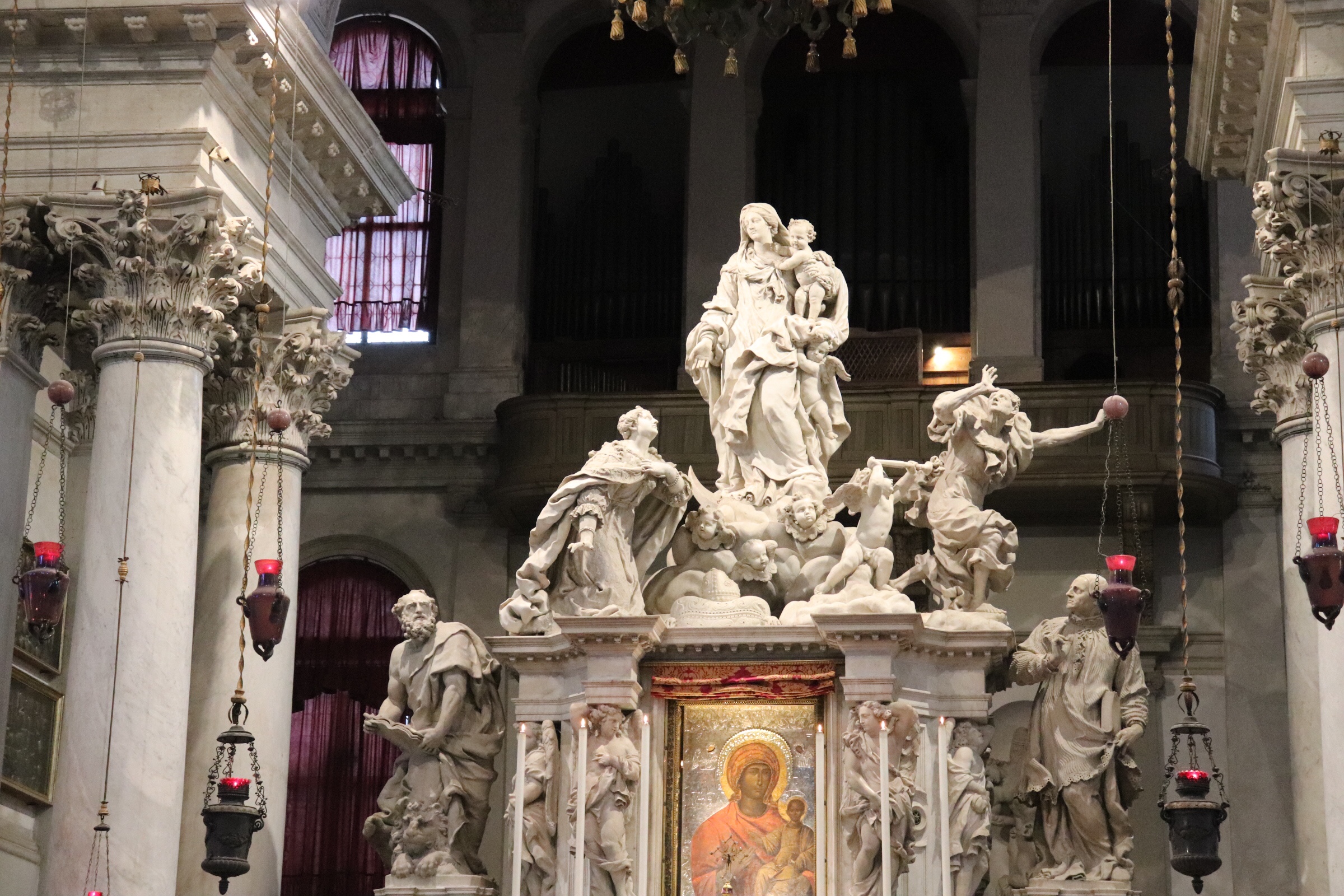
The volume of the interior held the sculpture depicting Venice (beautiful woman on the left) pleading to the Virgin Mary (center) while ugly hag (right) depicting the plague is being defeated.

Venice (left) pleading to Virgin Mary (Center) to defeat the plague (hag on right)
Santa Maria della Salute

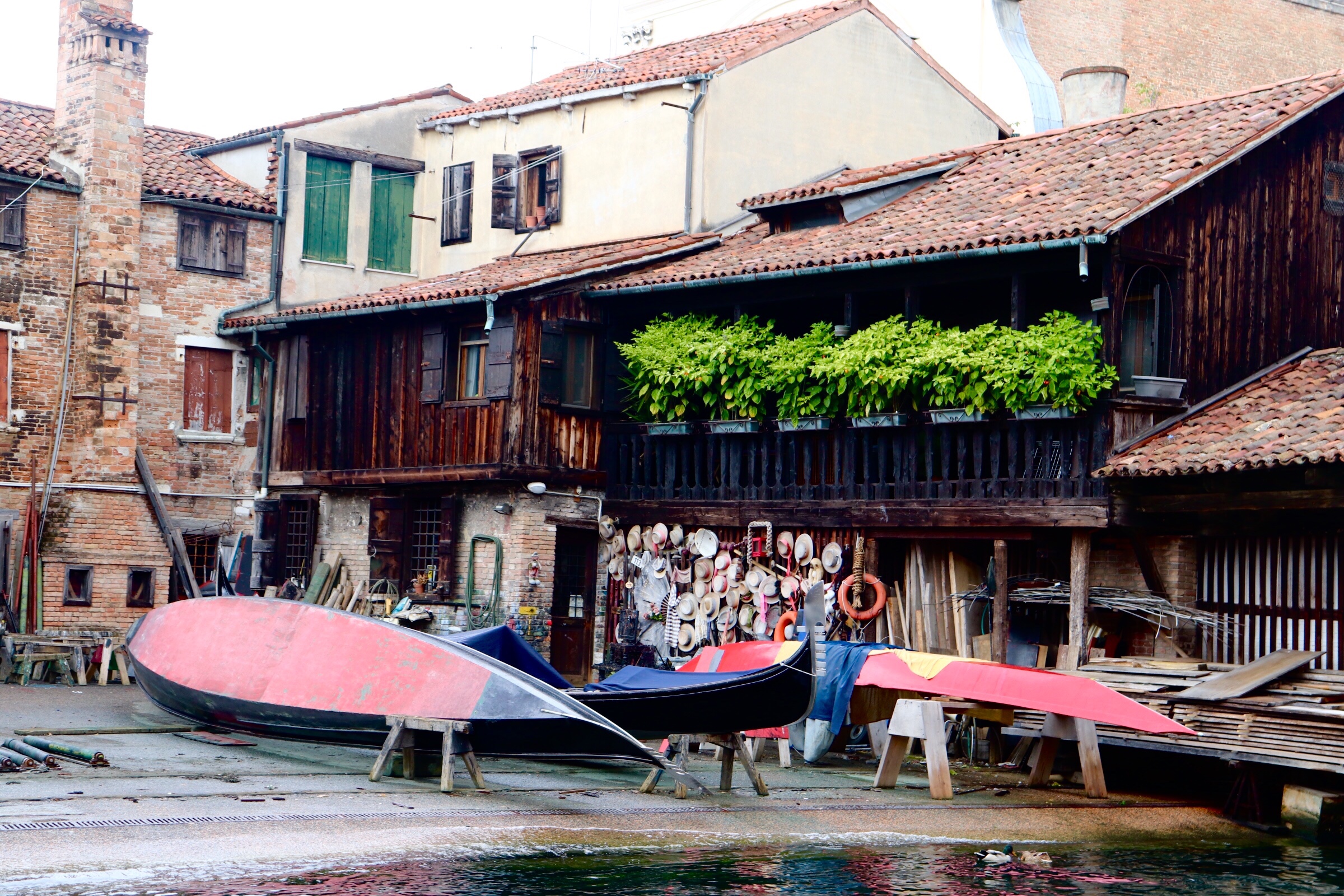
From there we strolled along the Giudecca Canal side of the island. In the past this area was home to warehouses for salt (Venice was the largest exporter of salt, ‘white gold’, in Europe). It was also where the gondolas were (and still are) built.

Boat building yard

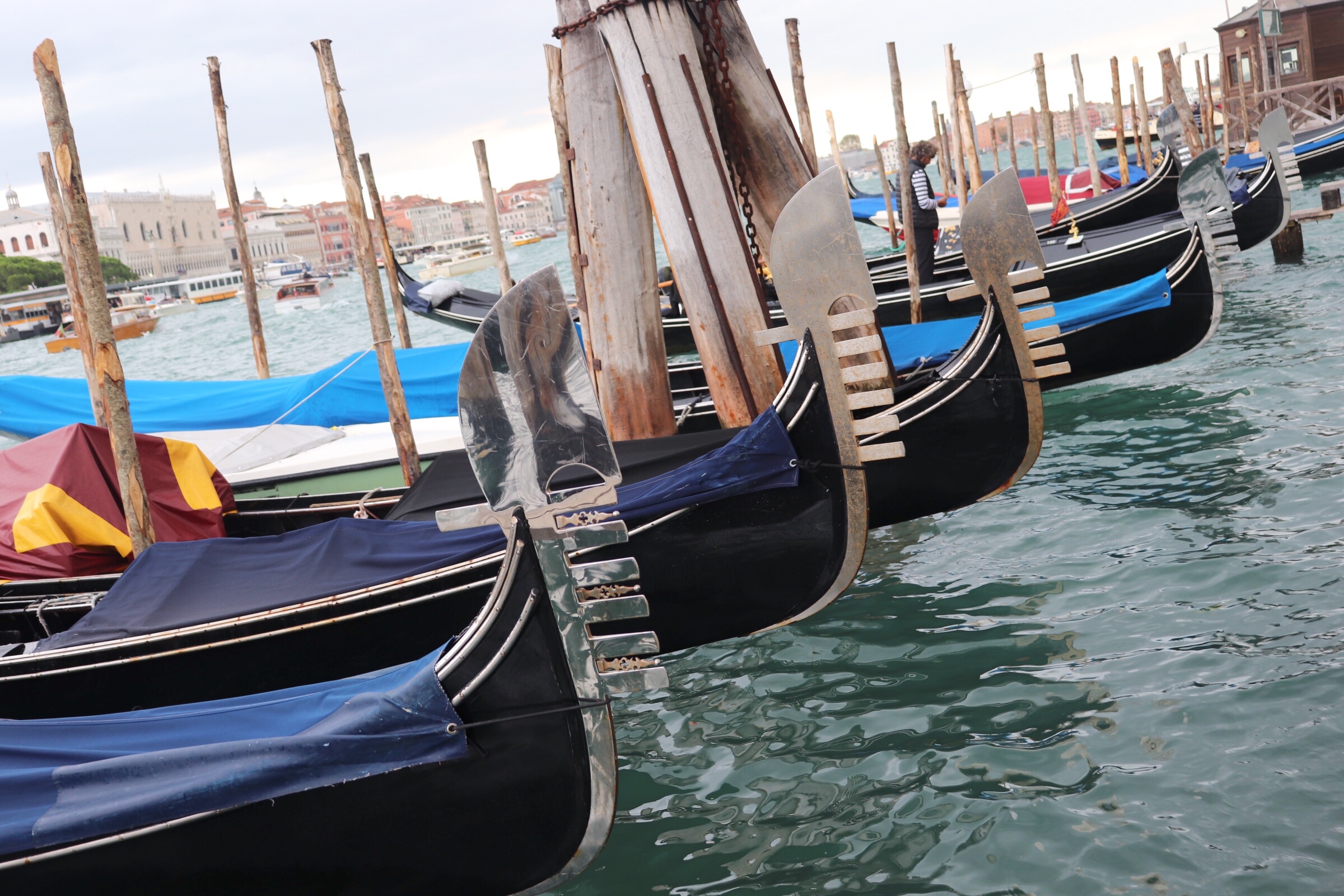
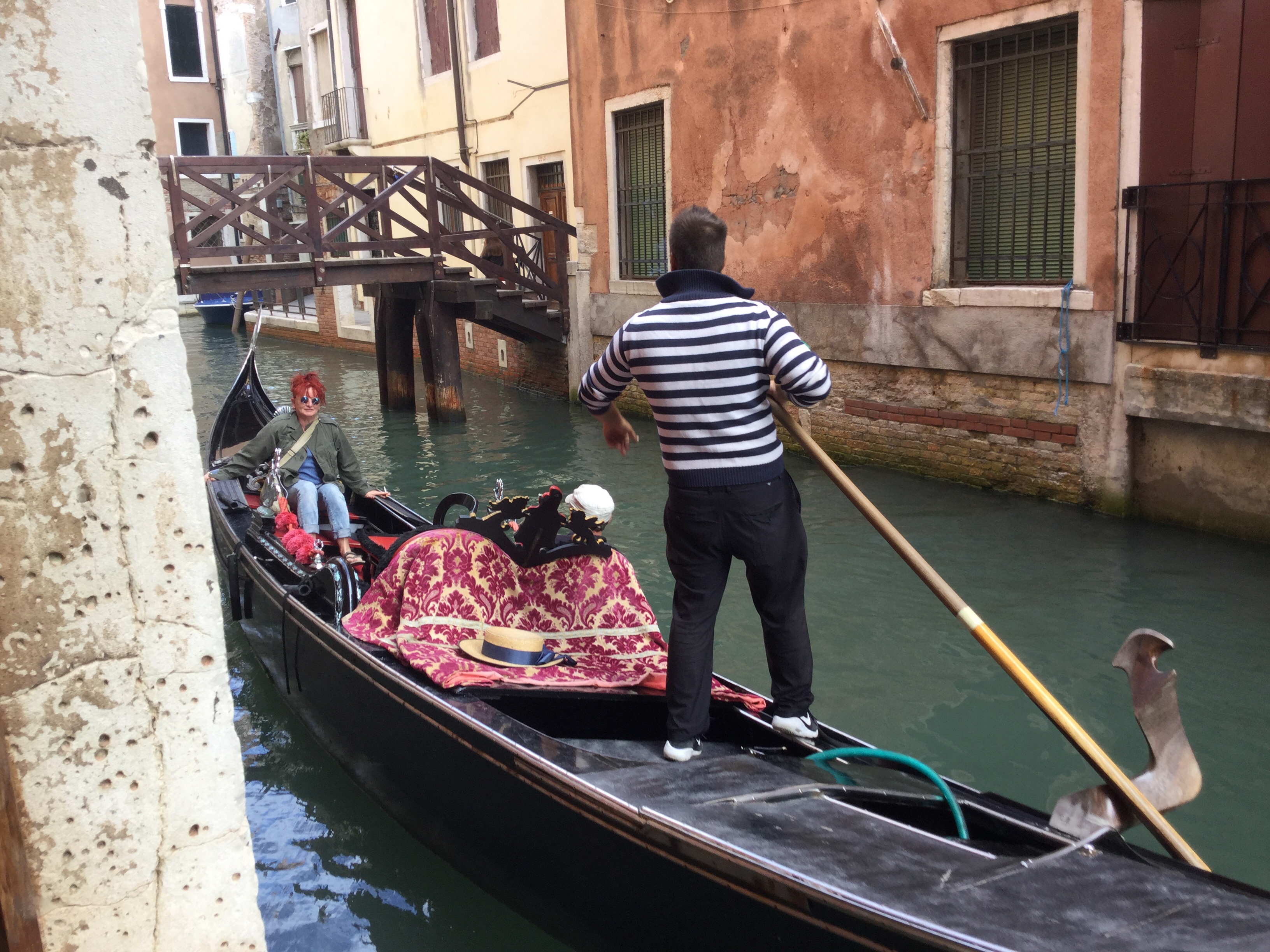
The prow head of the gondola is weighted to counterbalance the weight of the gondolier and is in the shape of an “S” to represent the curves of the canals. The six “teeth” facing out represent the six districts (sestiere) of Venice. Some prow pieces have an additional three icons between the teeth representing the three islands – Murano, Burano and Torcello. The one tooth facing the gondola represents Giudecca.

Gondolas and their prow heads

The tour concluded back at the Accademia, and our desire to visit the Galleries was doused when we saw the long queue! Lunch was in order. We wandered the back alleyways in search of an ‘off the beaten path’ place. We watched a waiter begin to set up outdoor tables, but it was still before noon and they weren’t officially open. We killed a little more time and we’re back when they rolled up the metal door!

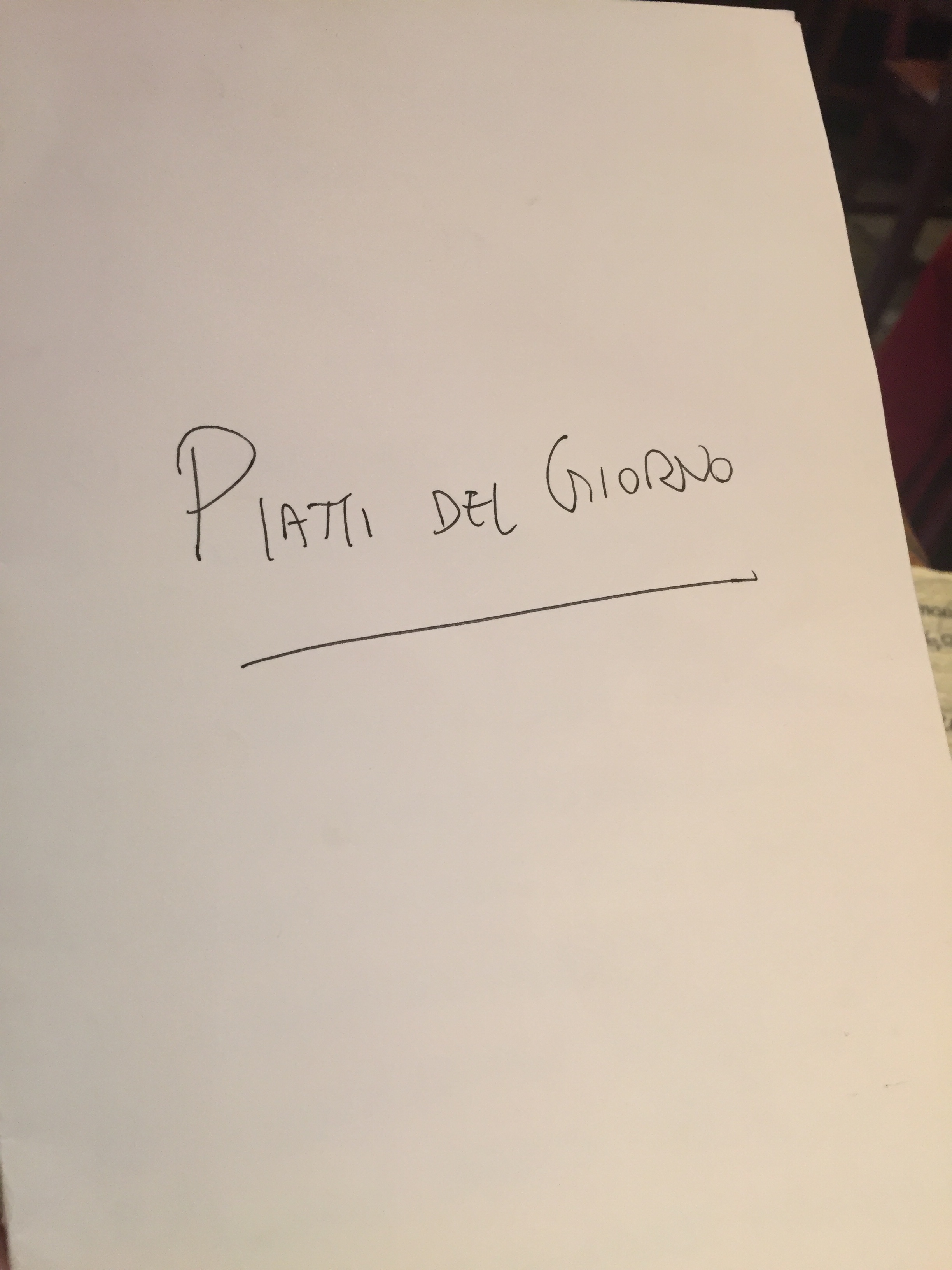
Who doesn’t love a place with a had written menu?

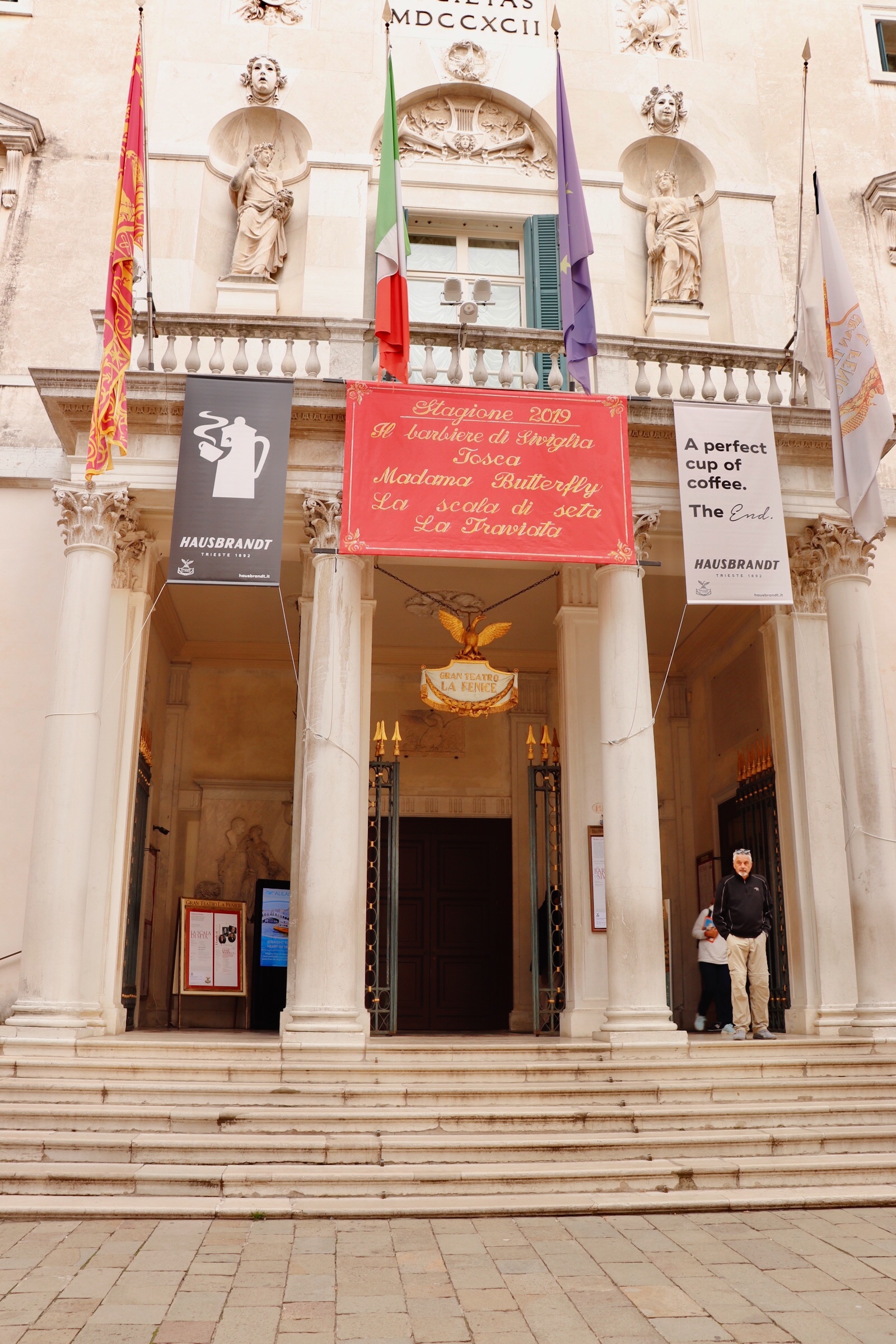
After lunch we went in search of the Opera house and we found it (our navigation was getting good!). However, because it was Sunday, it was closed.

The Opera House (and Tom)

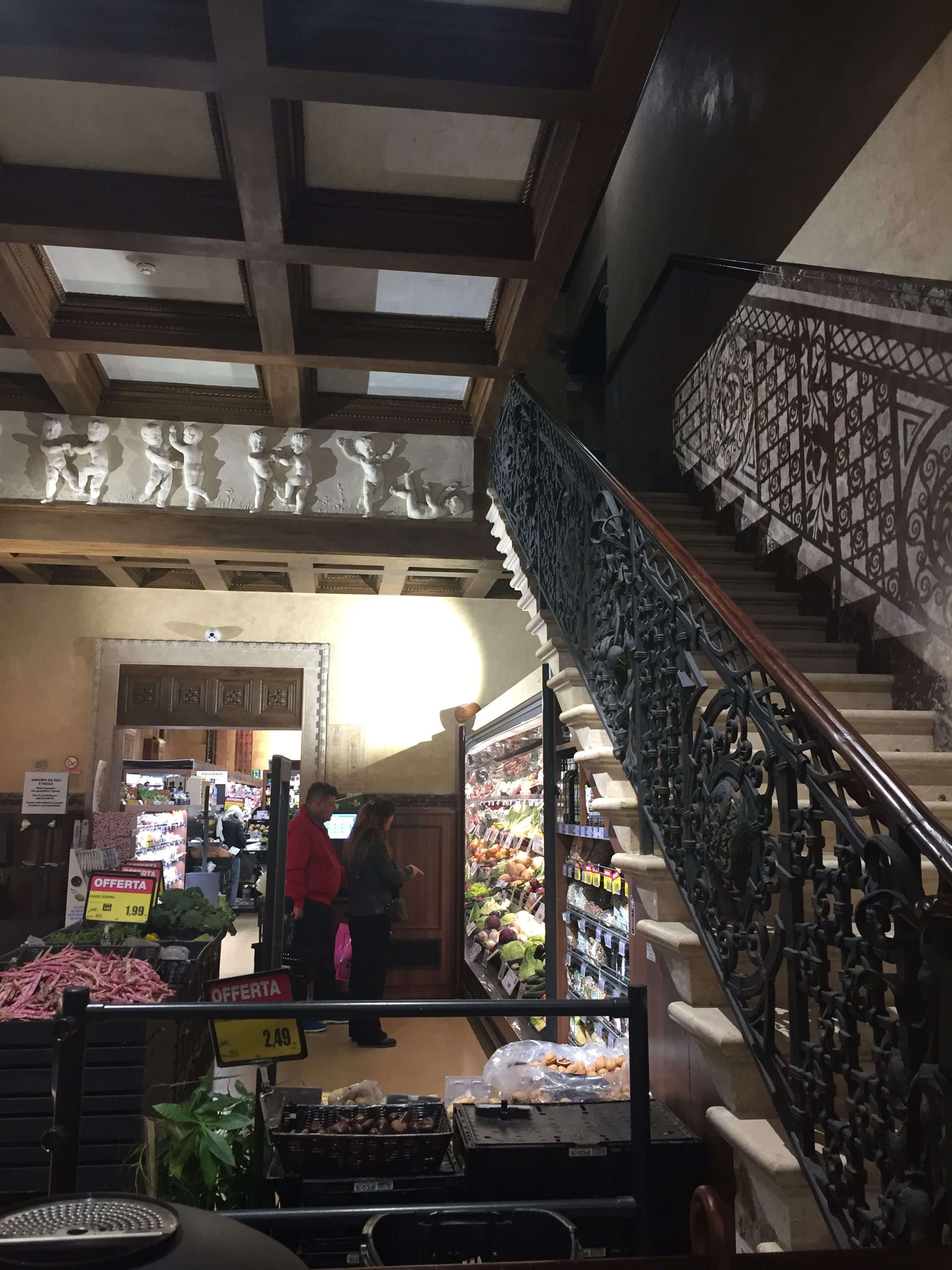
We headed back home for a nap, stopping at the market for a few things for dinner.

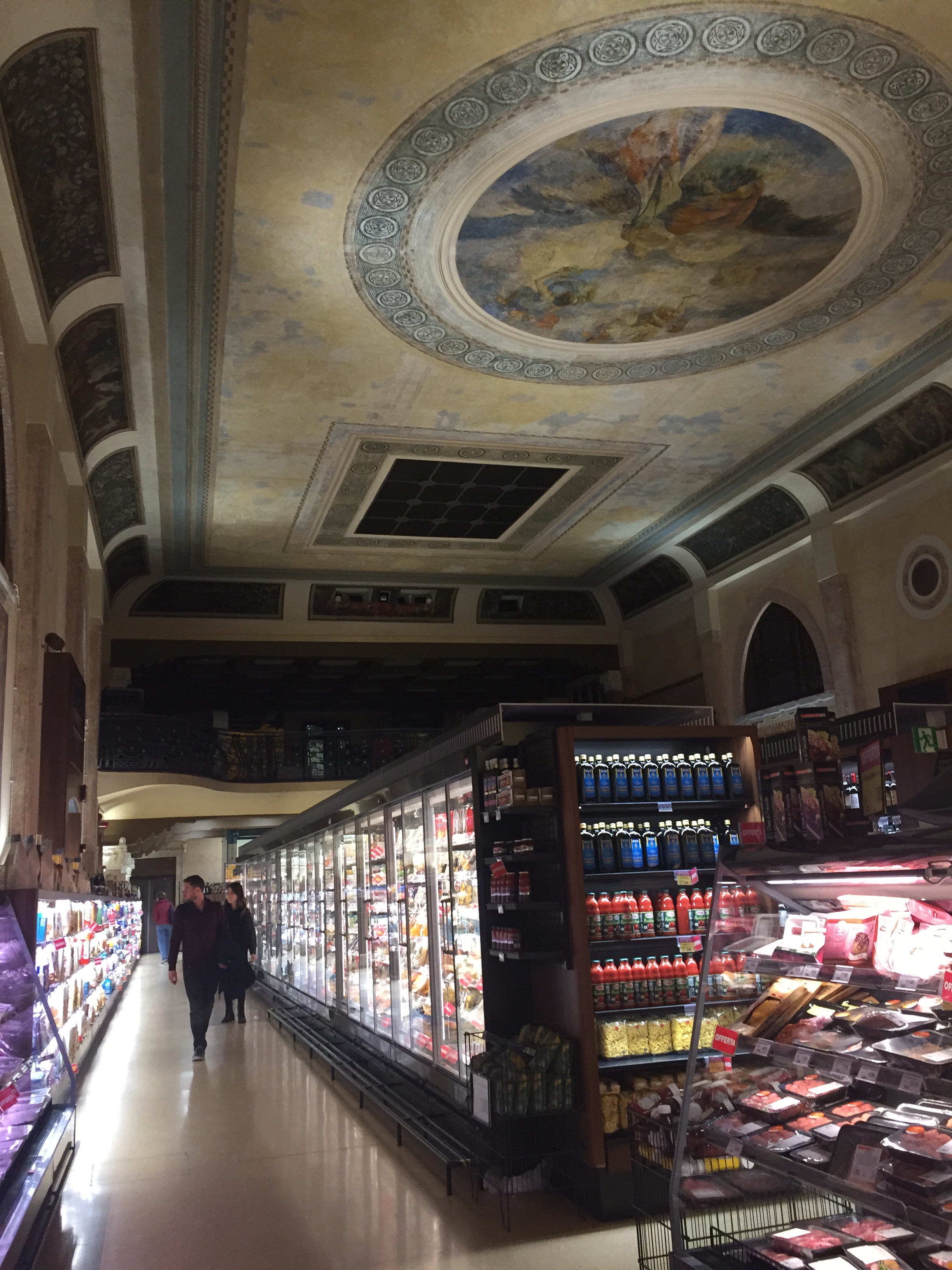
Leave it to the Venetians to turn a theater into a market
Teatro Italiano

We made dinner at home and enjoyed an evening in. Later in the evening we strolled the neighborhood which was surprisingly lively for a Sunday night, and made a ‘timing run’ to the train station. (We have to be there at 6:00 a.m. on Wednesday morning!)

¡Bella Venezia!

I love waking up in a magical place. It doesn’t get much more magical than Venice. The ancient city and her history, her neighborhoods, her families and her perseverance to thrive.

We allowed ourselves a lazy morning enjoying the movement of people and boats out our window. We had breakfast at home, caught up on news from home – Chloe Layne Gibson arrived sometime in the night/morning? (the time zones continue to baffle me) and Tombo, Janette and baby are all well. Girls are in Nashville and Orlando respectively and all going well.

Our first commitment was a photography class/tour at 3:30 p.m. This will be the second time I have signed up with a local photographer for shooting tips, tricks and off the beaten path locations. We agreed to meet Sara in the Castello sestiere, which was about a half an hour’s walk from us. Without WiFi and navigation capabilities we allowed ourselves 2 1/2 hours to find her!

Hitting the streets in the Cannaregio

I had put the location in Google maps and then “screen shot” the turn by turn directions which got us as far as the San Marco sestiere, then it all broke down! Plan B was to follow the signs and the crowds (it was Saturday in Venice) to St. Mark’s Square. From there we knew we could follow the waterfront to the Giardini location.

It was madness and fun at the same time. Once out of St Mark’s the crowds began to thin and the walk became more pleasant.

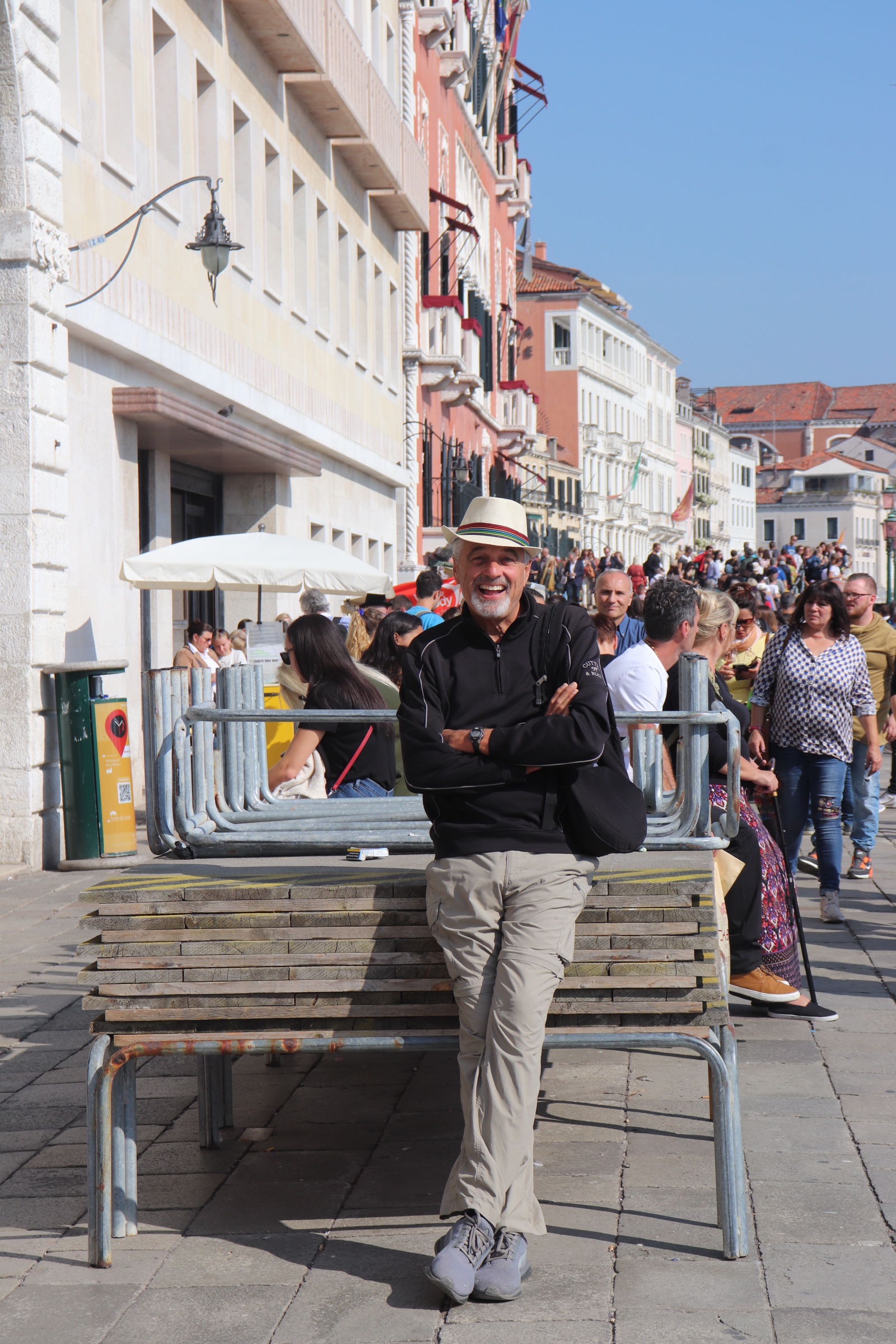
Thank God Tom wore his hat so I could spot him!
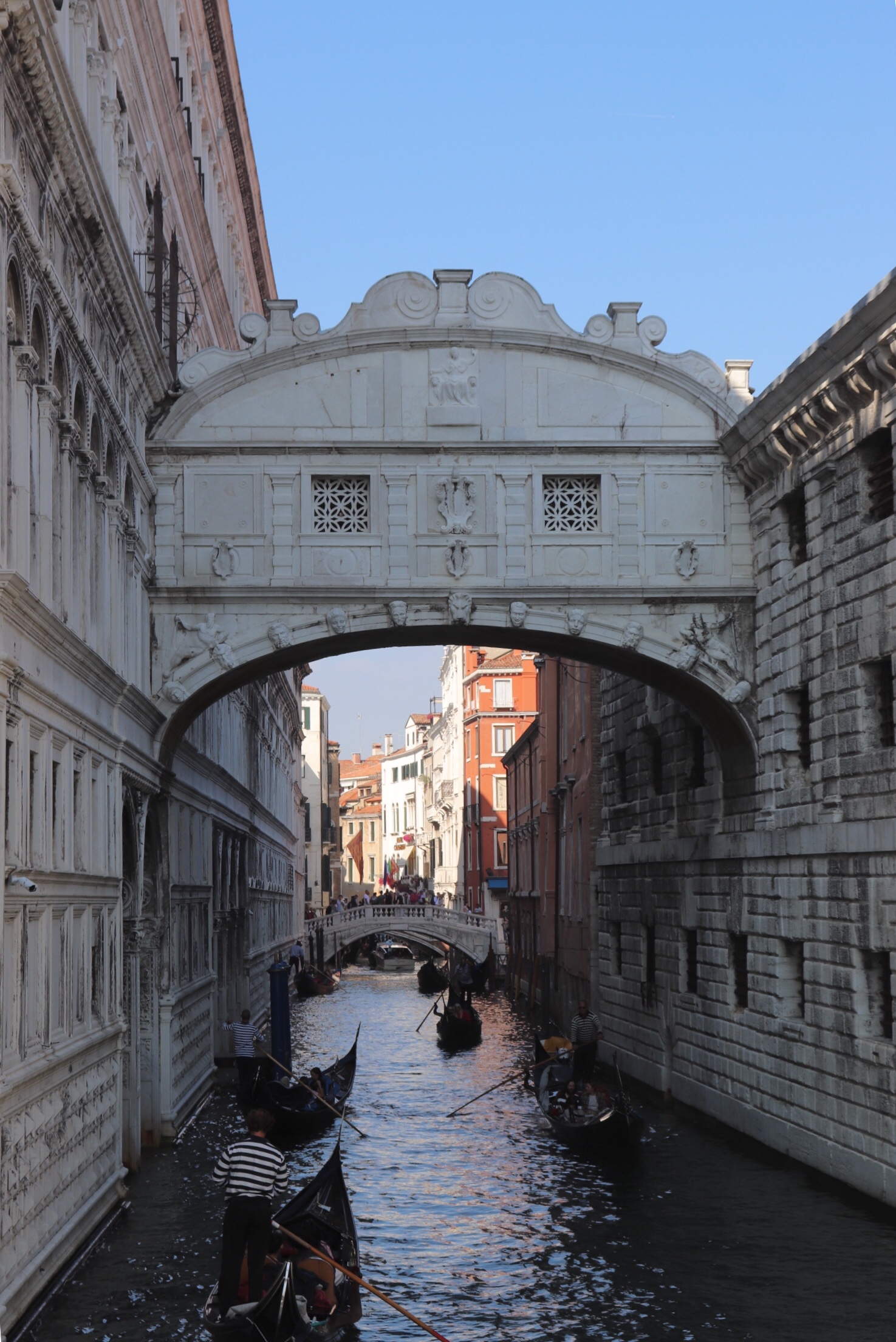
The Bridge of Sighs, The Doge’s Palace

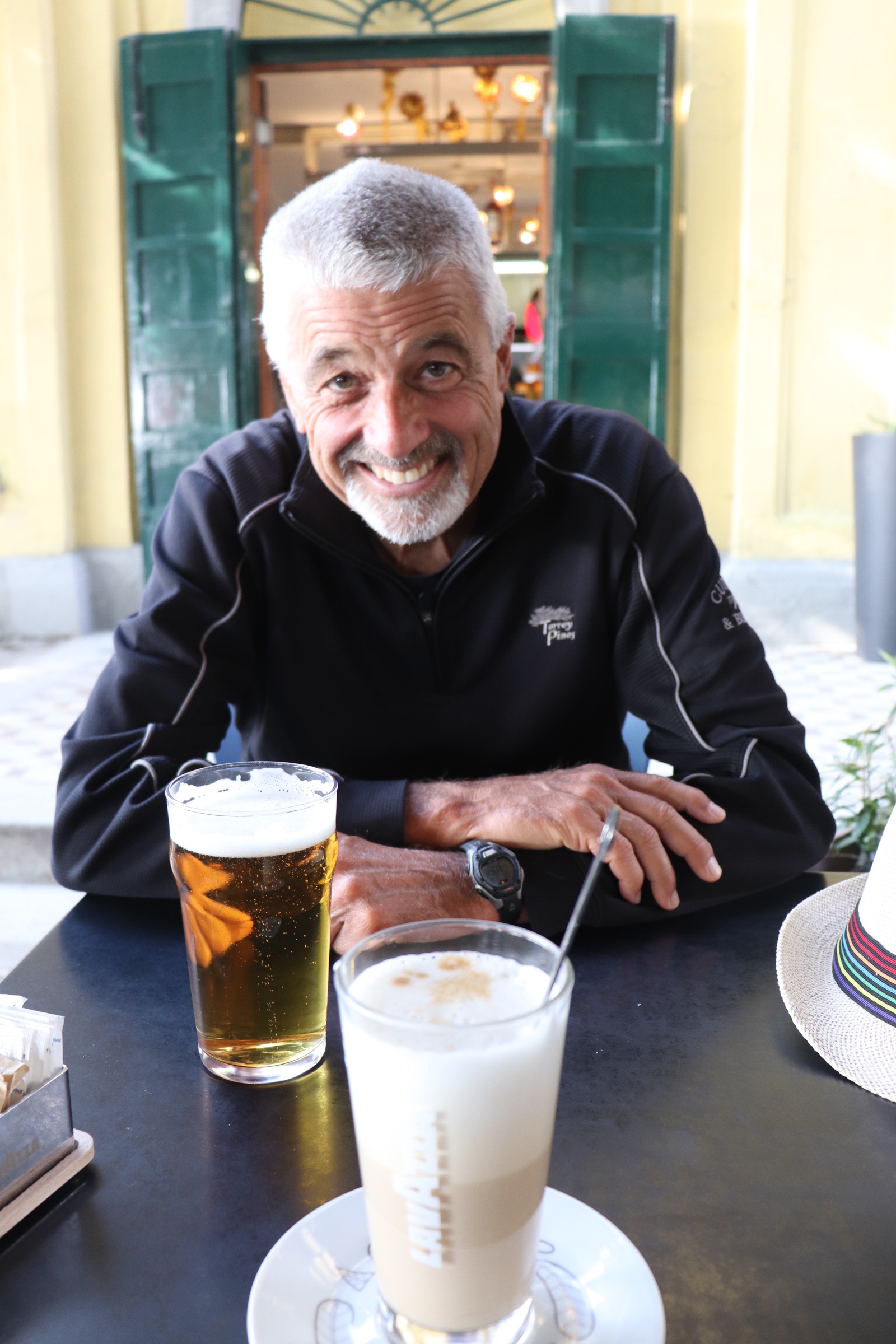
We actually arrived about 45 minutes ahead of schedule and took the opportunity to have refreshments and a rest.

A beer and a latté

We met Sara at our appointed time and place and headed into the neighborhoods. She’s a professional wedding and portrait photographer from Estonia that comes to Venice every year for ‘the season’ to work. Because she has an eight year-old daughter, that ‘season’ is now the school year.

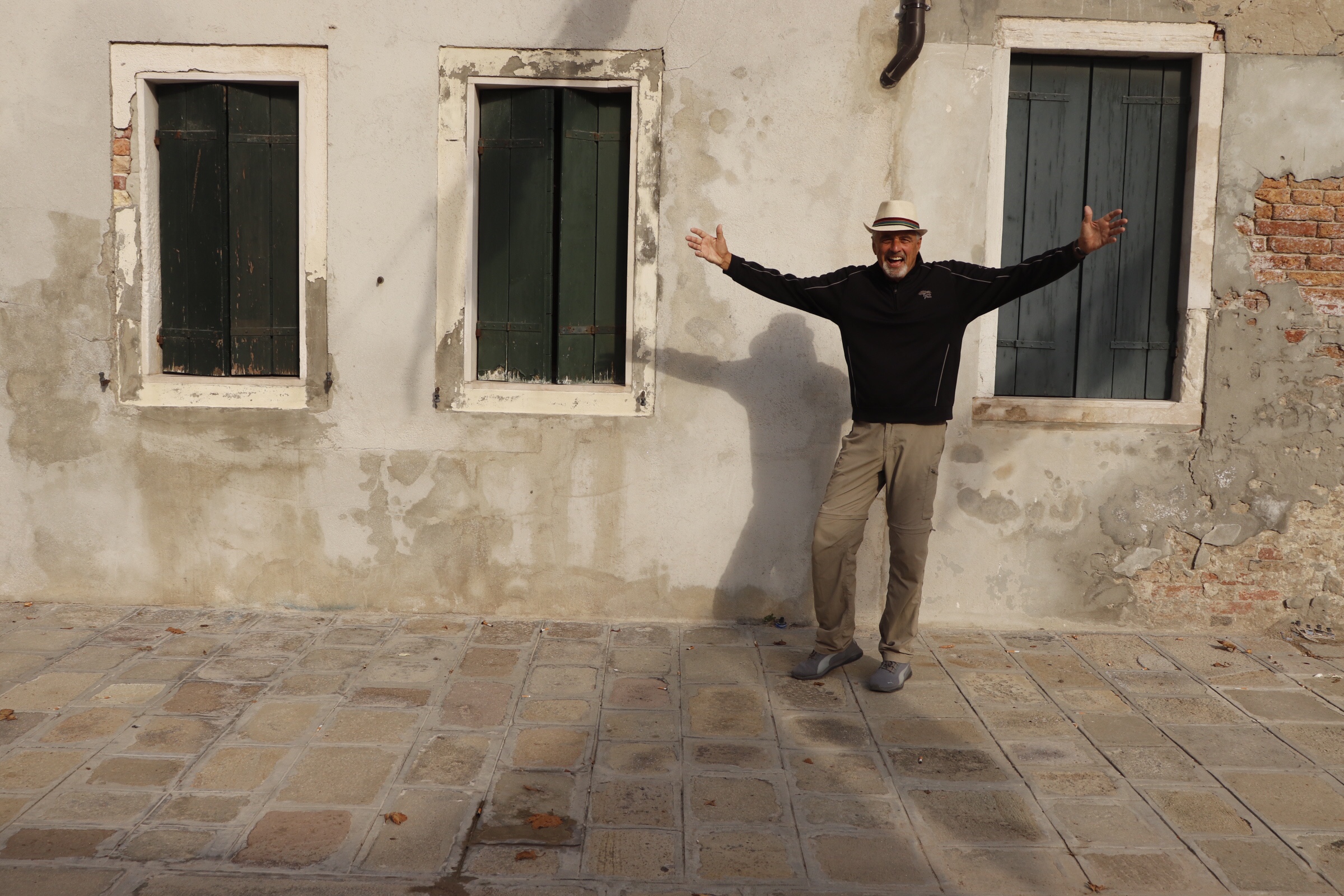
We walked the canals and streets of the Castello as she instructed me on light, composition, framing, etc. we used Tom as a model. I learned so much!

Framing, light, shadows – – –
Street photography with locals
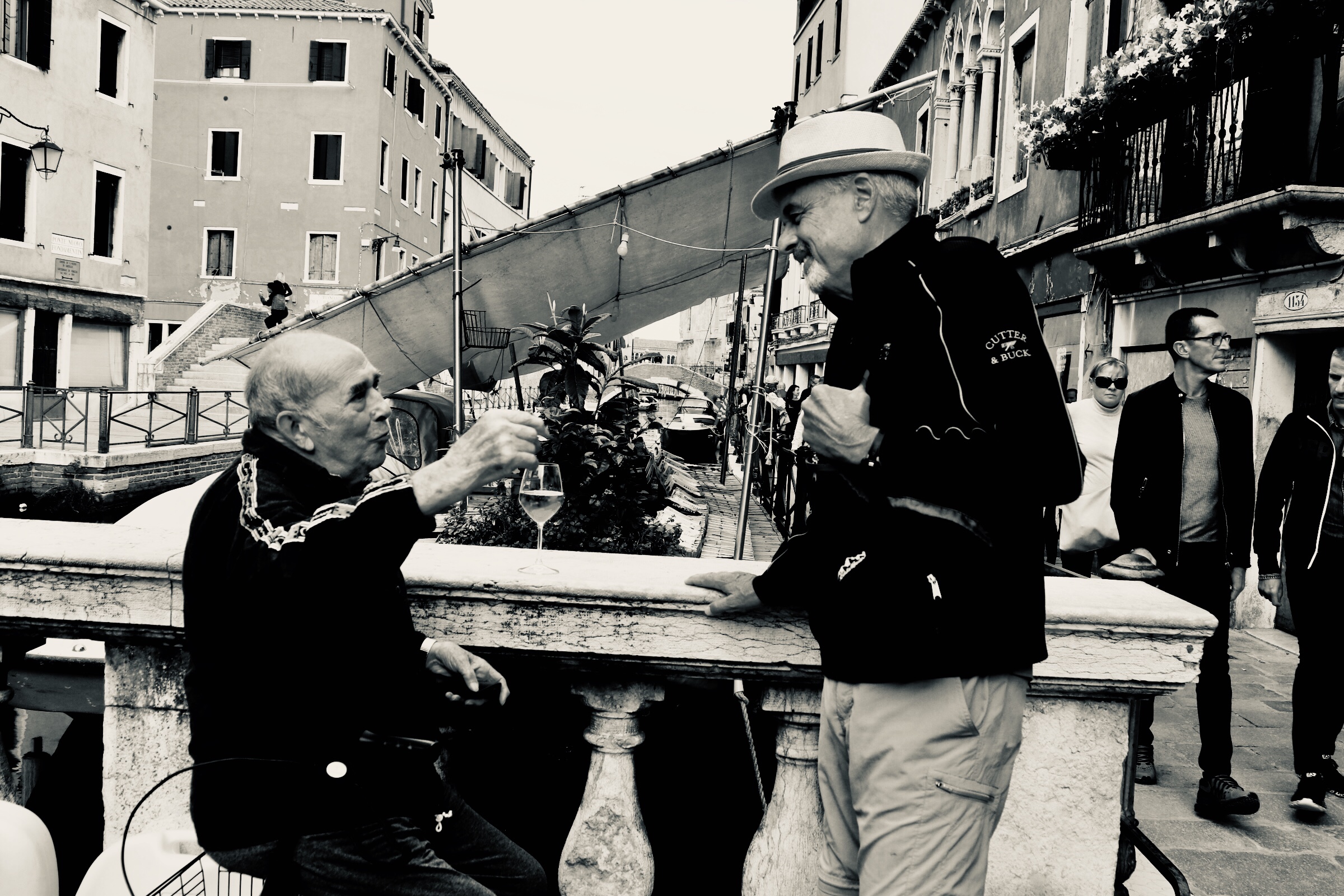
Old men talking in two languages!
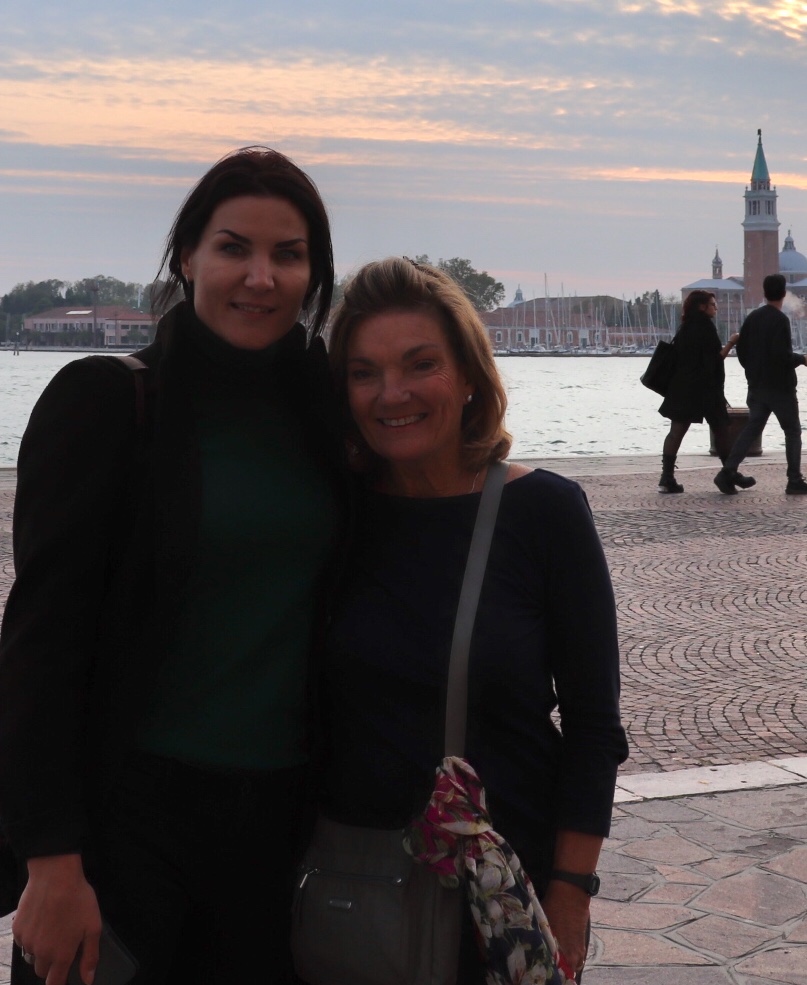
Sara and me

We ended our session near sunset and said our goodbyes. After all of our walking we decided to take the Vaporetto home. It was a good choice for a couple of reasons – – – not walking and the views from the water!

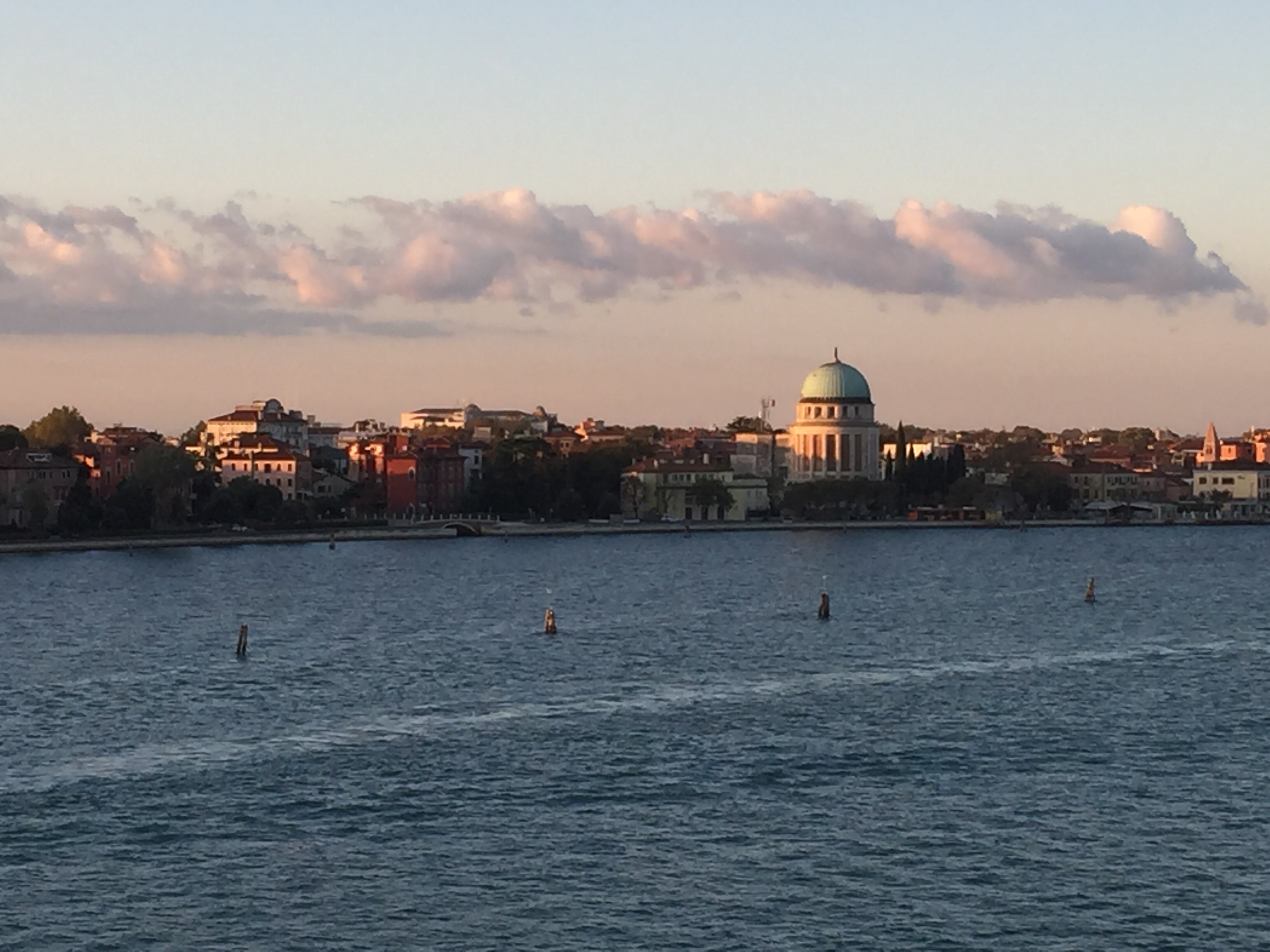
Sunset in Venice
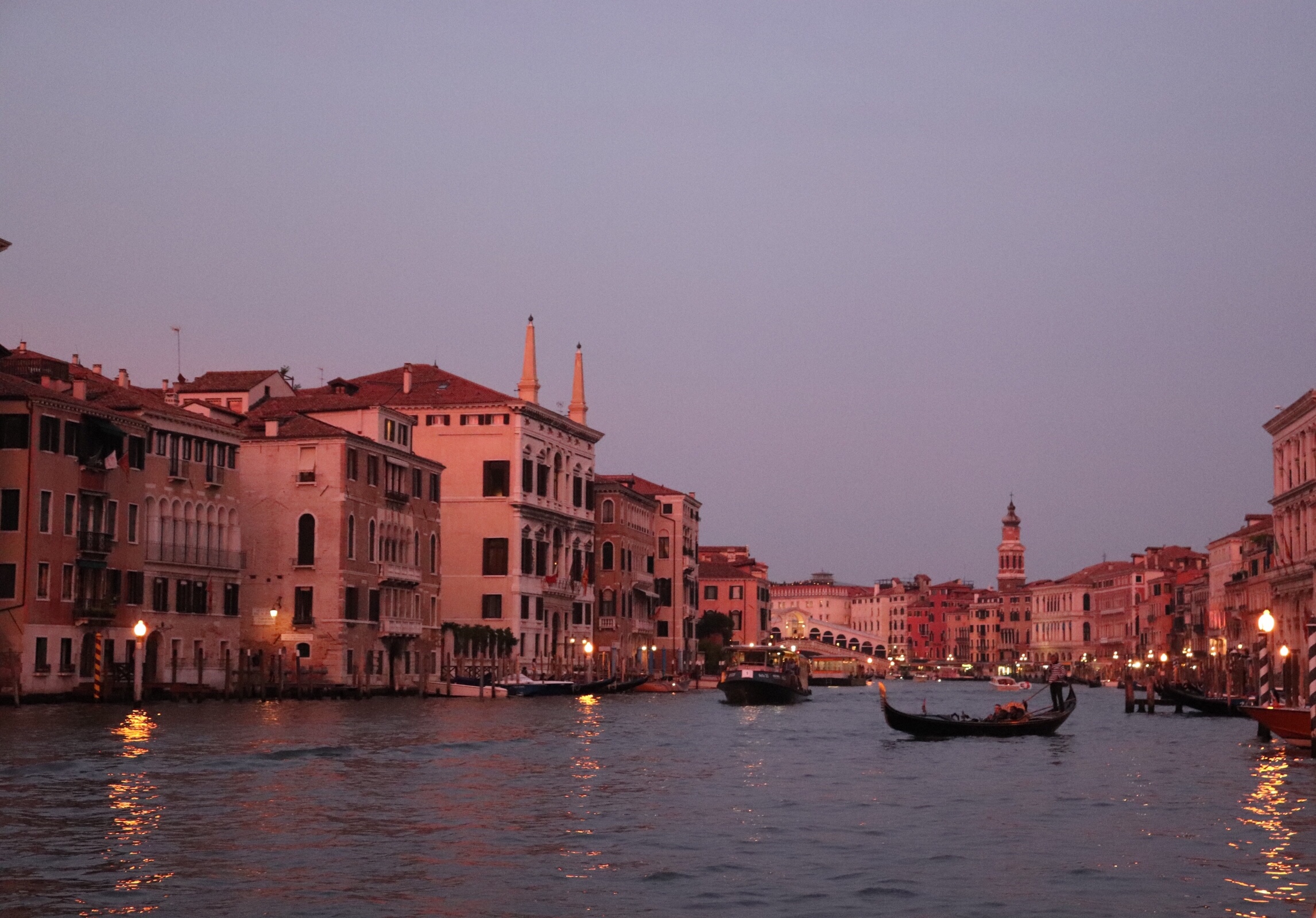
Twilight on the Grand Canal
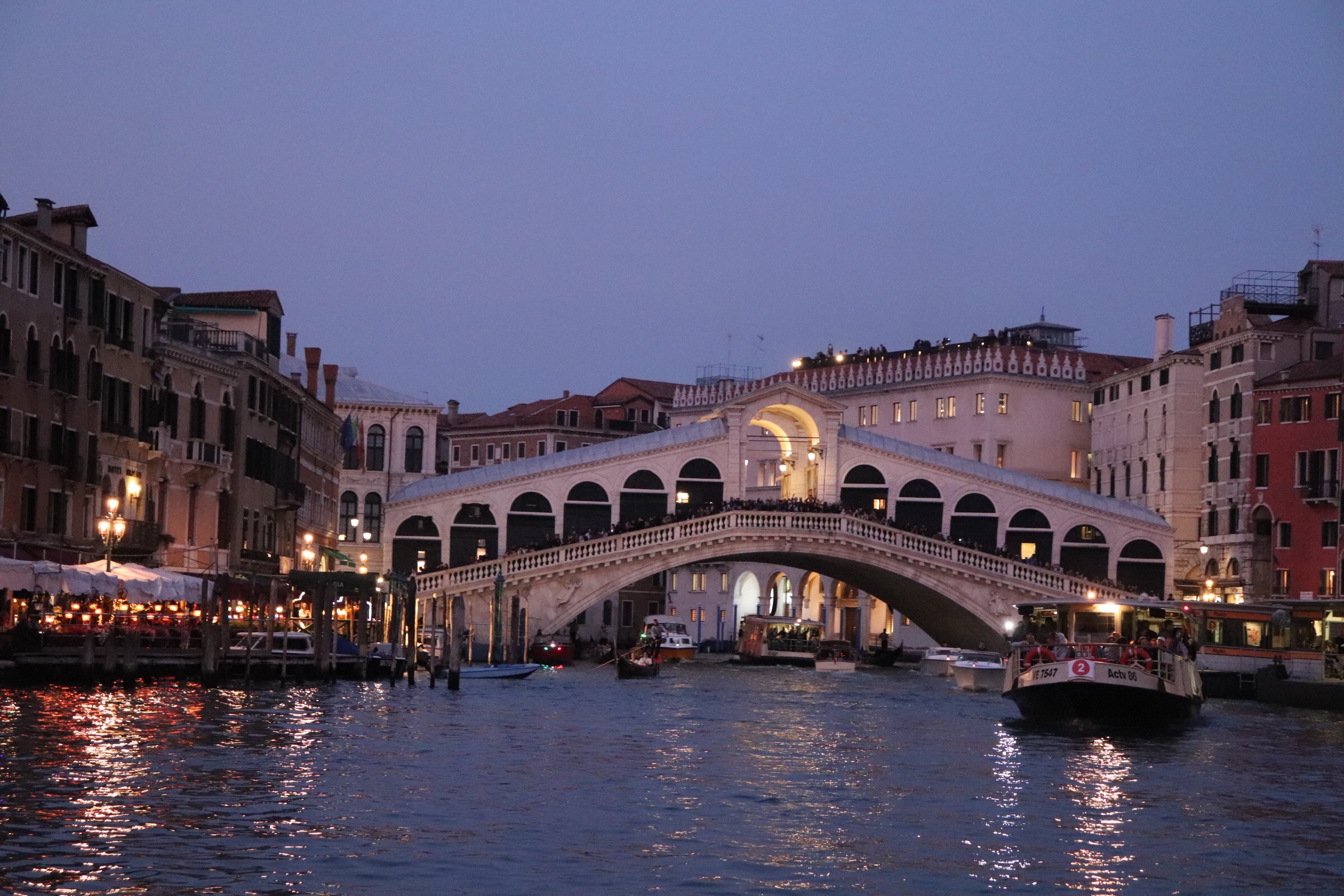
The Rialto Bridge

We stopped at the Coop on the way home and got a slice of lasagna for take away to add to our charcuterie board at home.

A wonderful day!

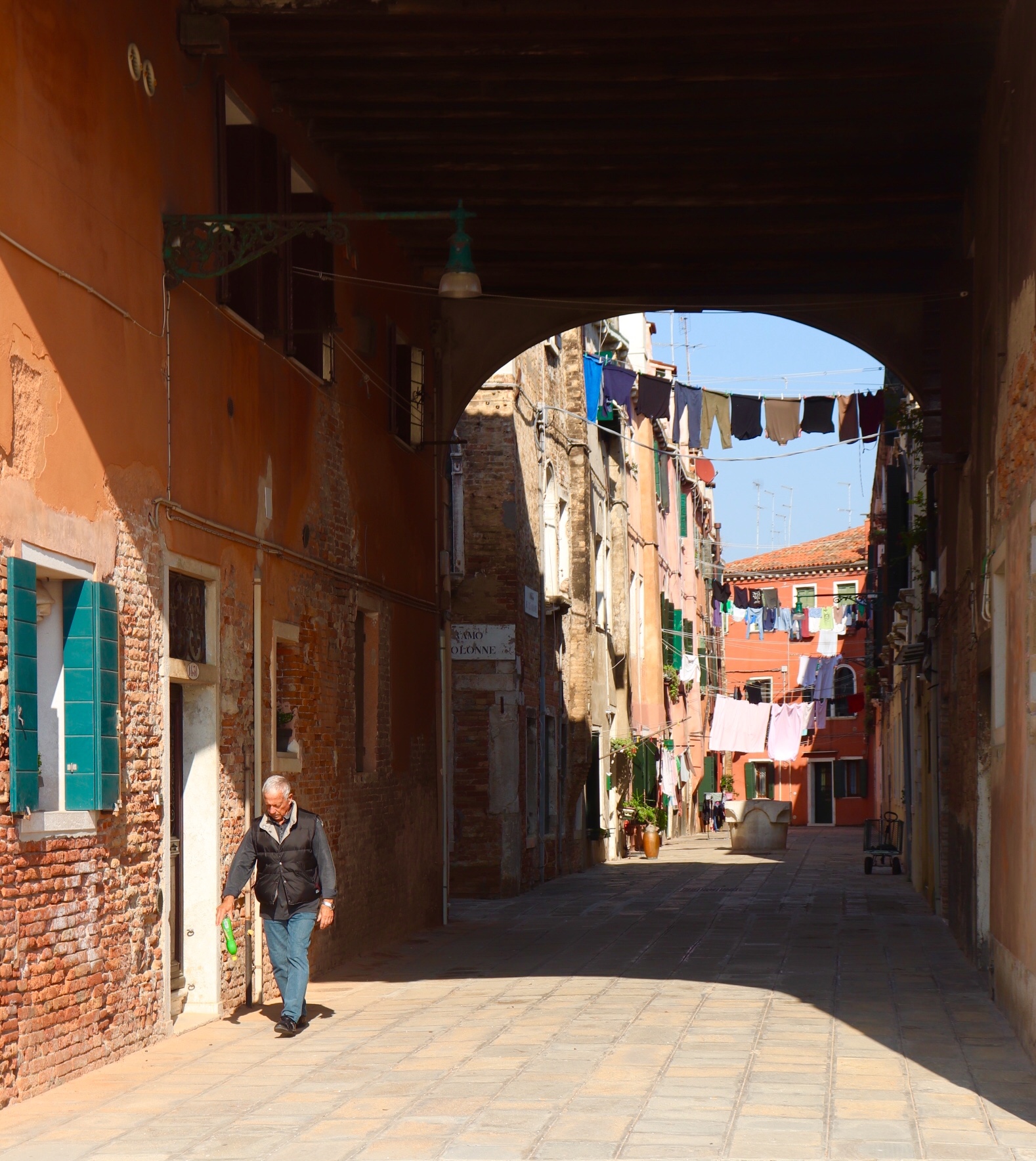
The ubiquitous laundry

¡Venezia!

No matter how you feel about cruise ships, there cannot be a more beautiful way to enter the city of Venice than by water and the perspective that being about 6 stories up provides. There is no other approach (train, car or plane) that allows you the stealth that a water entry does.

We arrived back in Venice after a very windy sail across the Adriatic from Split. The seas weren’t particularly rough, although there were plenty of whitecaps, but the wind howled most of the night.

Still it was peaceful and picturesque as dawn broke over Venice and we sailed silently into her harbor.

Sunrise in Venice
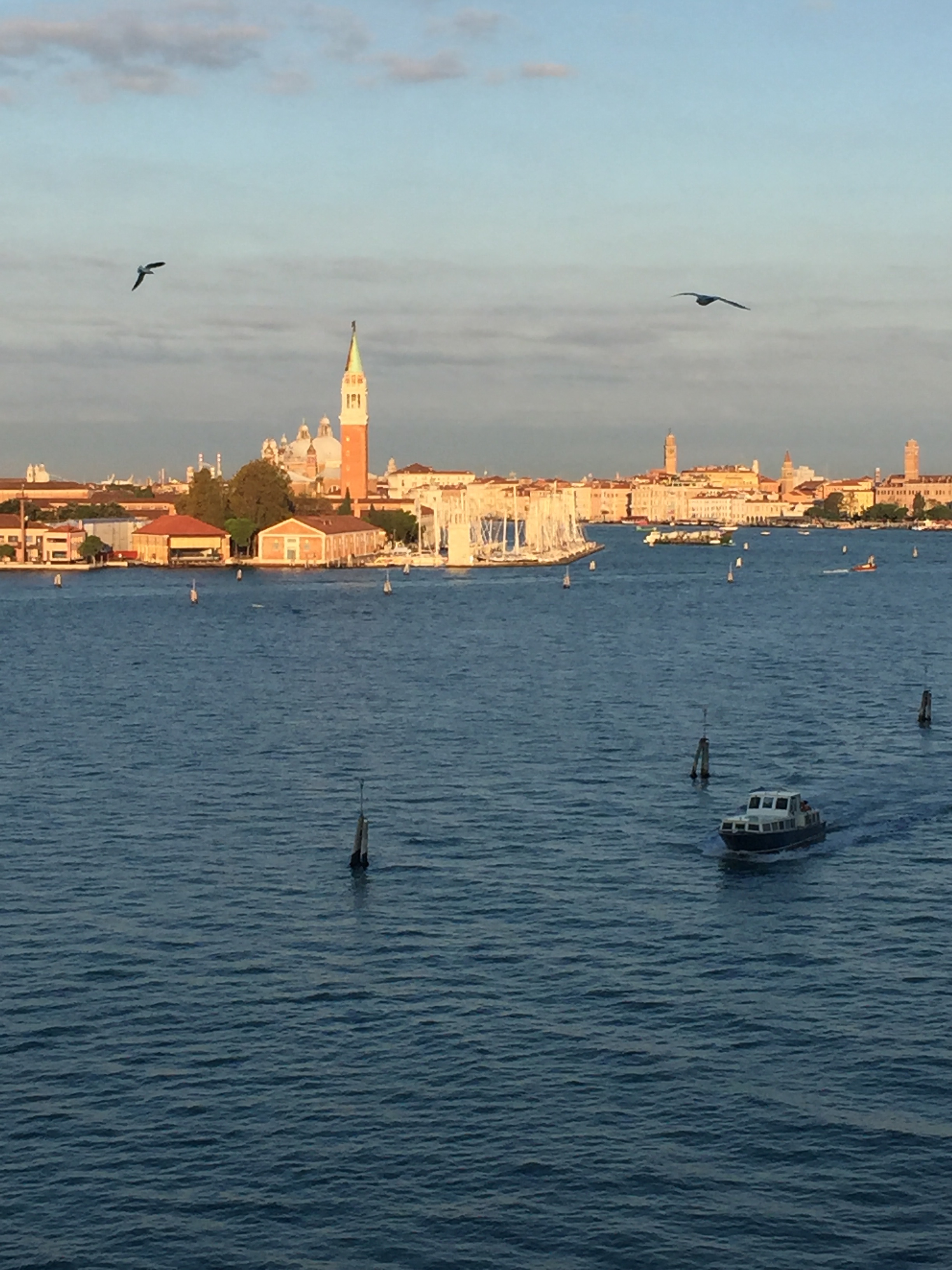
Our approach by sea

For disembarking almost 2,000 passengers, the ship companies have this down to an art (if not a science). The night before you and your luggage are assigned a color group which gives you your order of disembarkation. Everyone had to be out of their staterooms by 8 a.m. (they were going to flip this ship and sail again at 5 p.m.). Breakfast was served at various locations until 10:30 and the last passengers would be off by 10:45!

We were in the 10:00 group and left the ship, retrieved our luggage (also in a color-coded arrangement) and were on the People Mover within 20 minutes. The People Mover, a monorail, takes you from the cruise terminal to the Piazzale Roma stop in Venice. This is the transportation hub for the city where you can catch a train, a bus to the airport or a vaparetto for local transport in the city.

We had an address for our apartment, but without WiFi we had no navigation services. We stopped and bought a paper map (yep!) and had the location marked for us. Then we headed out walking, pulling our bags through the narrow streets and up and over a few bridges. We did well until we got into the heart of the Cannaregio and finally had to call the landlord for help! Turned out we had come to within a couple of blocks of the apartment, but without the help of Carlotta, who was waiting to check us in and came to fetch us, we never would have found it.

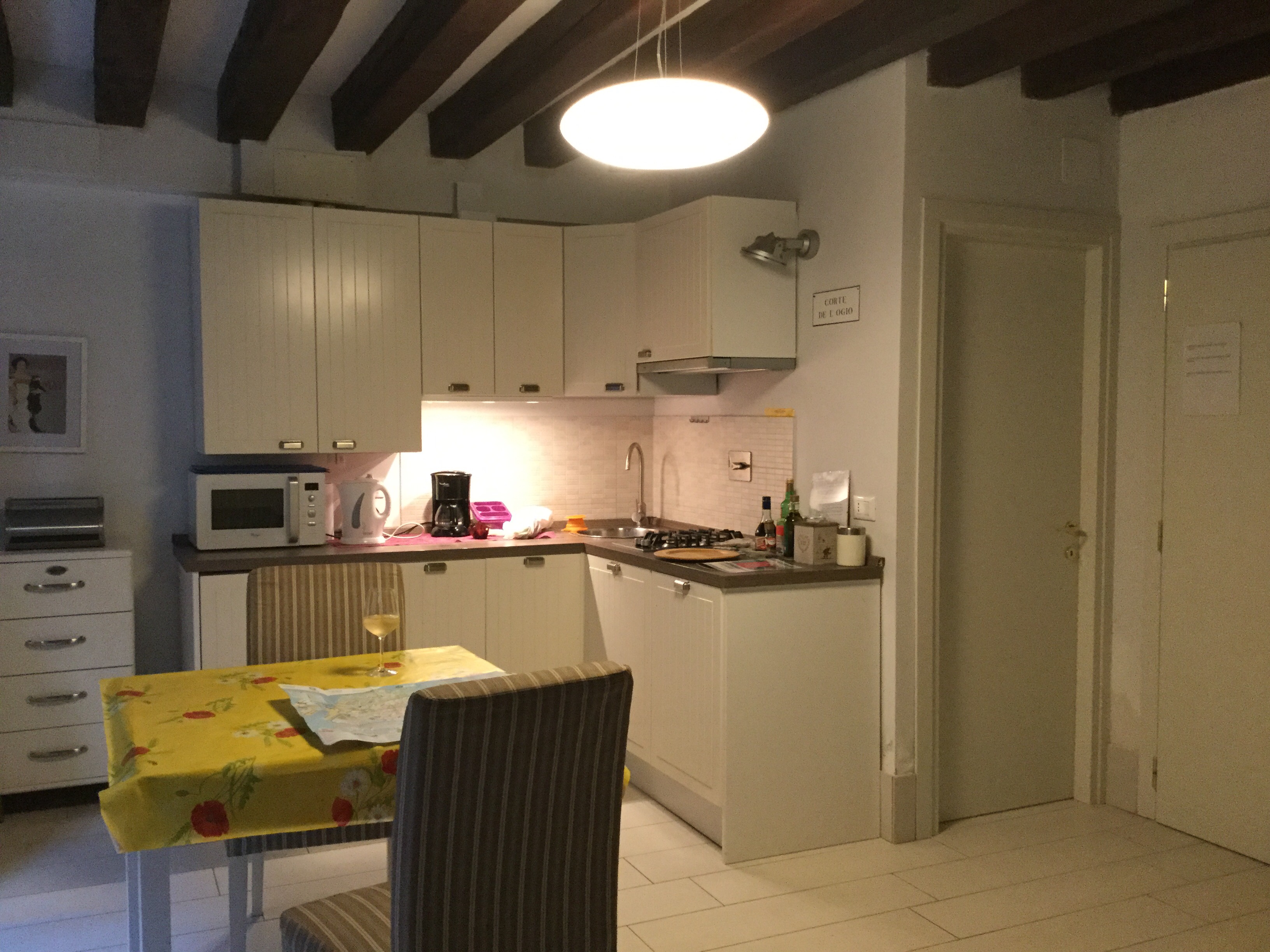
Checked in, oriented to the apartment do’s and don’ts, coached on transportation options, restaurants and shops we were happily ensconced in our new digs for the next five days. So happy to be back in this magical city.

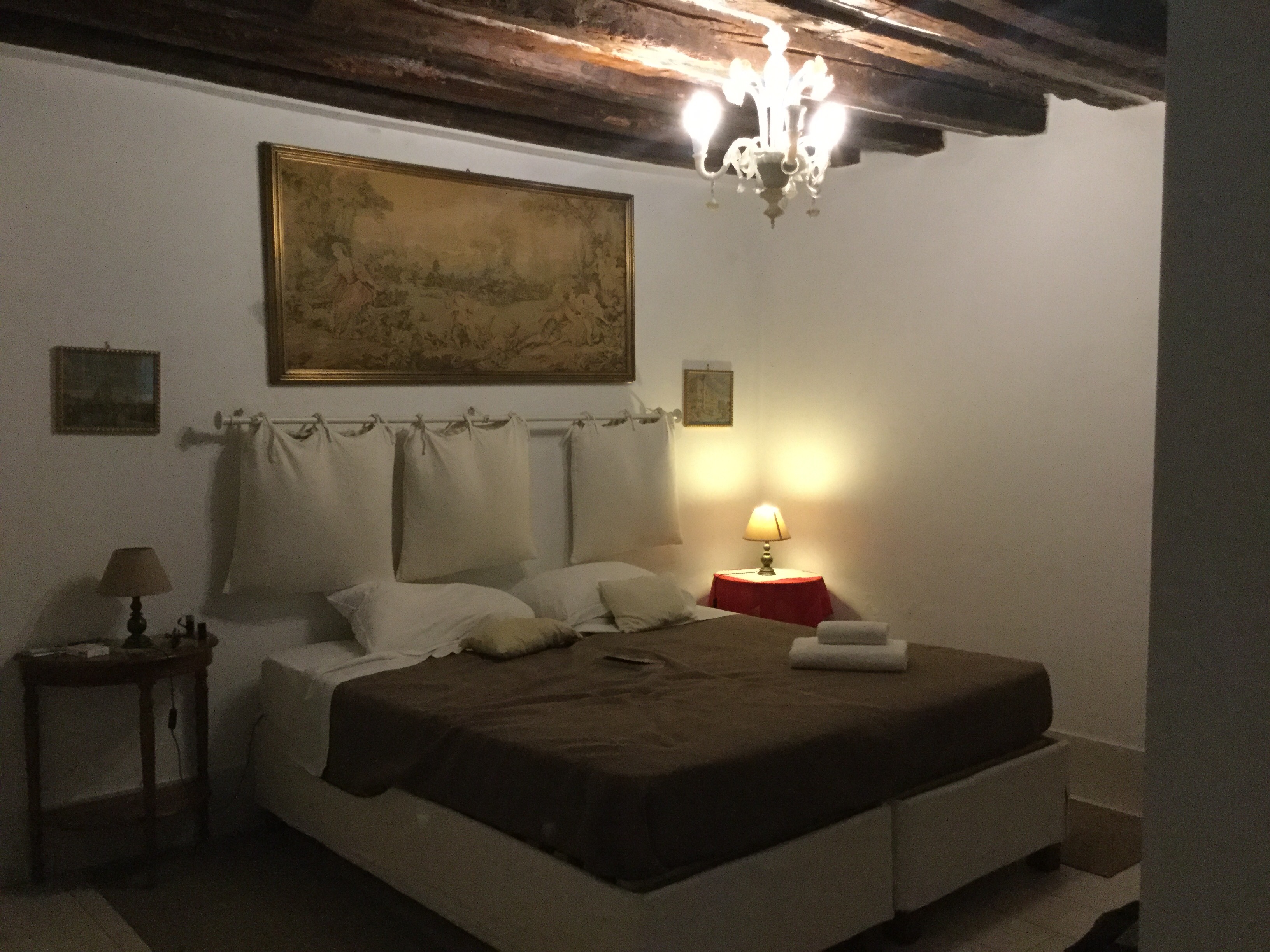
Bedroom
Kitchen
View from the kitchen door

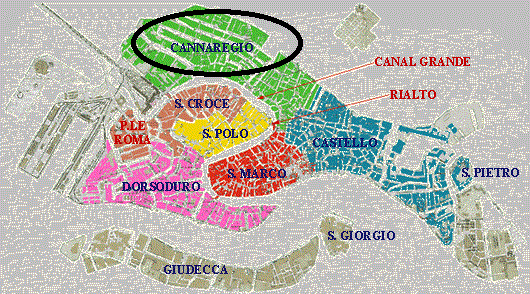
We unpacked a little, studied the map and tried to orient ourselves to locations we would visit in the upcoming days and then we hit the streets. We are in the Cannaregio district or Sestiere of Venice. If looking at an aerial view of Venice, the Cannaregio is the northernmost Sestiere.

The Cannaregio

From the 16th through the 18th century this was the Jewish Ghetto. The height of the buildings in this area represents the population they were forced to house. There are still five active synagogues here serving the small current Jewish population.

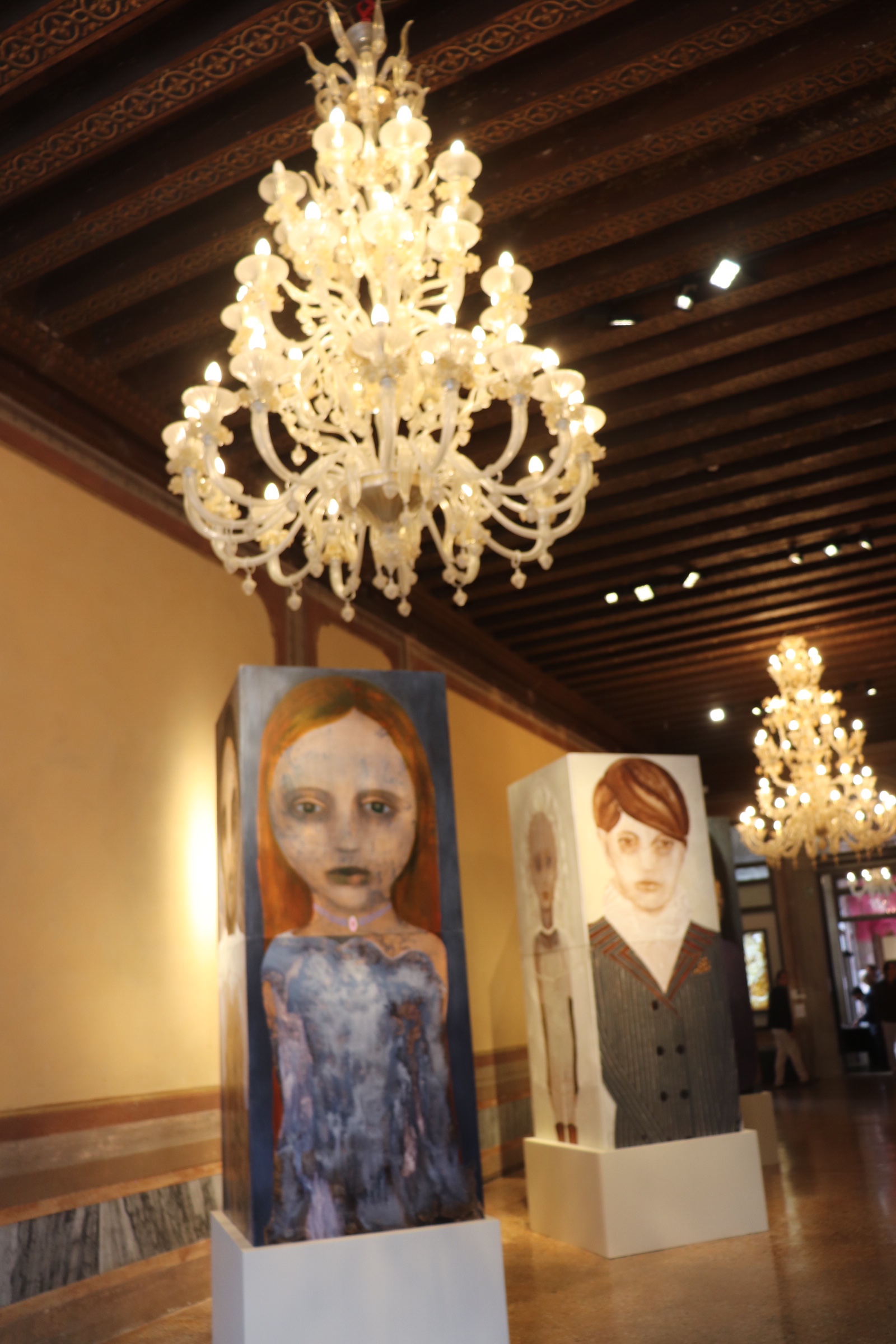
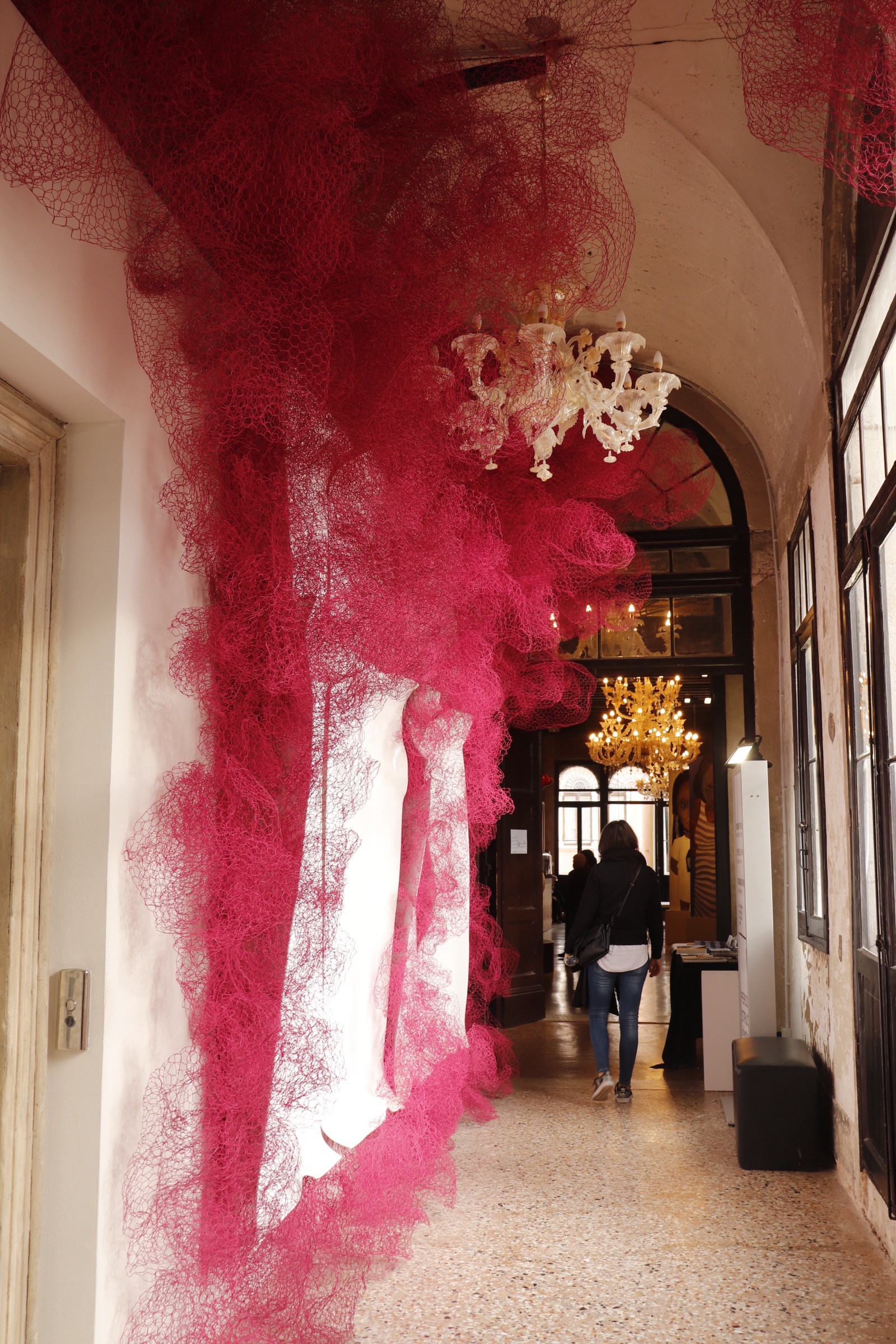
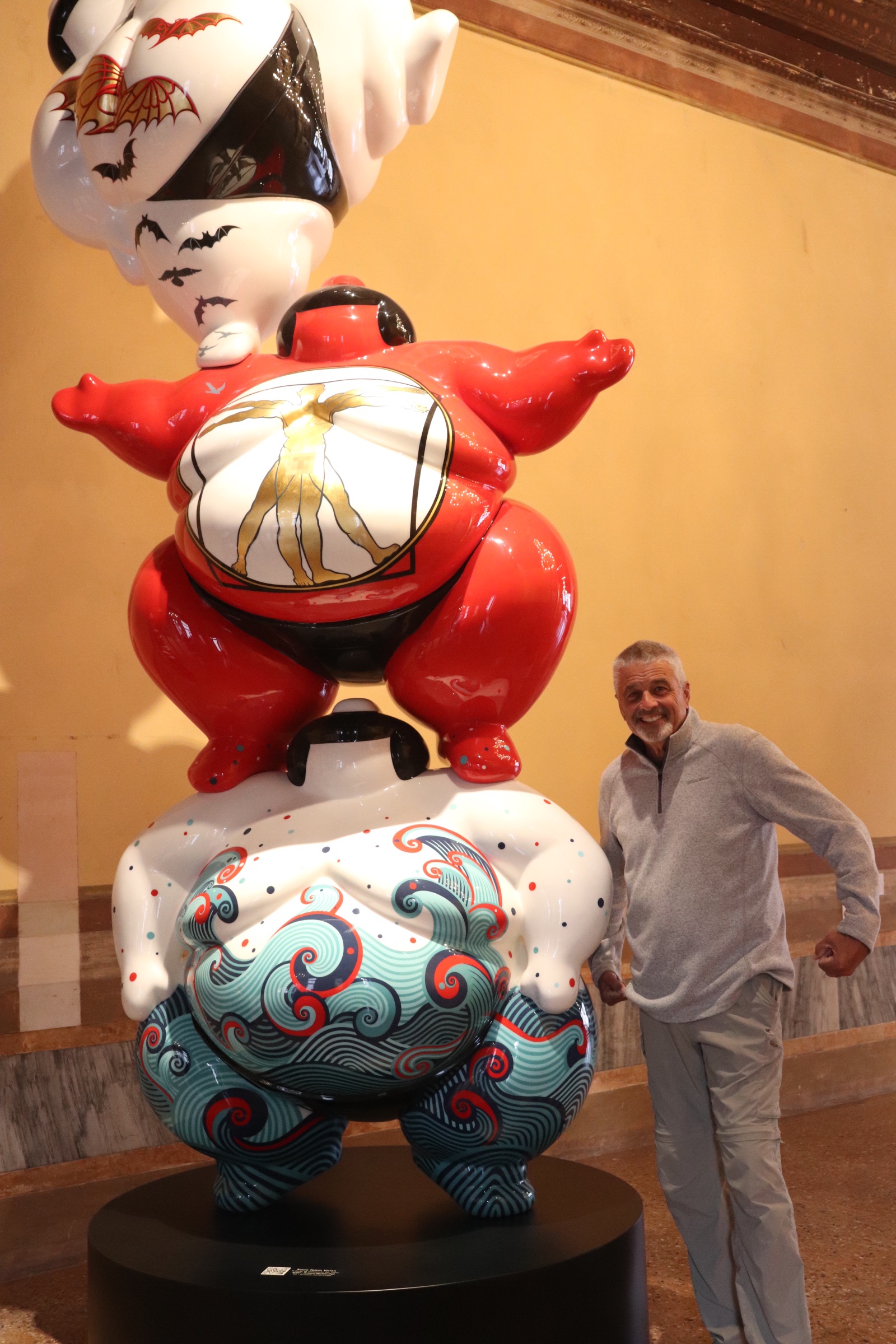
Not far from our apartment we stumbled upon Personal Structures in the Palazzo Mora, a European Cultural Center exhibit running alongside the Biennale Arte 2019. The exhibit presents a wide selection of works from emerging and internationally renowned artists, photographers and sculptors. What a find! The palazzo alone, built in the 16th century, is worth the visit, but the art was superb.

A gallery in the Palazzo Mora
Art installation
Tom posing with Sumo wrestlers sculpture

We continued our wander down the Strada Nova, taking alleyways out to the Grand Canal and just embracing the sites, sounds and smell of the city. We stopped at a market on the way back to the apartment for some provisions. We returned to the apartment (yes, we found it) put the groceries away and waited for restaurants reopening at 7 p.m.

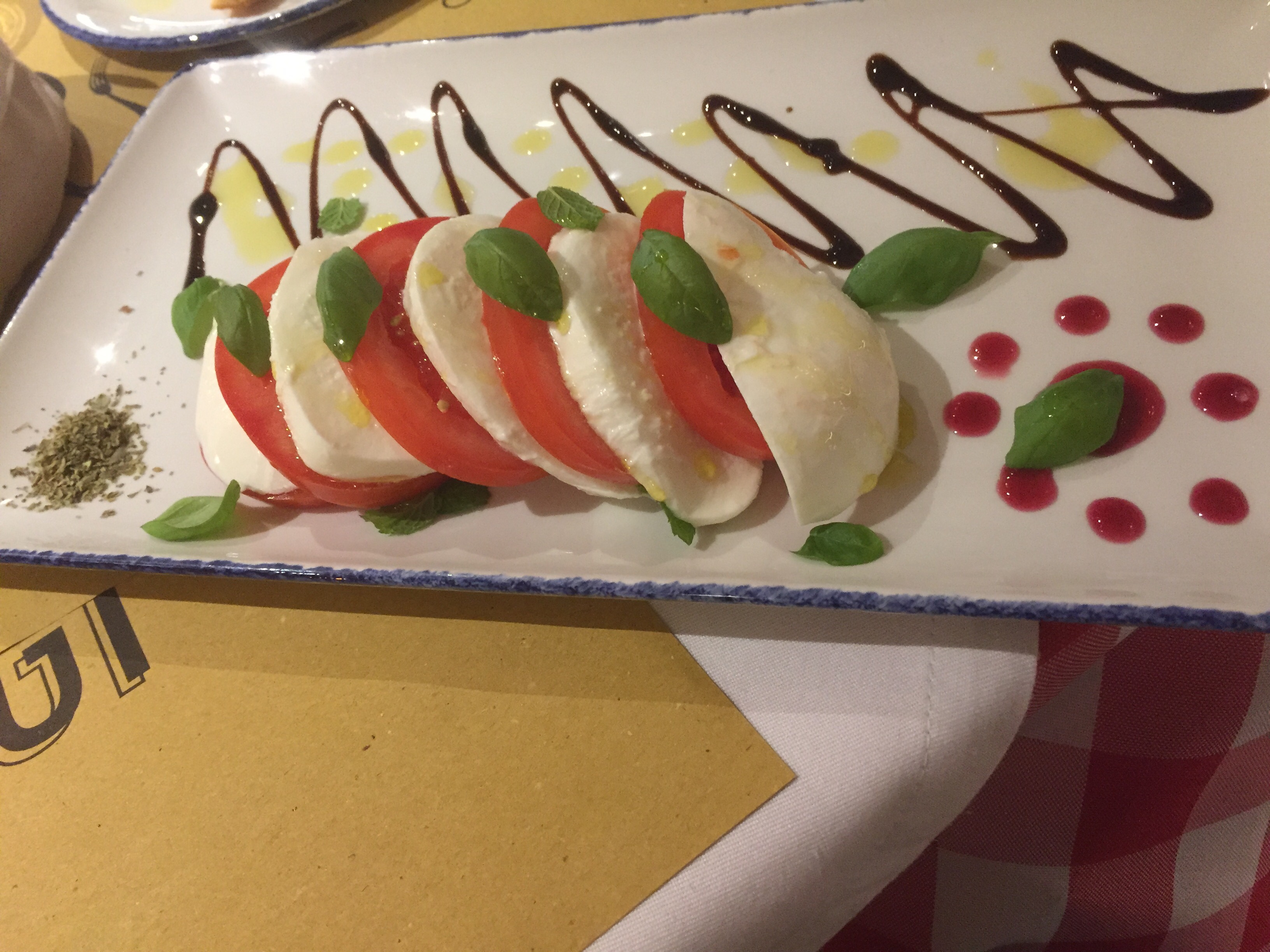
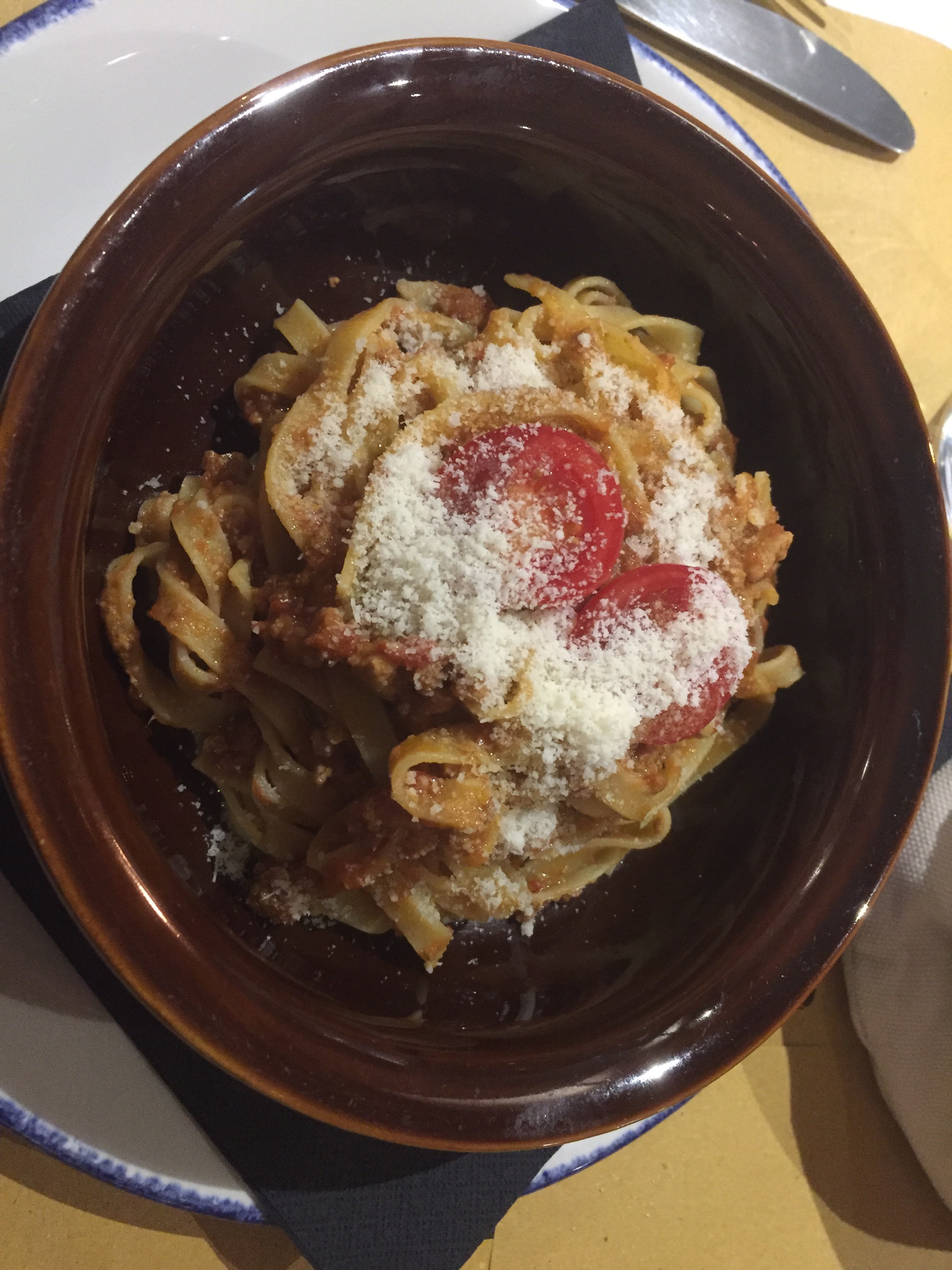
Carlotta, our apartment contact, had recommended a restaurant close to us. It was lovely and nicely located on the Strada to watch the Friday night parade. We had a delicious dinner and then walked in the opposite direction before returning home.

A shared caprese
Tagliatelle with Bolognese sauce

Time zones allowed a nice chat with Paige, who was now in Orlando, before signing off for the night.

Split, Croatia

The forecasted storm arrived, full force, in the middle of the night. Thunder shook the balcony doors and lightening lit up the sky and the sea. Quite the spectacle, but we sailed on up the Adriatic Coast towards Croatia.

We didn’t arrive in port until almost noon, giving us a leisurely morning. The rain was still coming down which kept us inside. We had scheduled a city walking tour here with a company independent of the ship. We got a map from our guest services to assist us in locating our meeting point. The group had sent us one and everything was in Croatian, the ship’s map was in English, but between the two and allowing ourselves plenty of time we found it.

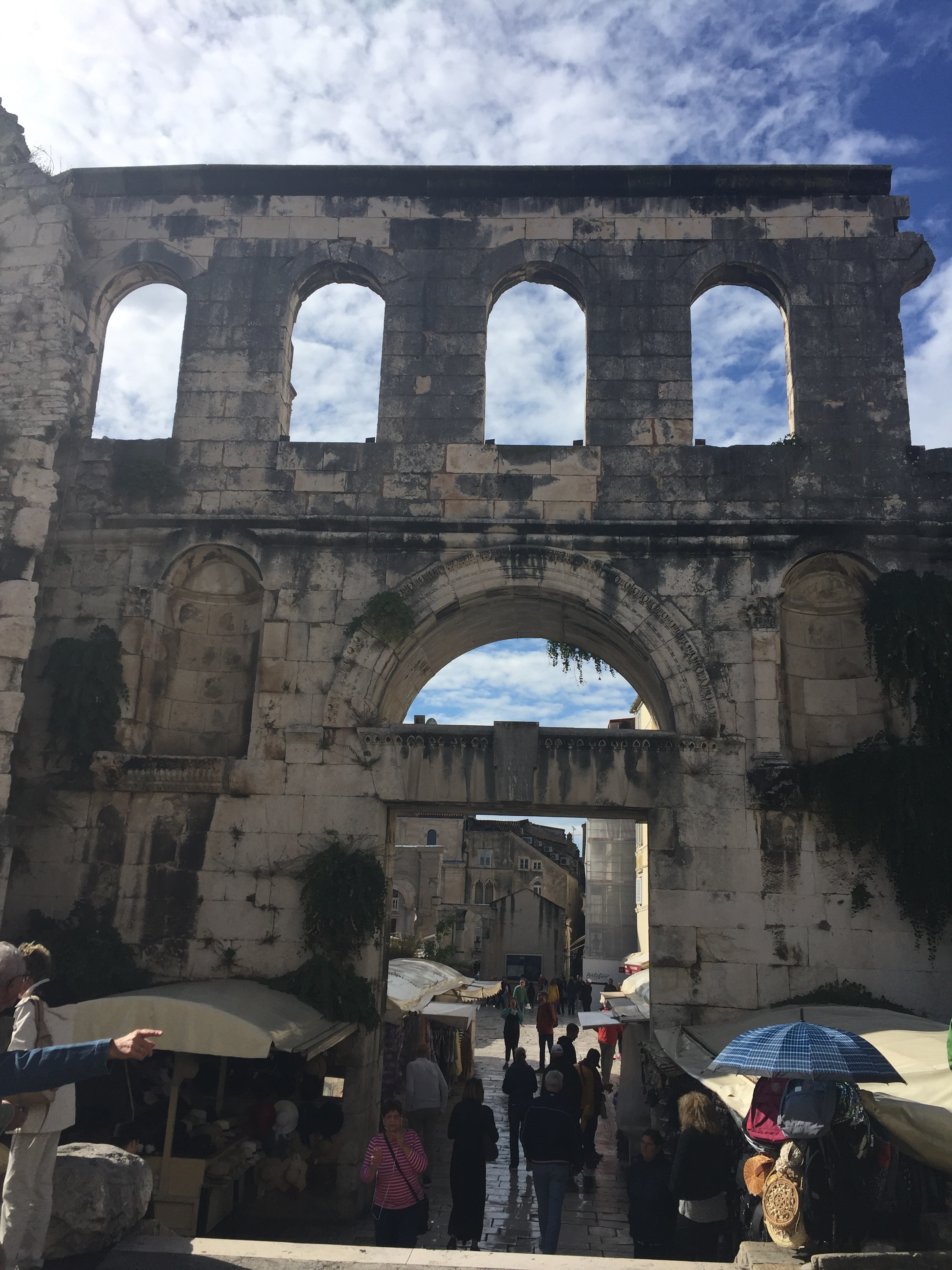
Entering the old town through gate of the Diocletian Palace
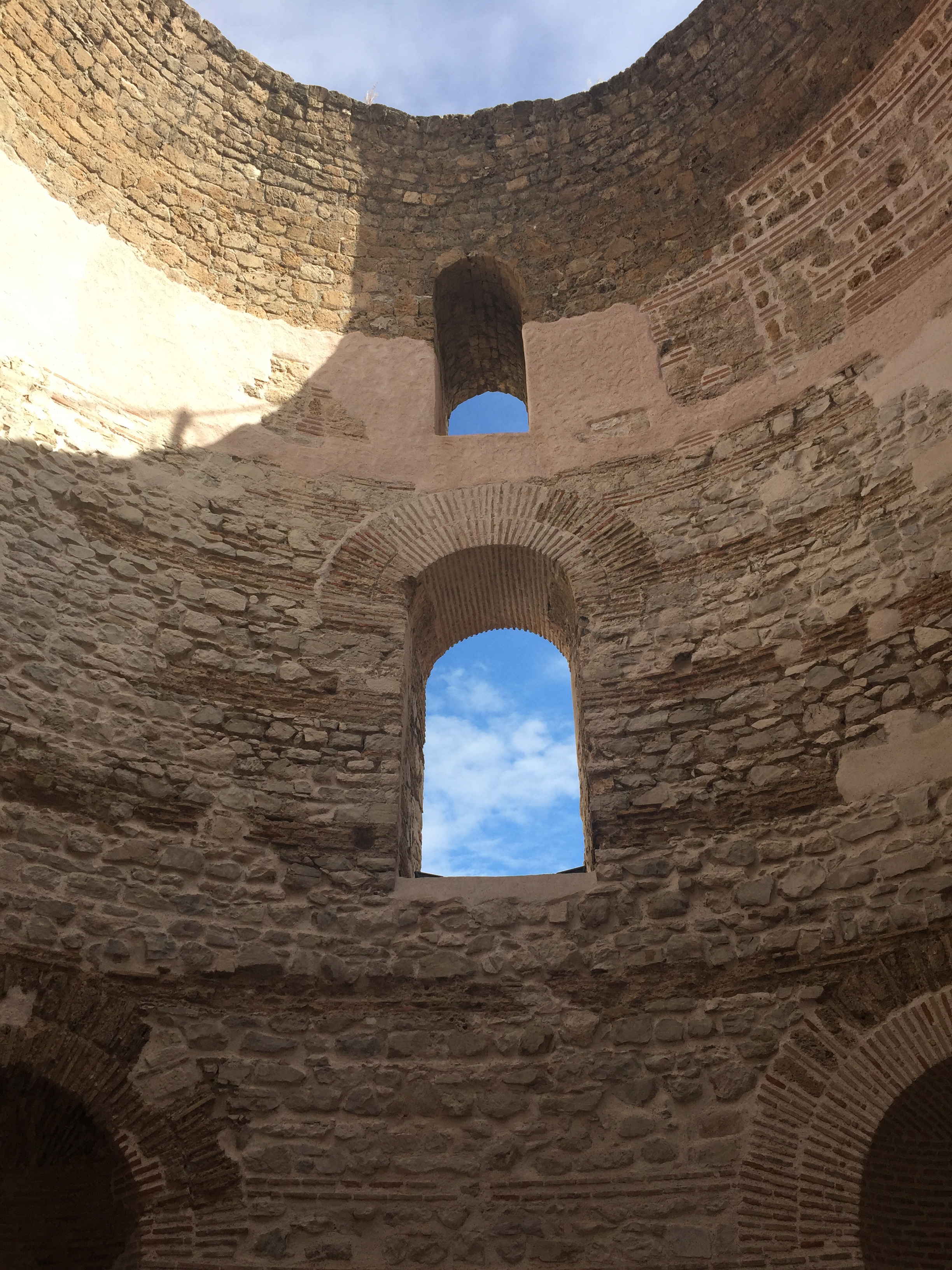
Palace remains

We met our tour guide, Gabby, just off one of the side streets within the walls of the Diocletian Palace. Most of our time would be spent in and around this palace learning the history of both Split and Croatia. Like other areas of the Adriatic and Mediterranean that we have visited, Split had its own Venetian occupation for more than 300 years. Their influence is felt, again, in the architecture and in the language.

The Palace was built by a Roman Emperor as a ‘retirement’ home. It was basically a walled city for himself, his family and the guards and servants who served him. After his death, many of the structures within the wall were demolished and individual homes were built that exist today. The Palace grounds have been continuously occupied for 1,700 years. Today, 200 residents still live within the walls, while others, seeing profits, moved out of the city and turned their homes into cafes, B&B’s and hotels!

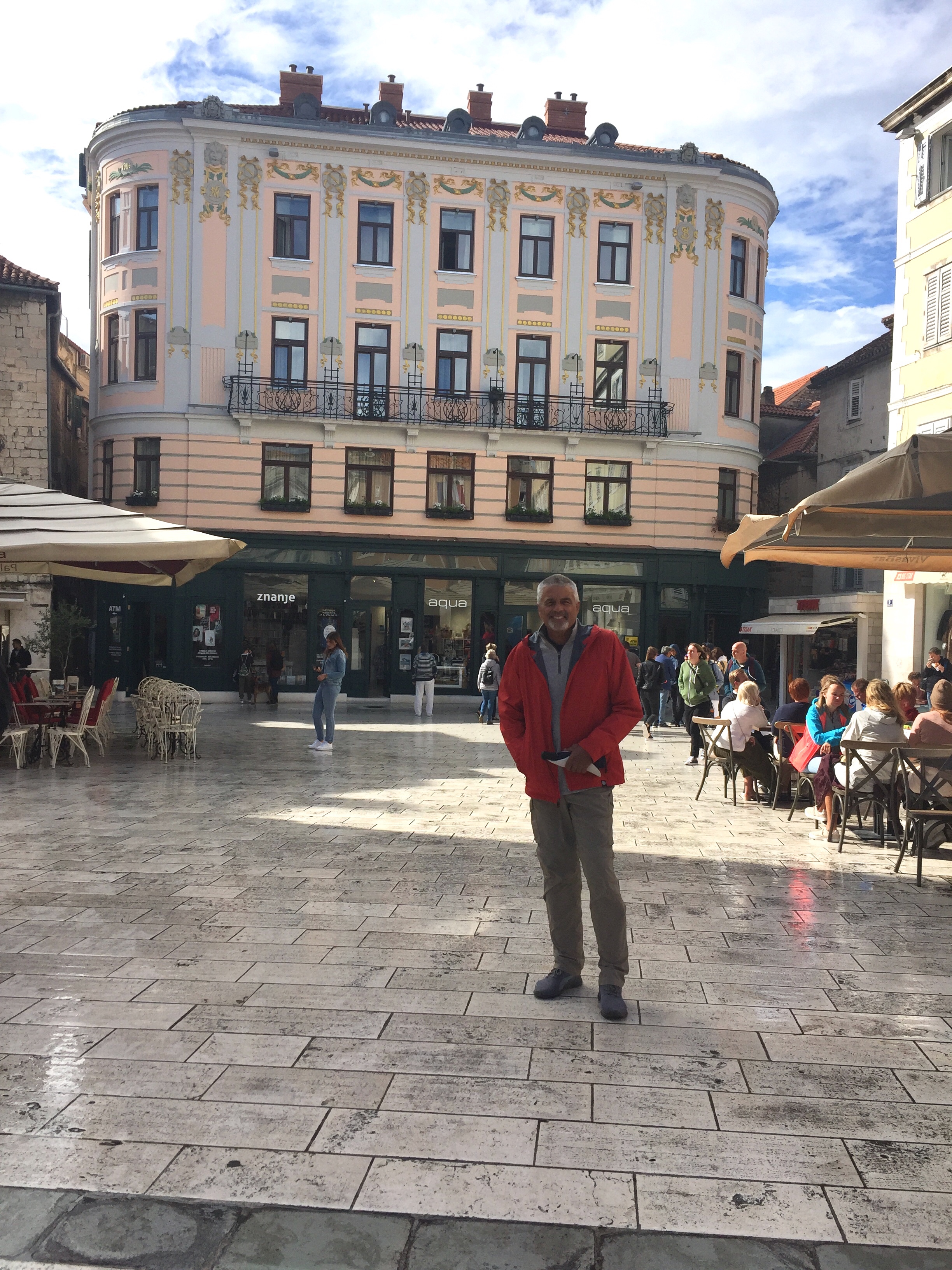
Outside the city walls

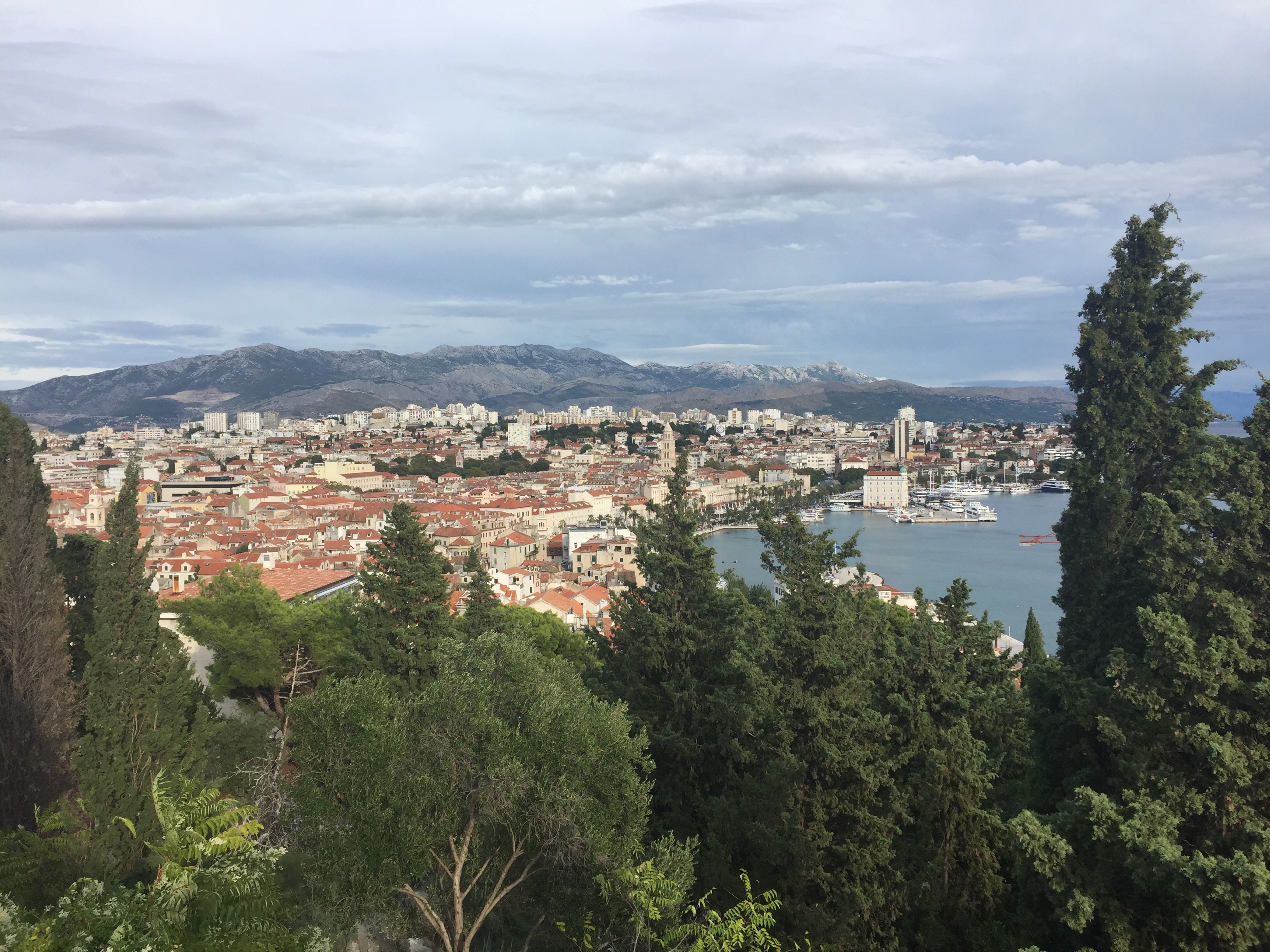
The tour continued outside the Palace, along the waterfront promenade and up into the hills above the city. Gabby is a fourth generation Croat and very proud of her country, their history and excited for their future as a young democracy.

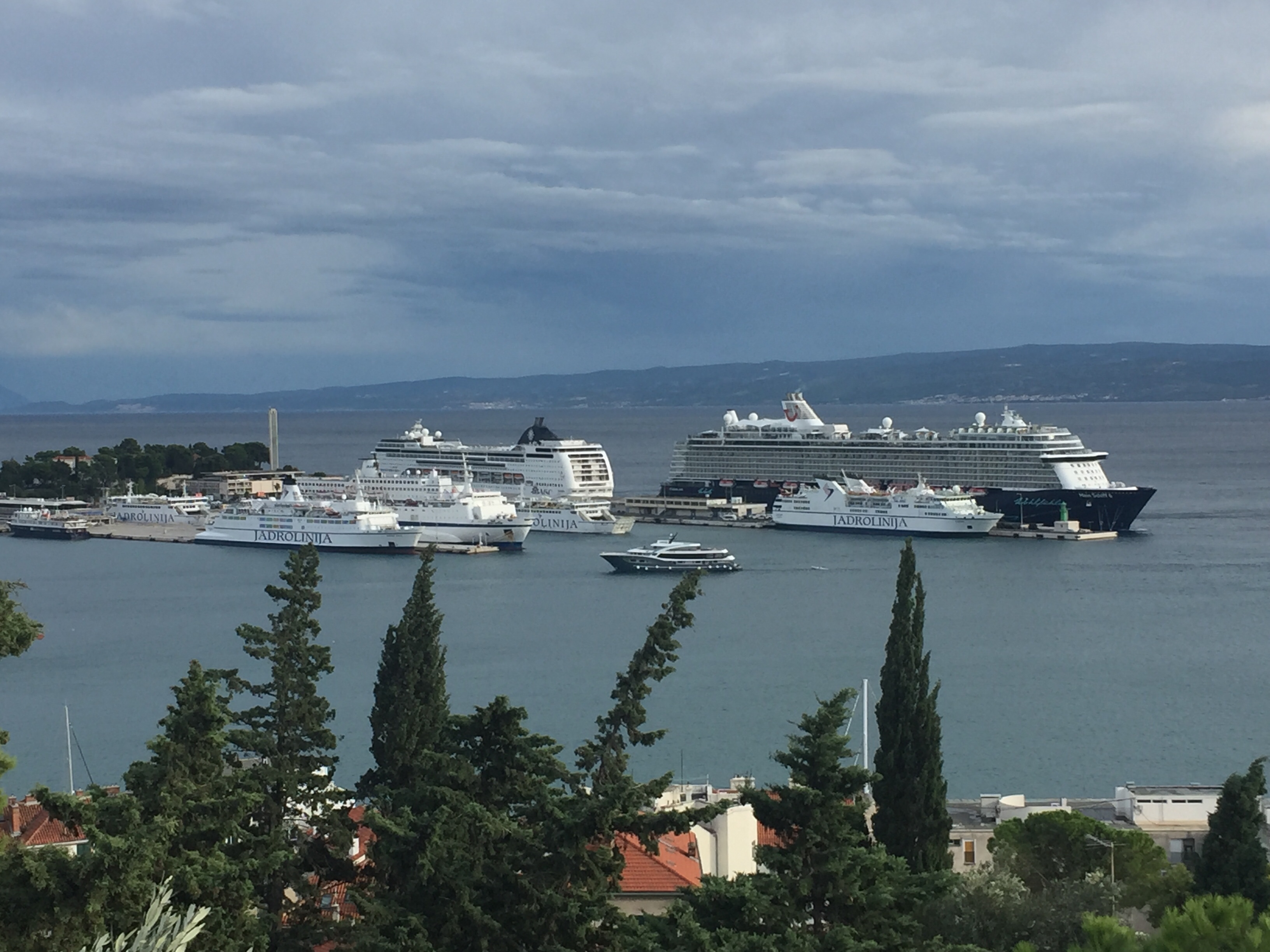
Split and the harbor from hills above
Ships in the harbor (we’re the smaller one)

The tour ended on the hillside and we wandered back down the streets to a bar in a plaza for a glass of wine. Tom asked if they took cards, but must have been misunderstood because they only took cash. They took his Euro but made change in Kunas (Croatian currency)! We stopped at a bank to see if we could exchange Kuna for Euro, but we didn’t have enough Kuna for 10 € only five! So Tom was on a mission to spend his Kuna (good only I’m Croatia) before we got back on the ship!!

The ship left port at 7 p.m. just as the lights of the city were coming on. We had our last dinner with our fun staff and said our goodbyes to our steward who will be going home to Indonesia tomorrow for three months. We packed our bags to have them in the hall by midnight and kept out only what we would need for the morning. The sailing was VERY windy and the most movement we had had on the ship. I was a little uncomfortable at the beginning but soon was asleep 😴

Domani, Venezia!

Cephalonia (Kefalonia) Greece

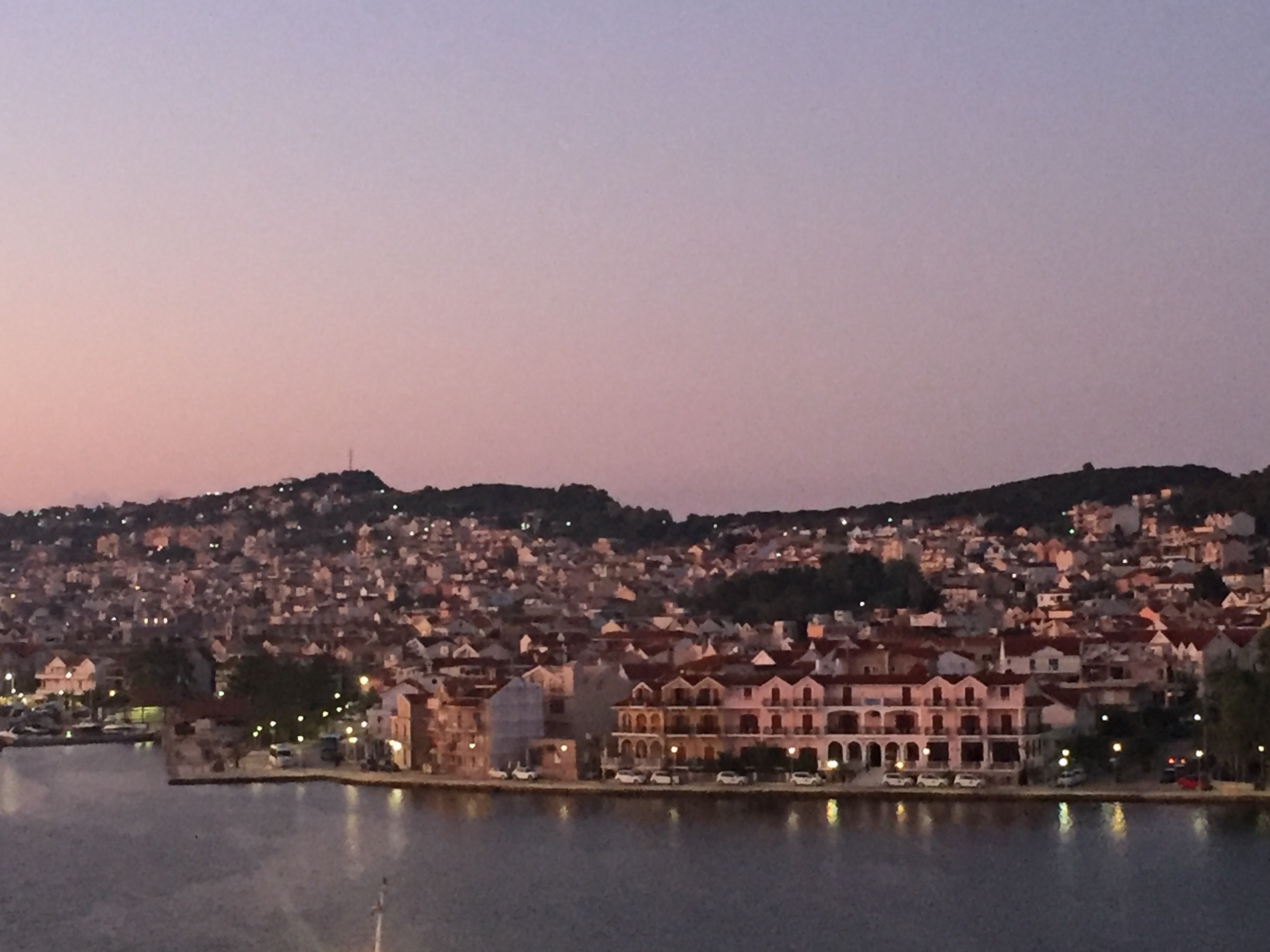
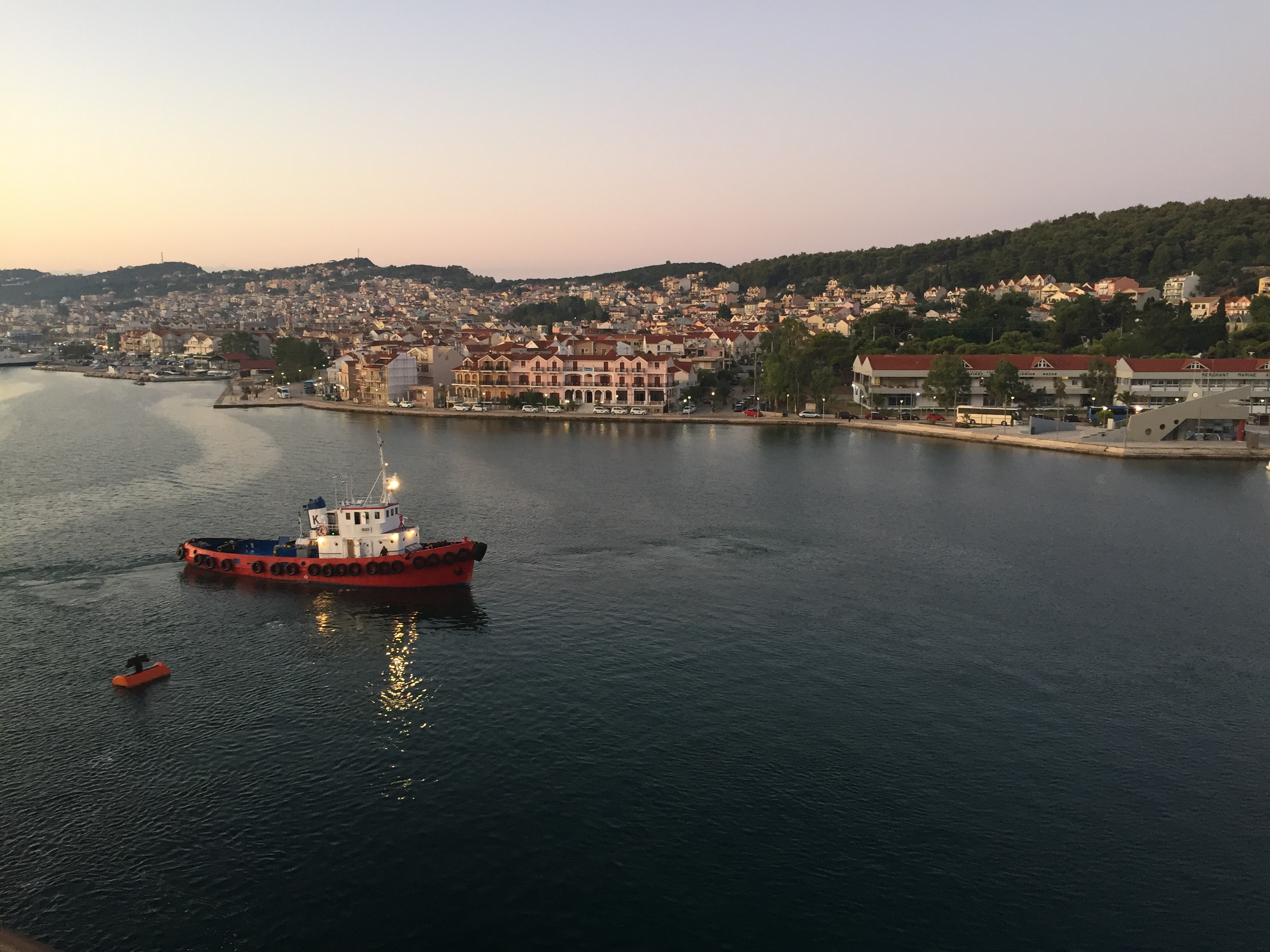
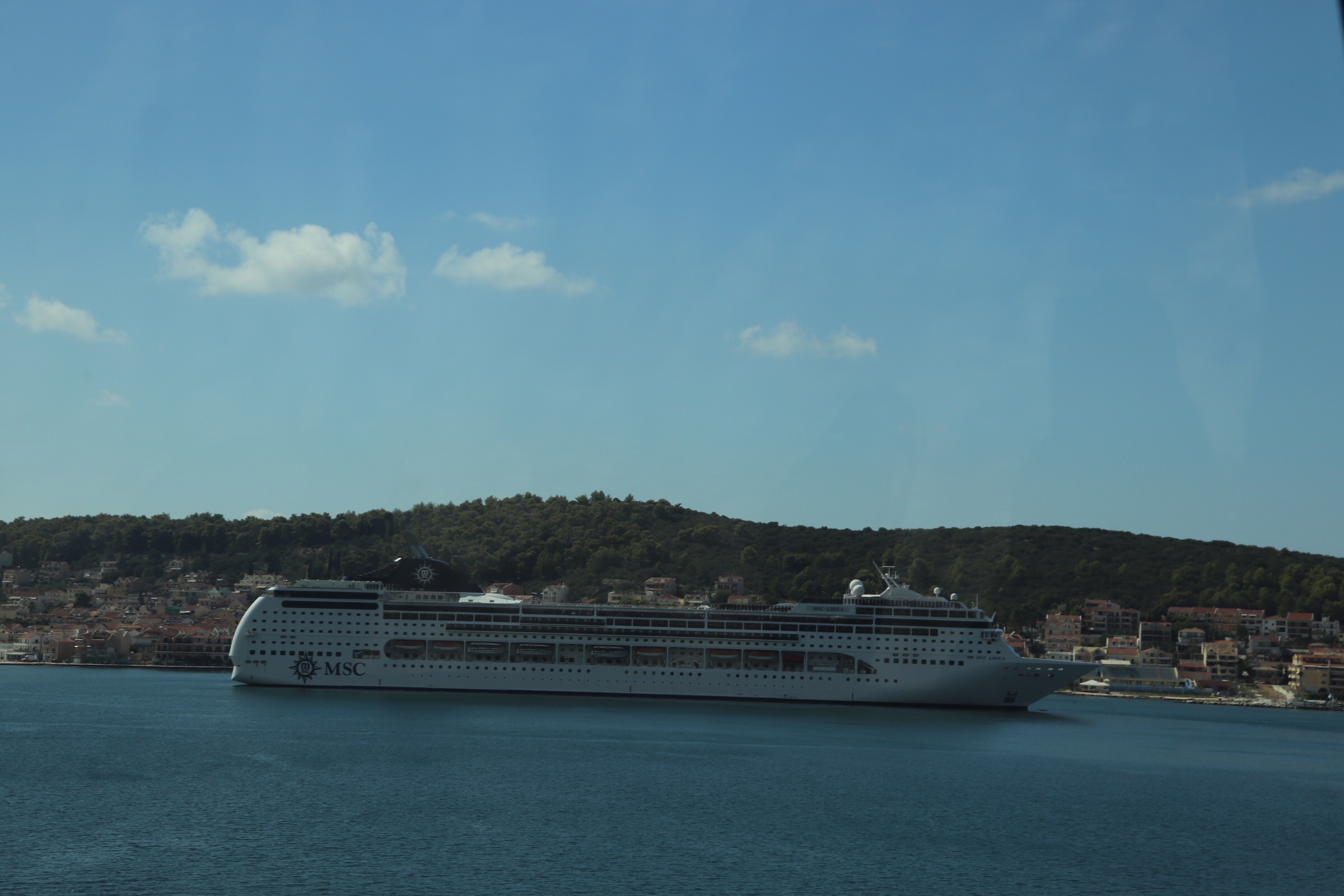
The sun was rising as we arrived in Argostoli harbor on Kefalonia. We lost an hour a few days prior when we left Italy and sailed east to Greece. Sunrise was now closer to 7:30 a.m. and the city lights were still on as we tied up to the dock.

Argostoli at sunrise
Docking assistant

The first thing you noticed when you arrived was both the architecture and the landscape. No white, classic Greek houses but instead houses with pitched, red tiled roofs painted in the soft palate of Southern Italy. And trees, lots of them, creating a beautiful urban landscape.

Today we were scheduled on a ship sponsored tour of the island including the Drogarati Caves and Myrtos Beach. We were a small group of 18, both German and English speaking and our guide (a Greek) moved flawlessly between the two languages as she narrated our journey.

We learned that a 1953 earthquake demolished more than 2/3 of the houses on the island. As the rebuilding began the houses were simple square boxes with flat roofs. The local government demanded the pitched, red tile roofs. There was pushback (flat roofs were a great place to hang laundry after all) but the city withheld electrical hookup until the owner complied.

The 1953 earthquake on the heels of WWII and a Greek Civil War had many inhabitants leaving Kefalonia for either the mainland or other destinations in Europe or the US. The population plummeted from 75,000 to 35,000. Tourism didn’t begin on the island until the mid-1980’s but it did and continues to help their economy.

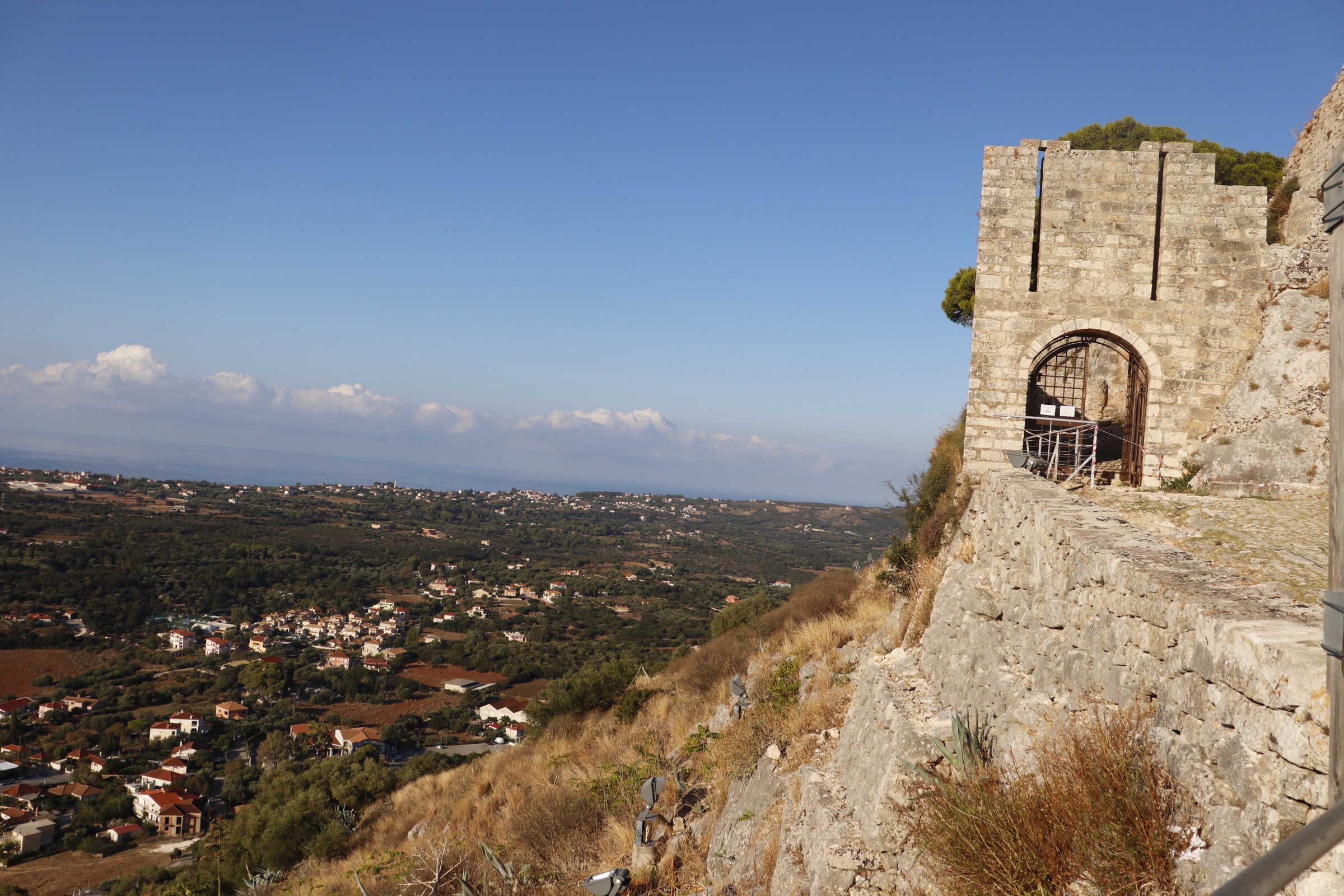
Our first stop was the Venetian fortress known as St. George’s Castle. Built in the 13th century by the Byzantines, it was the Venetians who took it over in 1504 and gave it its importance to the port of Argostoli and the protection of the whole area. Today, little remains of the once prominent fortress but your imagination can fill in the holes. The views in all directions are commanding and you can see how it’s location was important.

St. George’s Castle

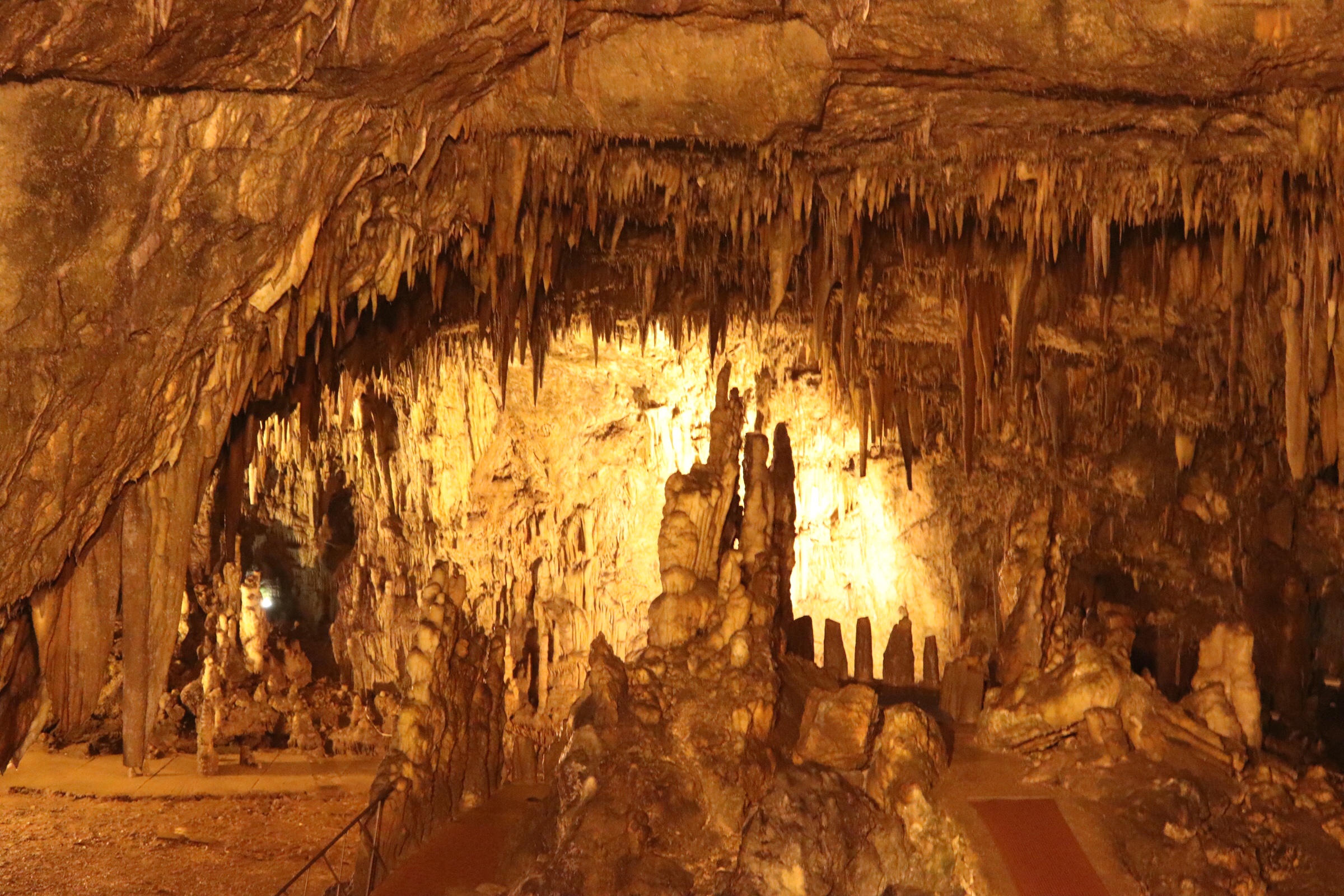
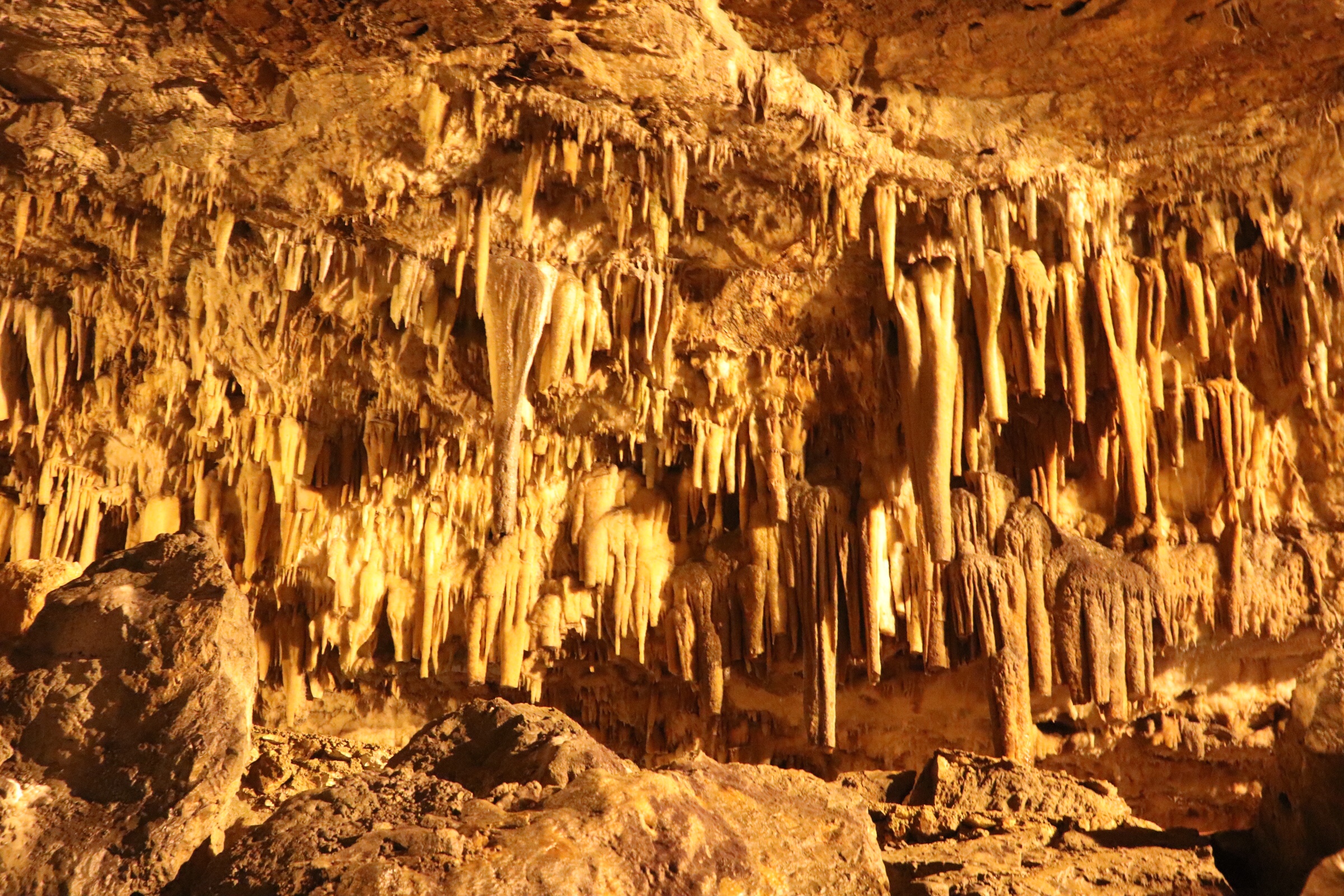
We continued over the spine of the island toward the harbor of Sami. This is a major harbor for ferry transportation to other Ionian Islands and mainland Greece. Our destination was the Drogarati Caves. The caves have been in existence for millions (?) of years but only became accessible after the 1953 earthquake when a piece of the mountain collapsed exposing the caves.

The main cavern
Some good stalactites

The caves today are accessible by a stairway and well maintained walkways. You have to remind yourself that they (stalactites and mites) only grow 1 cm. in 100 years!! These specimens were old!

We enjoyed a refreshment break there before reboarding the bus for the trip onward. Again, the landscape is so different from either Santorini or Crete. We could have been in Southern California – – oleander bushes, sycamores and plane trees, olive trees and bougainvillea flourished.

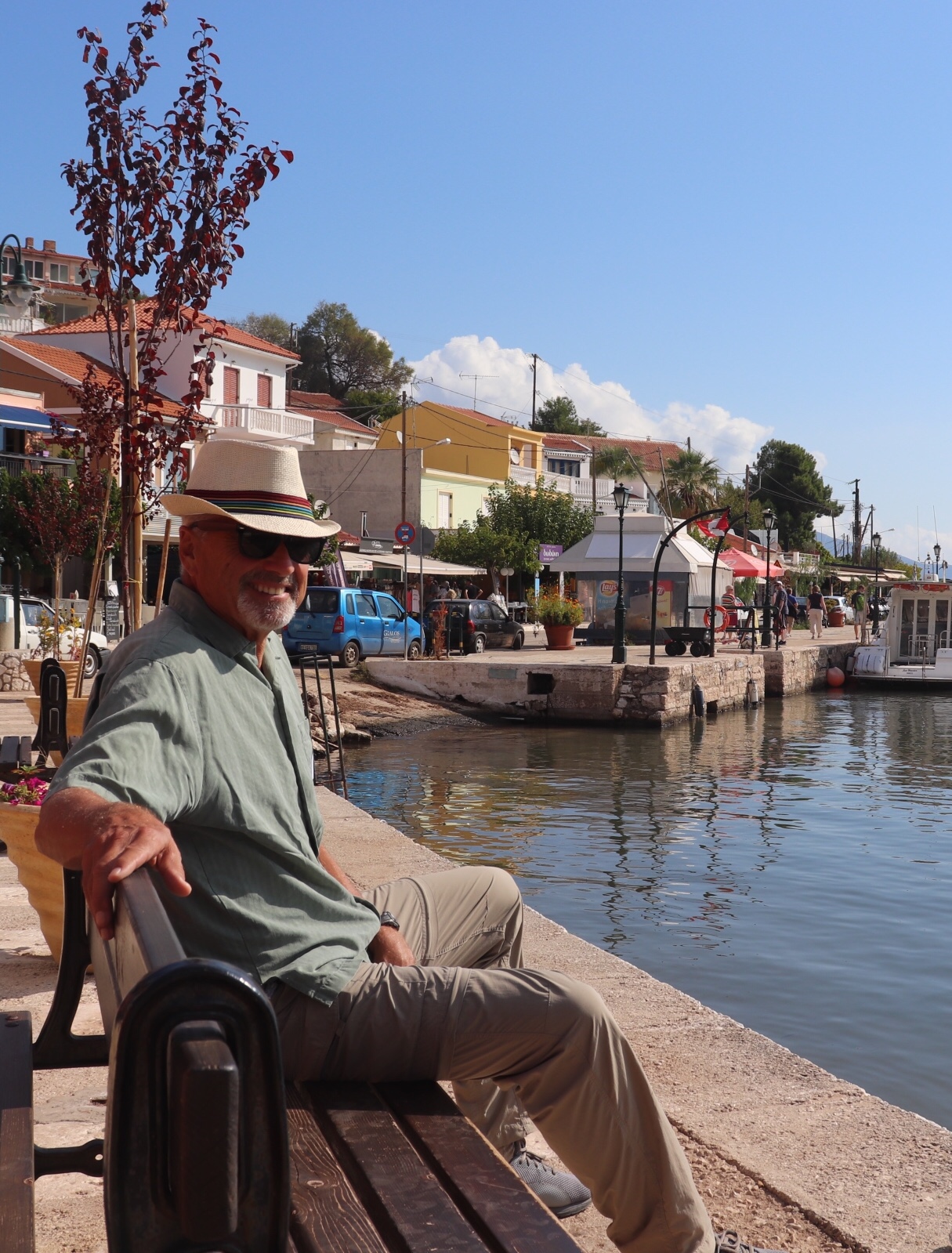
Our next stop was a small harbor town, Agia Efimia, about 45 minutes northwest of Sami. So picturesque and quaint you wanted to move there immediately. We have learned that we are at the tail end of ‘the season’ and soon the regularly scheduled flights from Kefalonia to Europe will end and there will be just ferry service and flights to Athens.

Tom, and his new hat, in Agia Efimia
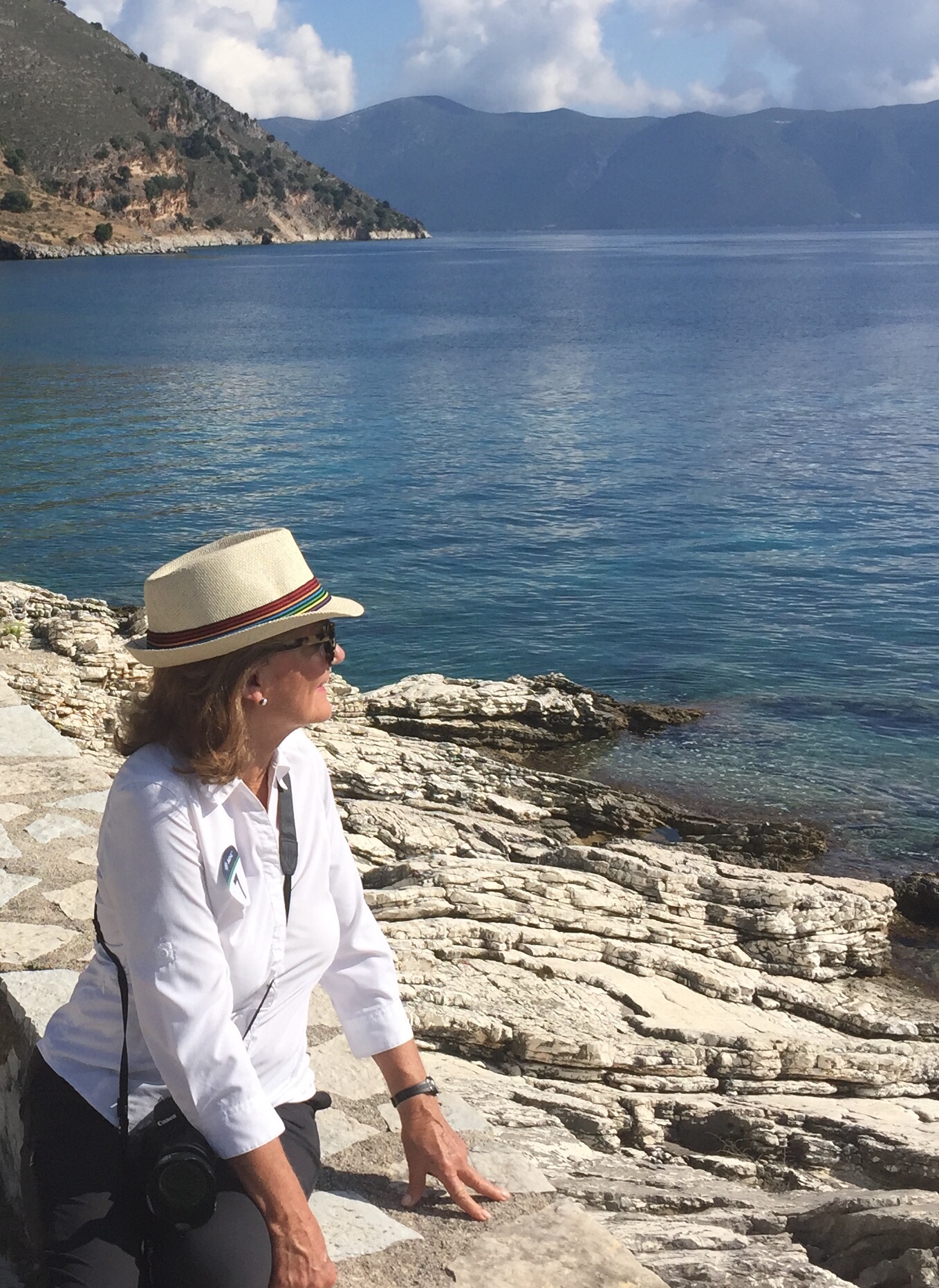
I took a turn with the hat!

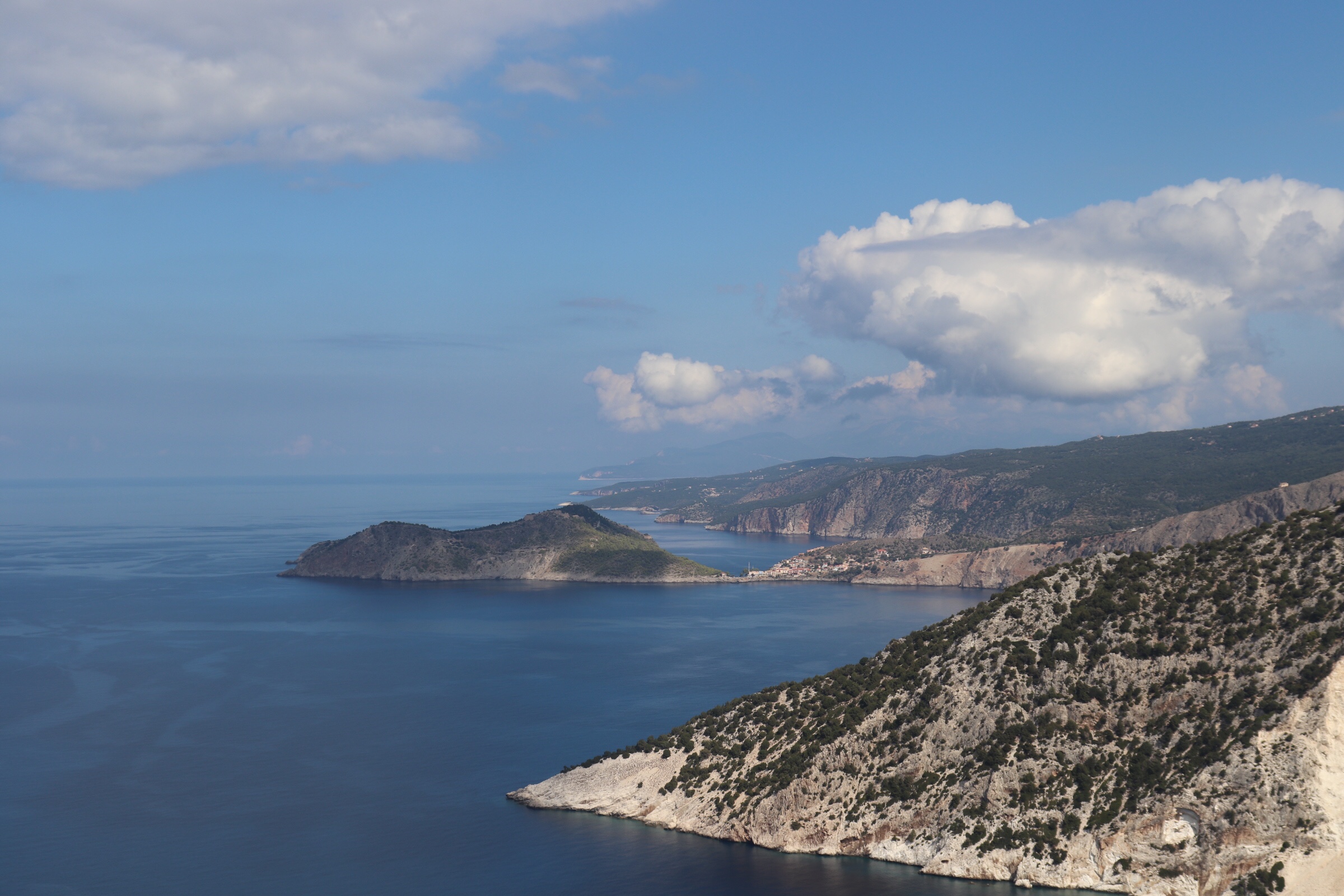
The island of Ithaka, made famous by Homer in the Iliad and The Odyssey can be seen over my shoulder. Home to only 3,000 residents and accessible only by ferry, it is one of the smaller Ionian islands.

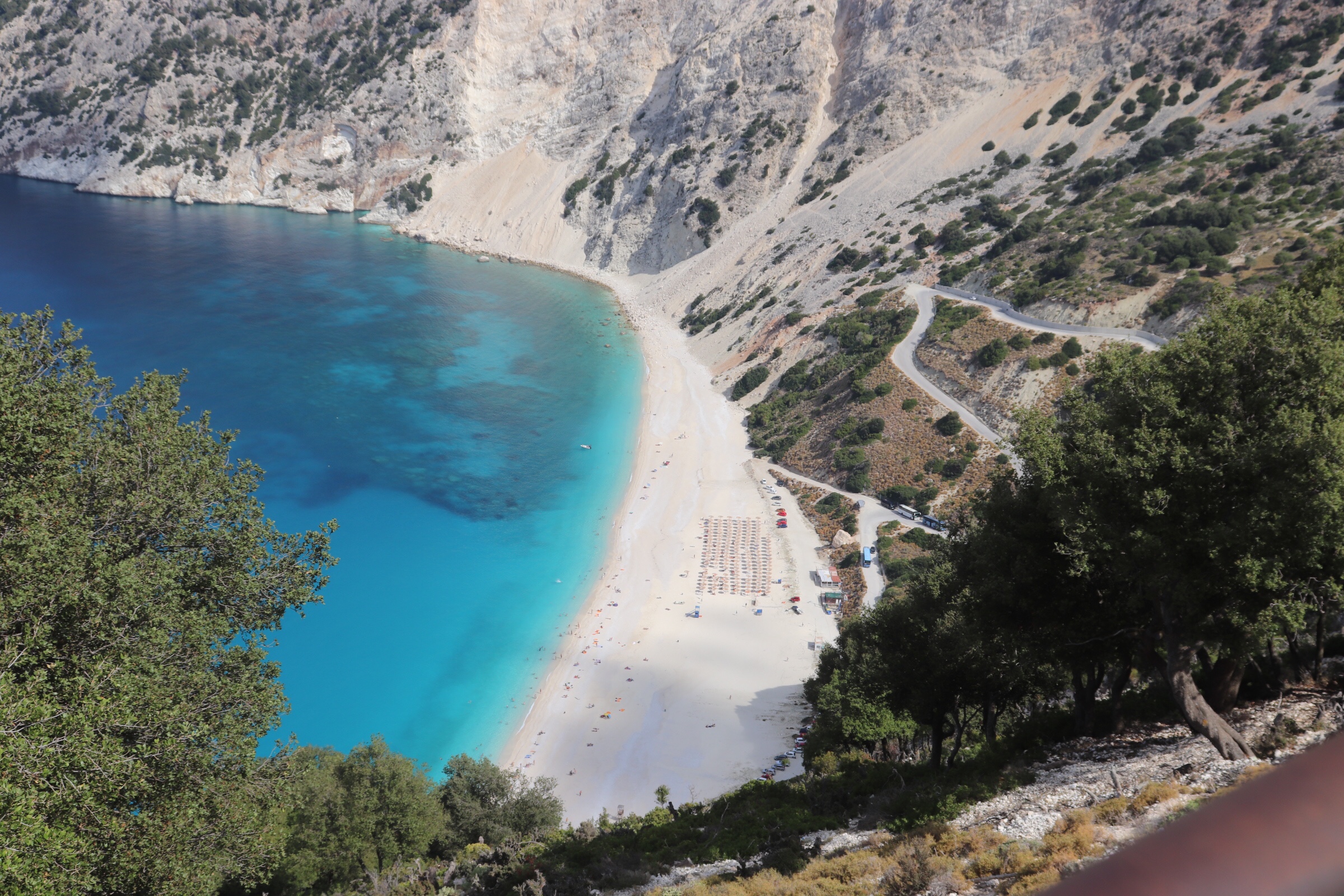
Our tour took us west over a narrow pass on the island. Next stop Myrtos Beach, and this only for the photo op! Myrtos Beach is the most photographed beach in Greece and used extensively in travel advertising. It did, indeed, look lovely and on another day would have been nice to occupy a chaise and partake of the crystal clear waters. But not today.

Myrtos Beach
View up the coast from Myrtos Beach (unseen in the foreground)

On the 45 minute trip back to the harbor and our ship we learned more about the history of Kefalonia especially during WWII. It was occupied by Italy who, in 1941 was allied with Germany. Many Germans and Italians were stationed here and shared barracks. With the fall of Mussolini in 1943, and Italy’s alignment with the Allies, the Italians stationed here were then considered traitors by the Germans. About 6,000 Italians were executed on Greece by the Germans during this time. There was a Civil War following WWII that we didn’t learn much about, then the 1953 earthquake! No wonder there was mass migration.

We make such a small footprint in the harbor!!

We returned to the ship for a much anticipated late lunch. The food was abundant and delicious. We found a new dining room that we enjoyed very much. Too bad we are only on board another day and a half.

We skipped dinner and went to the theater show at 8 p.m. Walked the top deck afterwards and watched the clouds and lightening in the distance. We were sailing into a storm.

Hints of a storm

Chania, Crete

The sleeping has been blissful aboard the Lirica! Almost without exception we sleep with the balcony door open giving us both sea breeze and the sounds and smell of the water. That, coupled with the constant soft vibration of the ship and you have a recipe for a good night’s sleep.

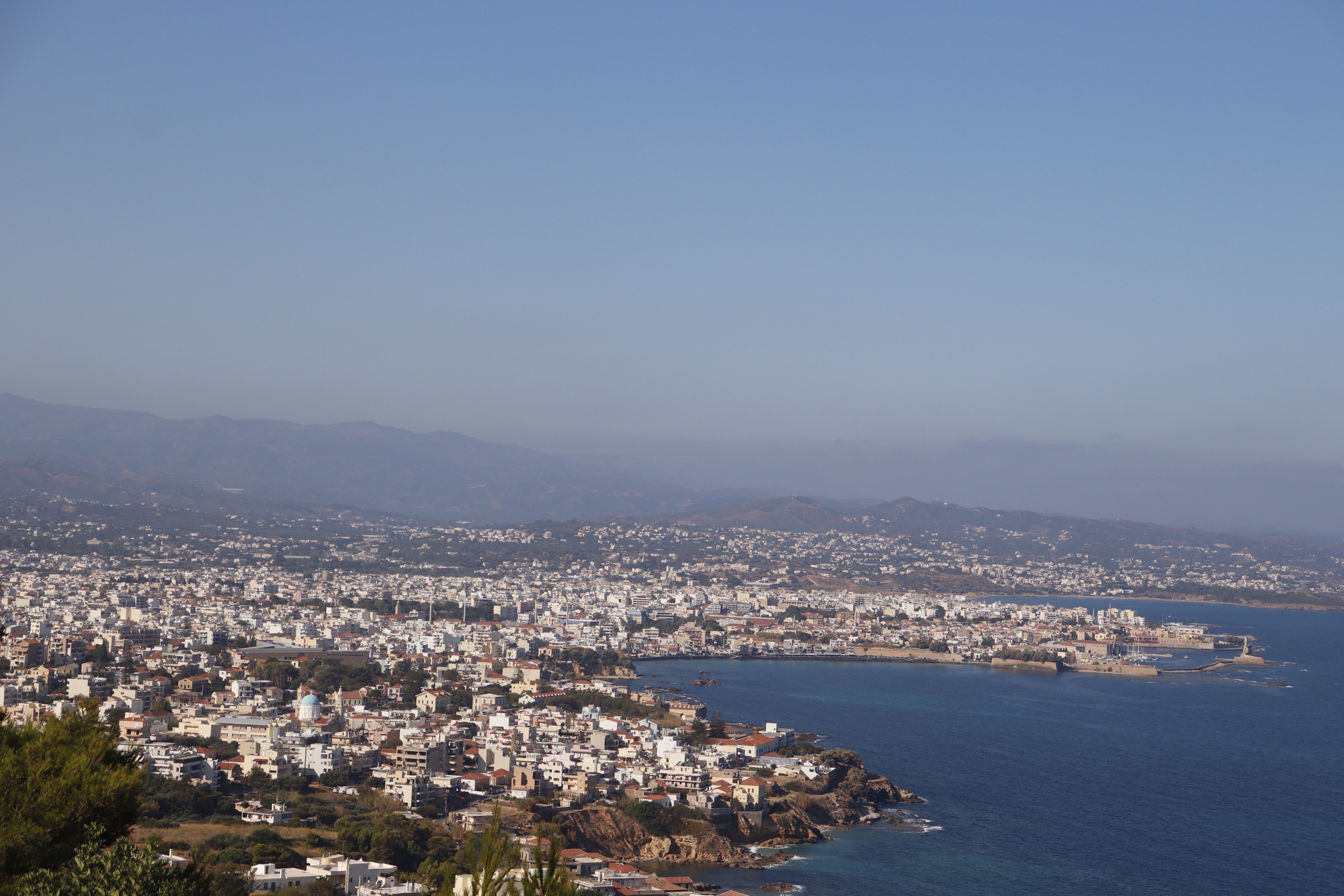
We arrived in Chania about sunrise. Watching the ballet of docking this ship is also amazing. Like parking a building two city blocks long and six stories tall, but accomplished effortlessly (or it looks effortless from my vantage point)!

We had arranged for an independent wine tasting and food walking tour before leaving home. We, and another couple, met Nasos, our guide, at the port. Nasos gave us an overview of the agenda for the day and a brief history of his life and how this came to be his business.

We climbed out of the port of Souda and up into the hills for our first stop – – – for coffee ☕️ the man had my heart right there!! The view back down to the harbor was beautiful and Nasos left the four of us alone to chat. Vincent and Angela, a couple about our age, were from Toronto, although Vincent had been born in Sicily and Angela was of Sicilian descent. They came on the cruise after 2+ weeks in Sicily visiting family and would return to Toronto at the cruise’s end.

View back to Souda port from cafe in the hill

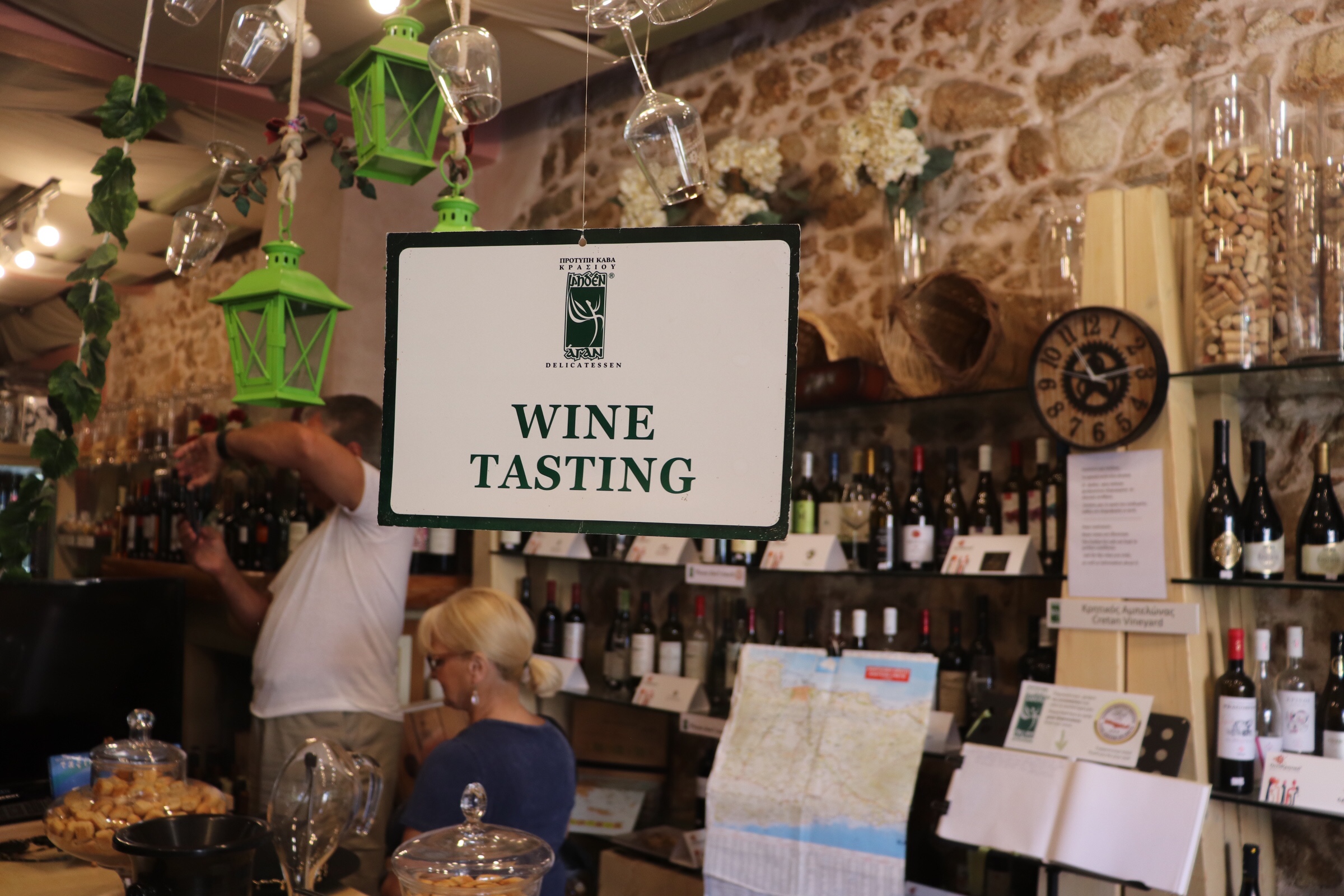
Nasos retrieved us and we wound back down out of the hills to town. Next stop, wine tasting (have I mentioned this man had my heart ❤️)? Lady Maria, the proprietress, continues the family business started by her father-in-law. The shop deals only in indigenous wines, from small productions that are not exported. So, wine you could only have here!

The wine shop

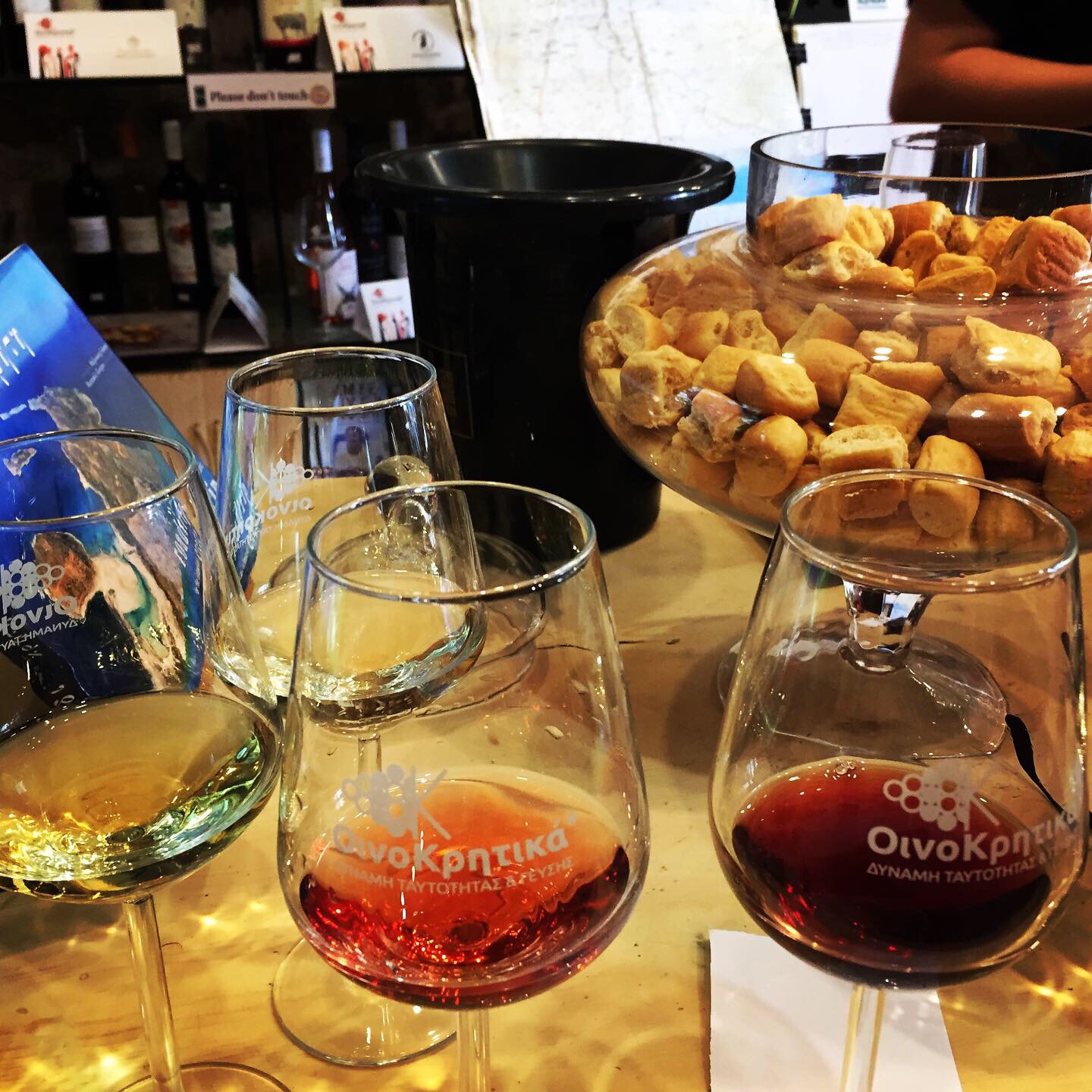
We had a short lesson on wine tasting (vs. drinking); looking at clarity and color, smelling aromas and learning the art of the mouth swirl and spit. Before each wine was served she showed us the grape varietal and it’s region on the island. We tasted two whites, a rośe and a robust red. I have to say I went into the event not anticipating I would like Greek wine, but I was happily surprised by the quality And taste of each one.

The tasting

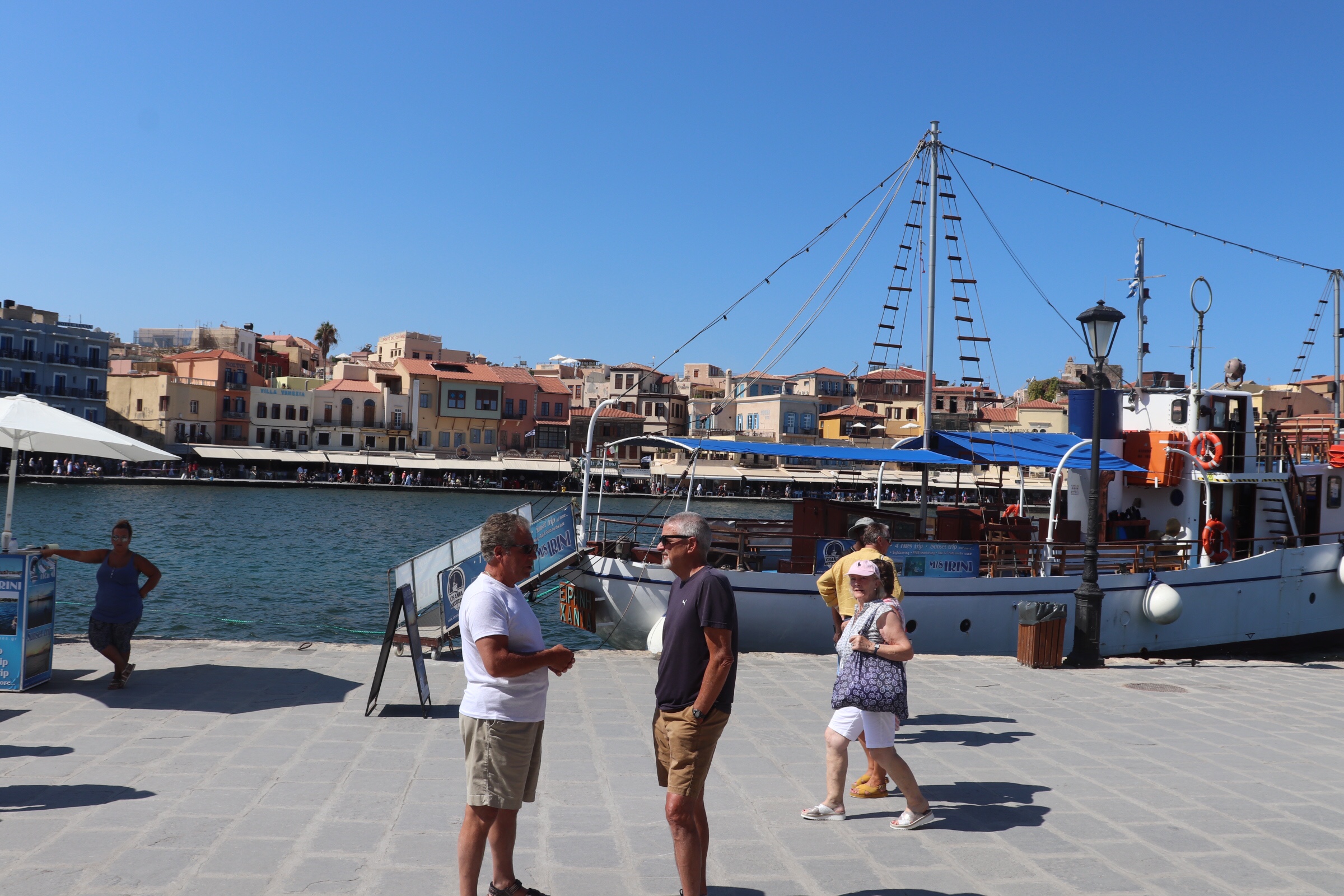
Nasos reappeared at the end of our tasting and led us, on foot, to the harbor. Here he pointed out our meeting point and gave us free reign for the next 45 minutes. We wandered the streets taking photos of the local color, browsing in an art gallery and a few of the many shops scattered among the tavernas.

Vincent and Tom
Local color

We met at our appointed place and time and this time were led through the ‘old town’ of Chania. For about 300 years (1300’s-1600’s) Chania was occupied by Venetians. Their influence on the architecture, improvements to the harbor and the layout of the city was clear. A mosque in the harbor area is a remnant of Ottoman occupation following the Venetians.

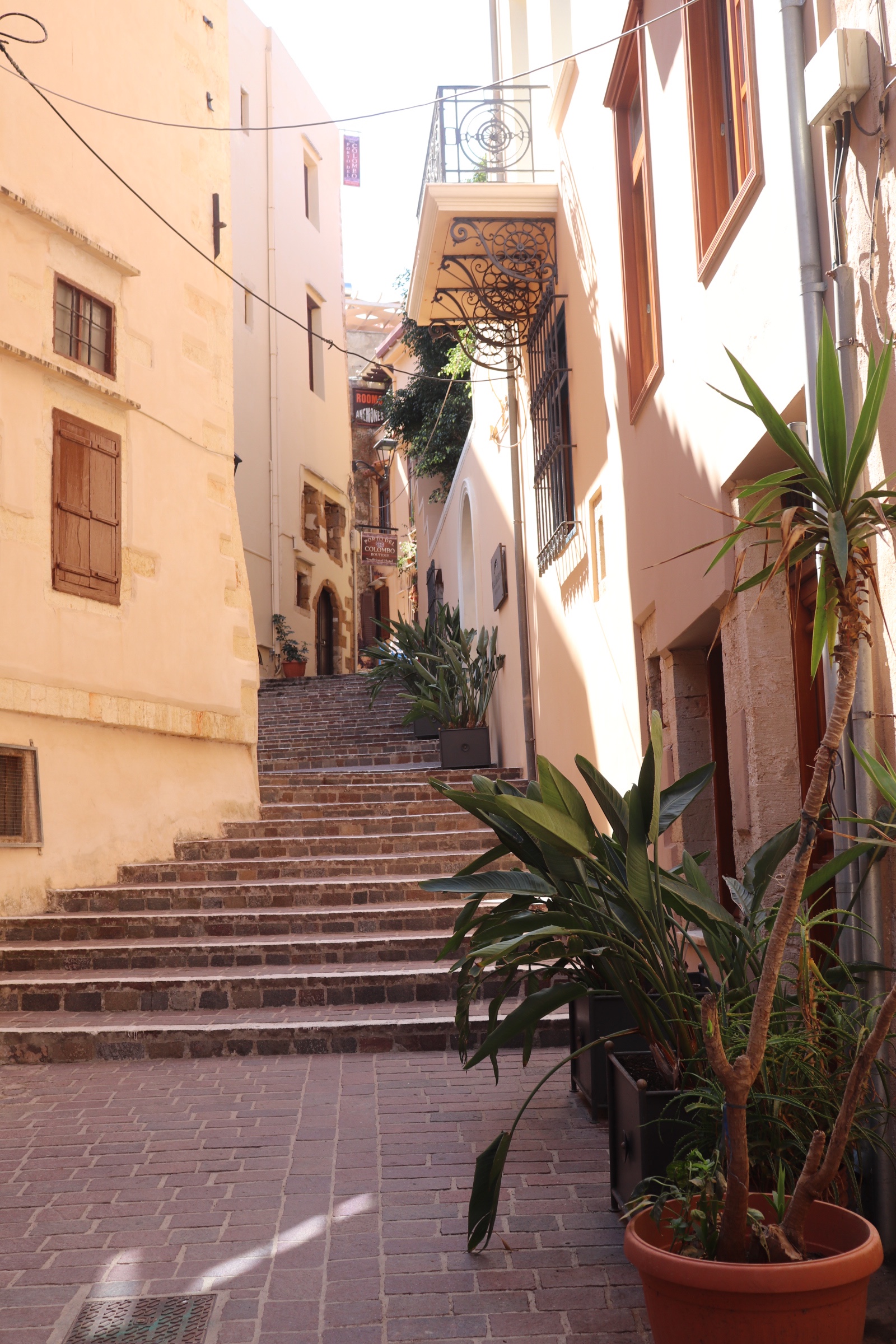
Old Chania
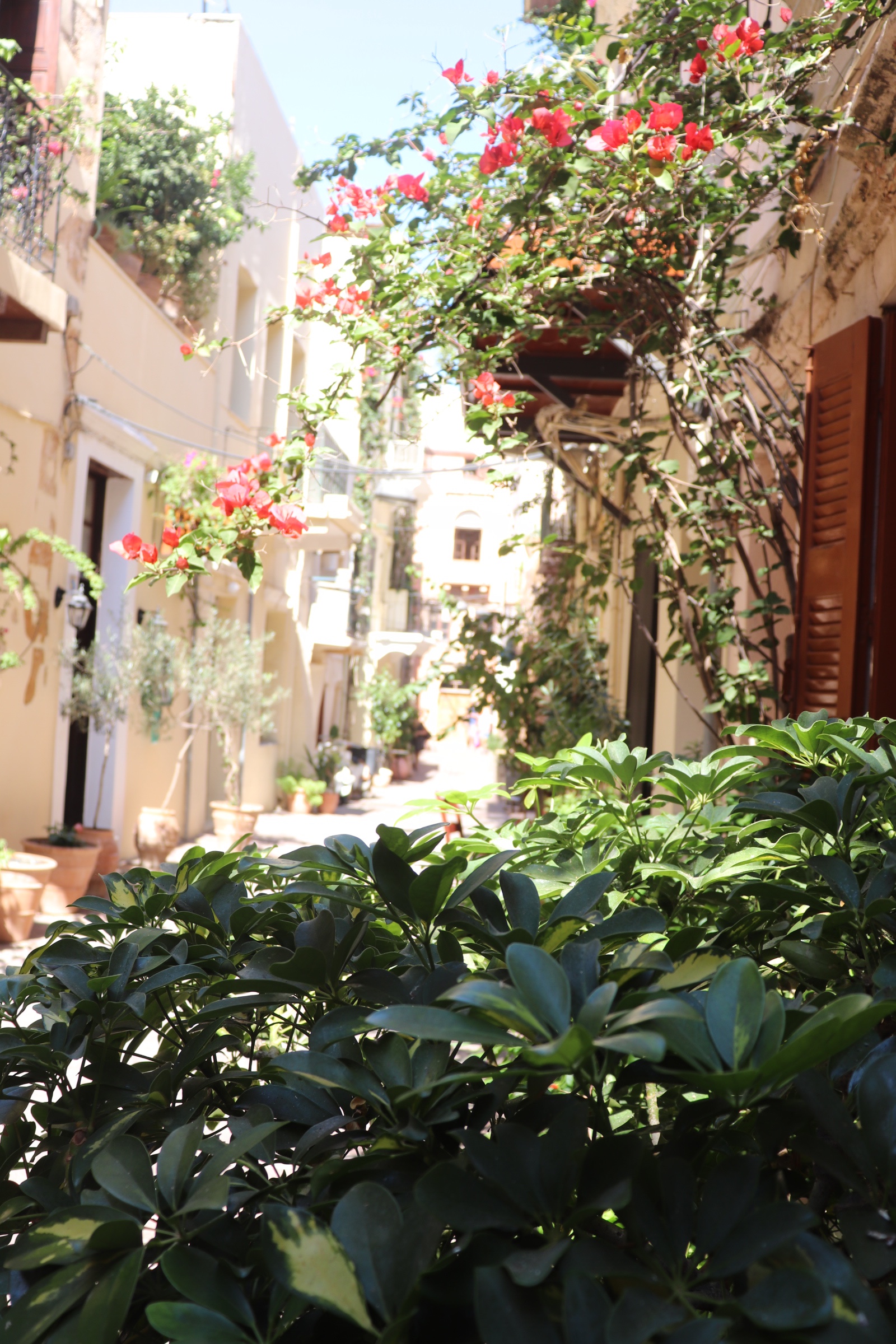
More ‘old town’ Chania

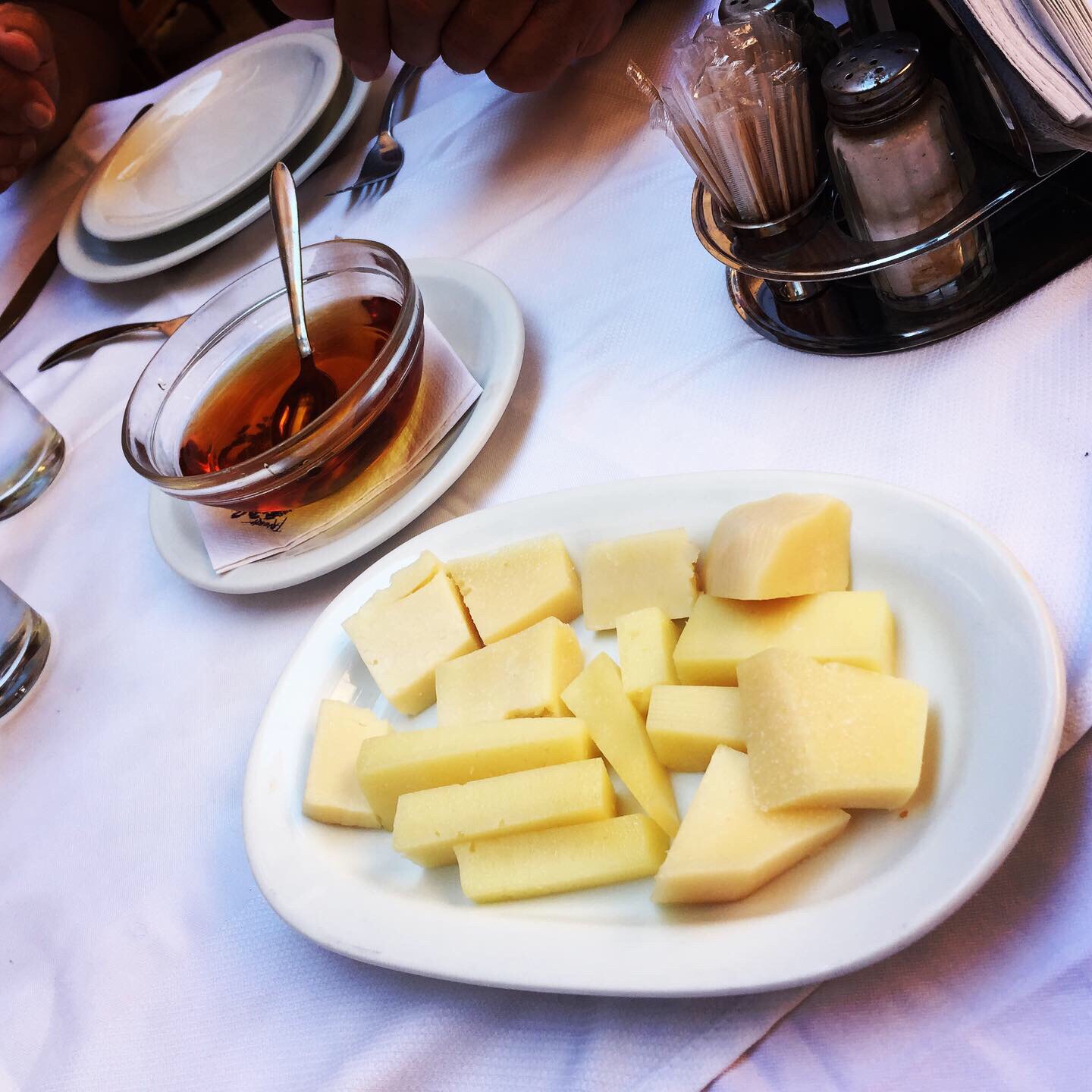
The meander through the old town brought us to Taverna Ela where a vast assortment of Greek foods awaited us. We started with two hard cheese (on the order of Toscana) served with honey (spooned on top of the cheese pieces you took). We learned this is traditional at weddings and other receptions.

Cheese served with honey

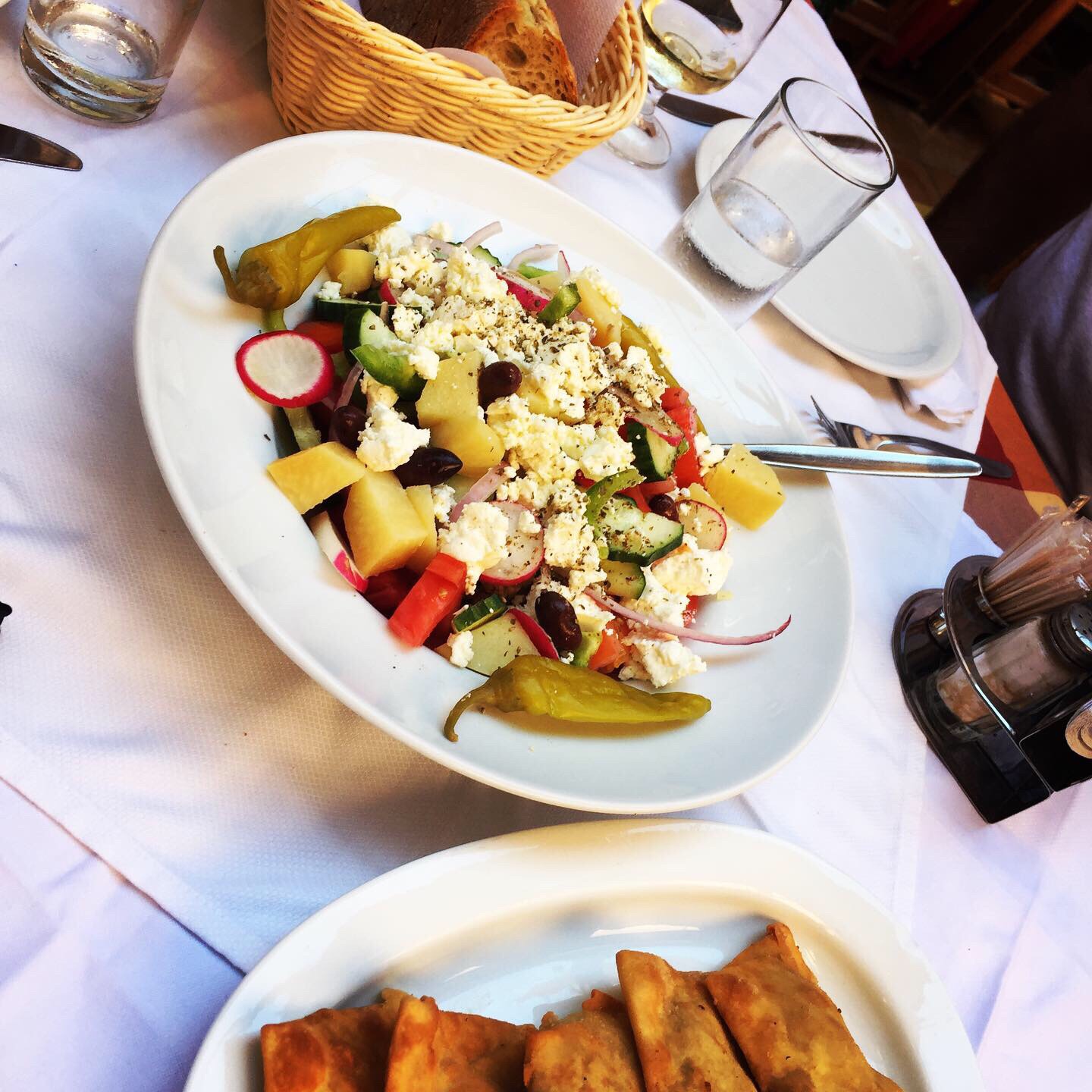
This was followed by a Greek salad, but not the one you’re conjuring right now! At the base is dry bread, this topped with tomatoes, cucumbers, onions, olives and goat cheese. Sprinkled with dried oregano and then doused with Greek olive oil. Delicious.

Greek Salad

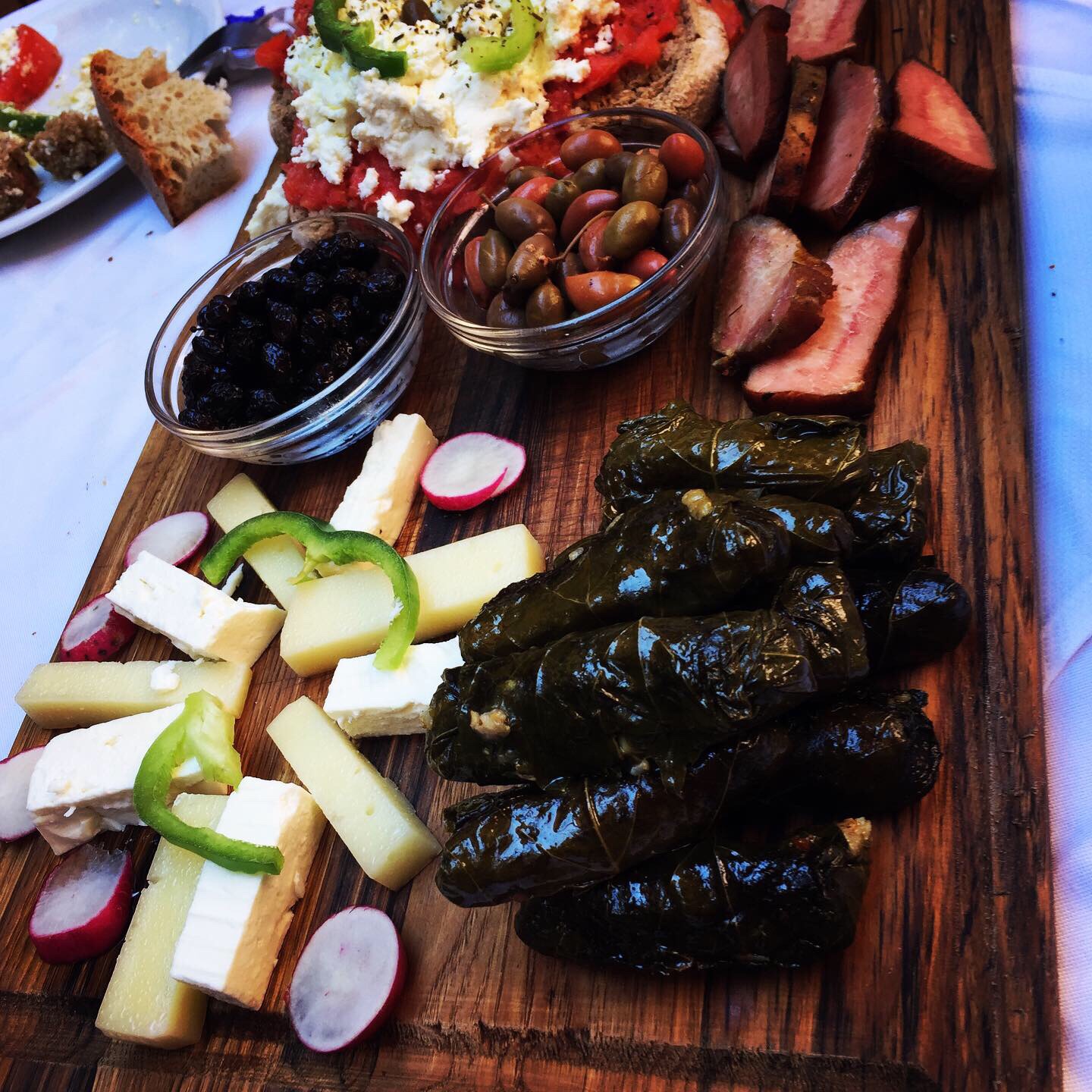
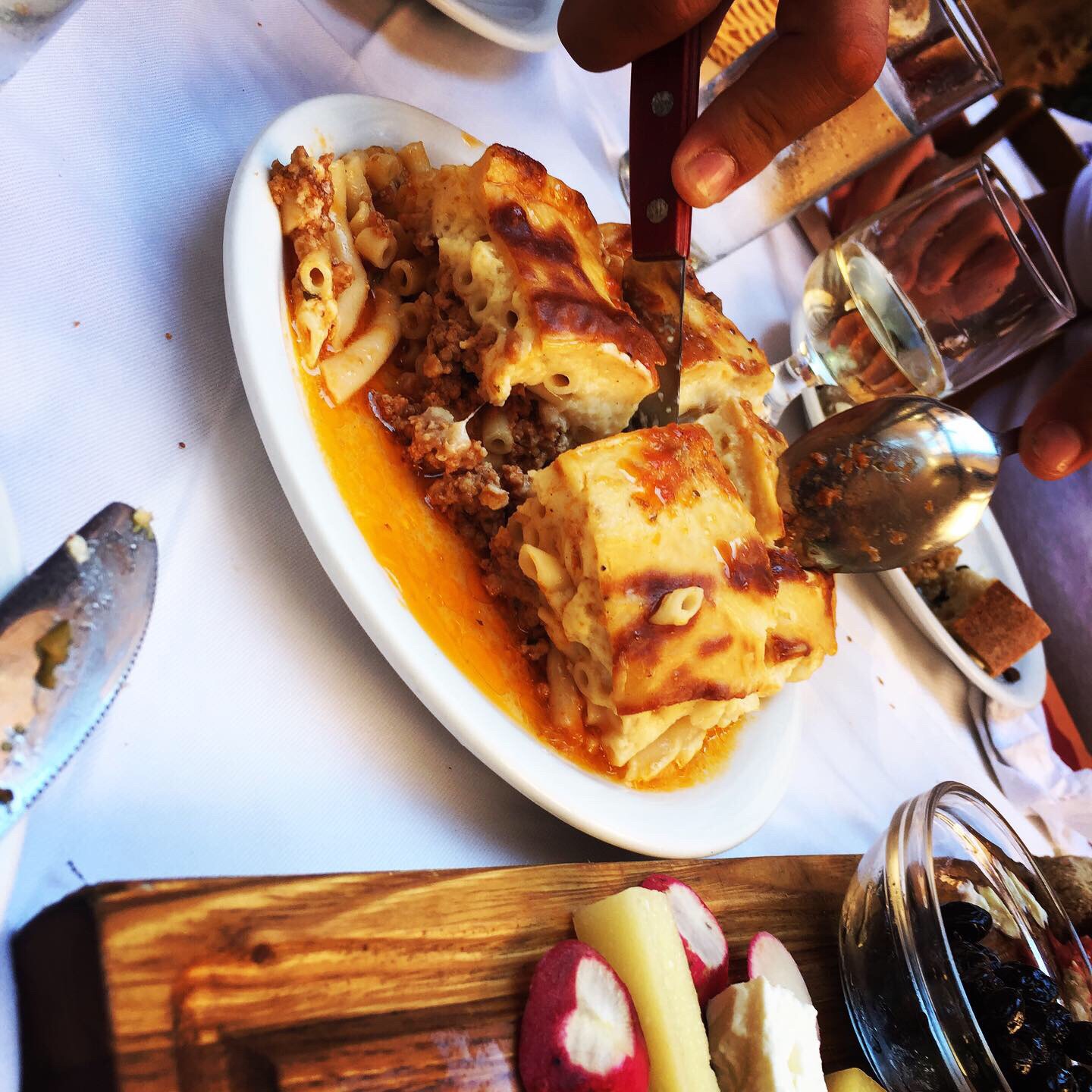
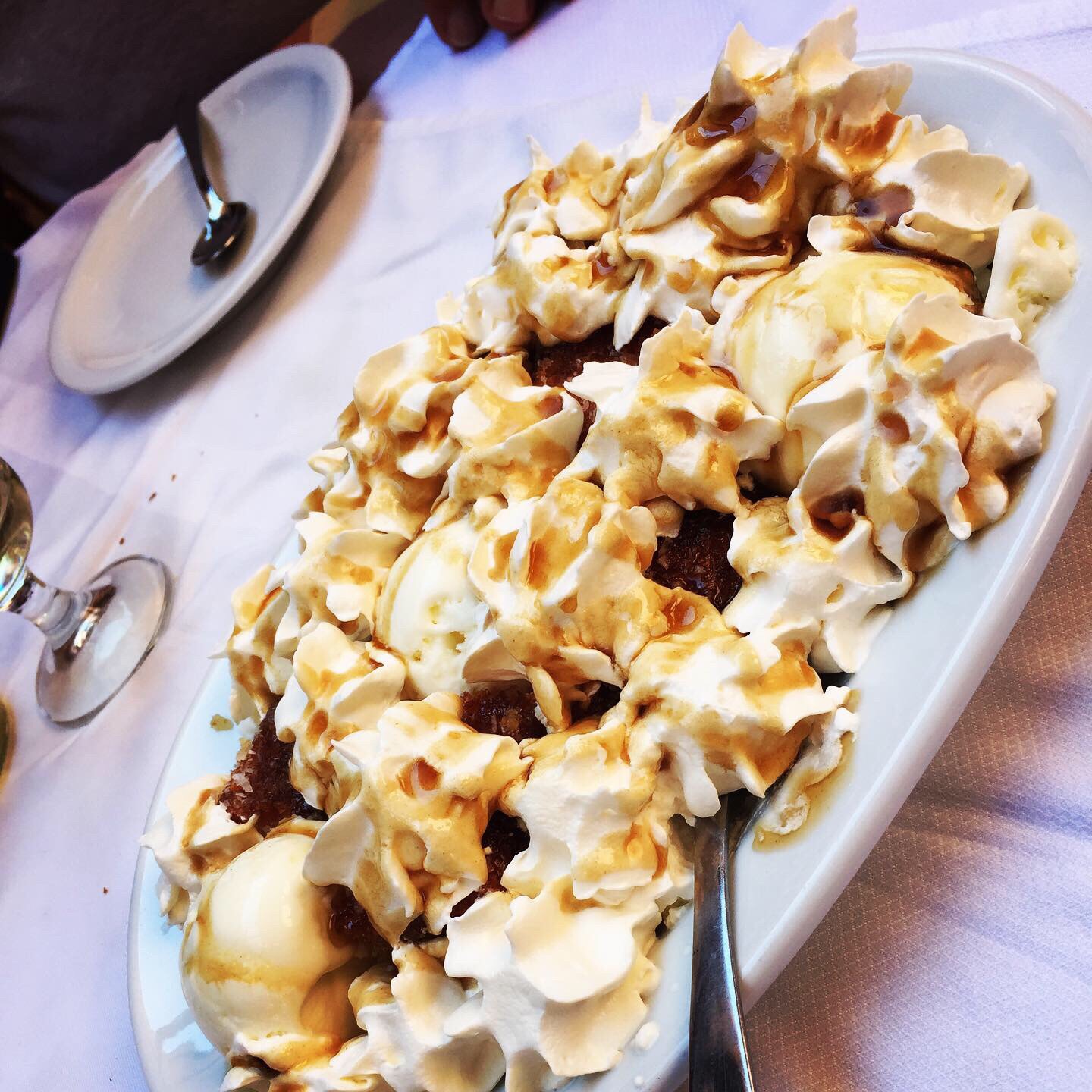
We all could have stopped there, but next came a platter with dolmas, dried pork, two types of local olives, a Greek version of bruschetta and more cheese (feta this time) and radish slices. And it didn’t stop there – – a pasta dish, akin to lasagne, but made with tubular pasta and topped with a bechamal sauce completed the main meal. Now near stomach explosion, out came dessert (gelato atop cake topped with whipped cream) and grappa!! Authentic, abundant and delicious.

The PLATTER!
The pasta
The dessert

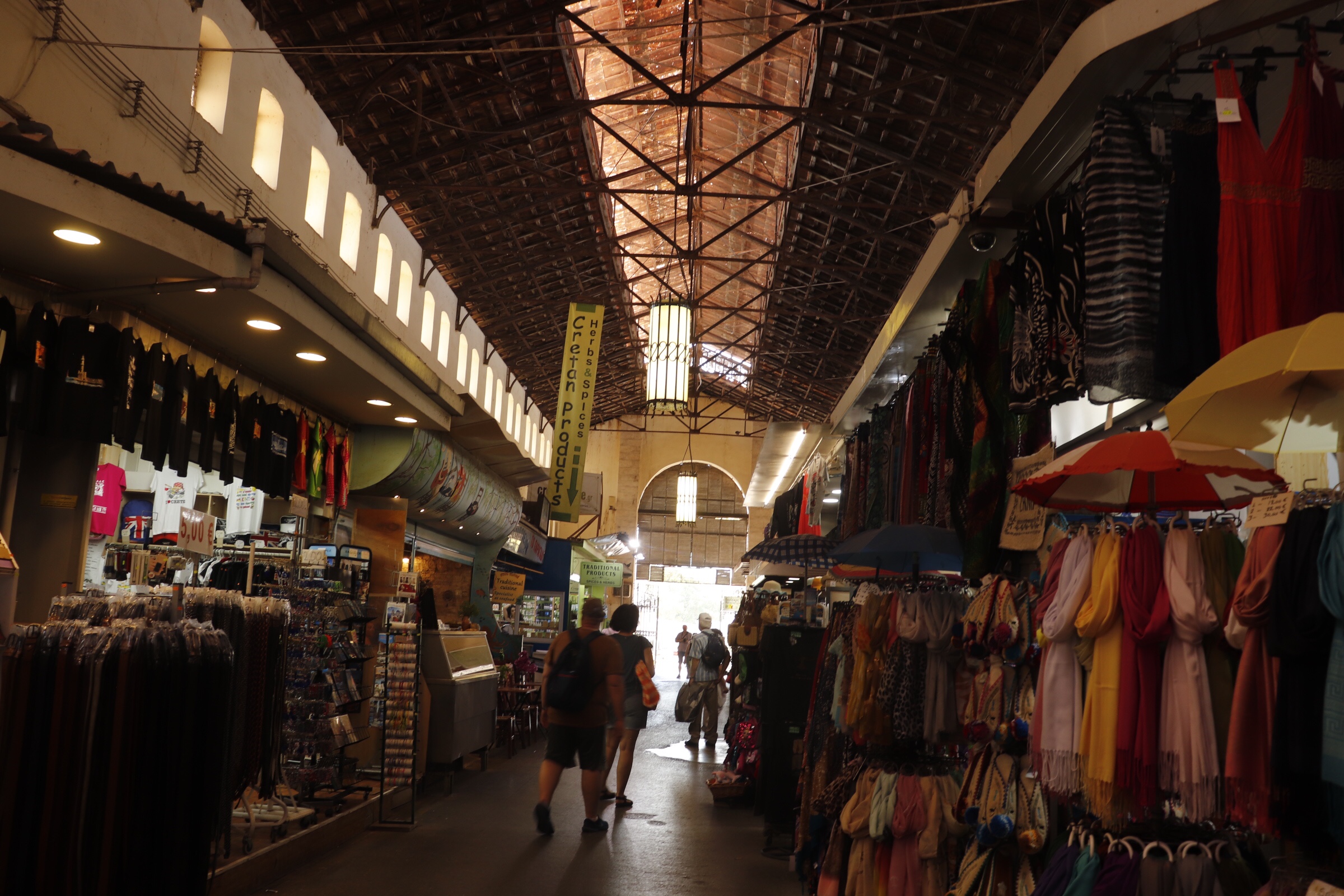
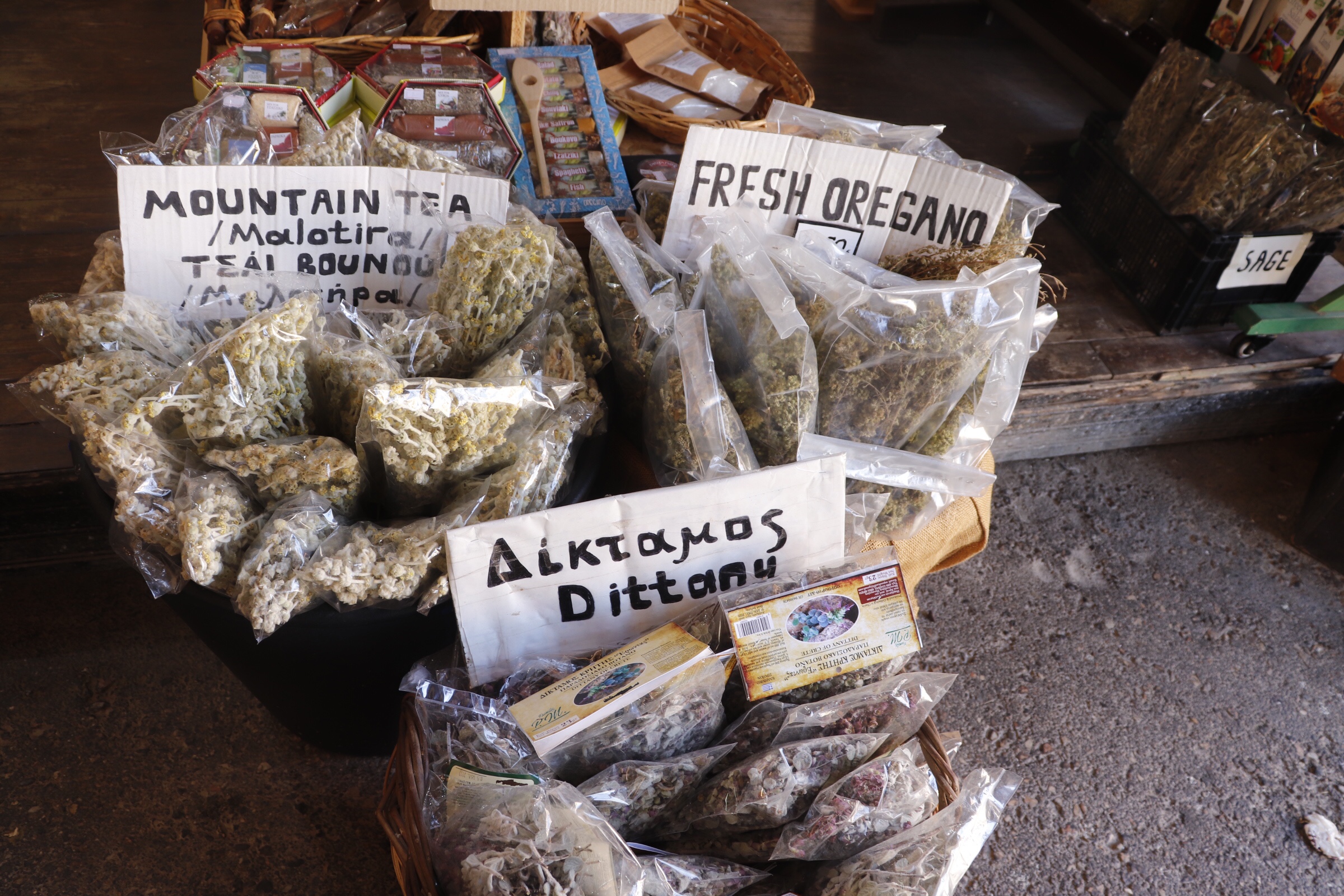
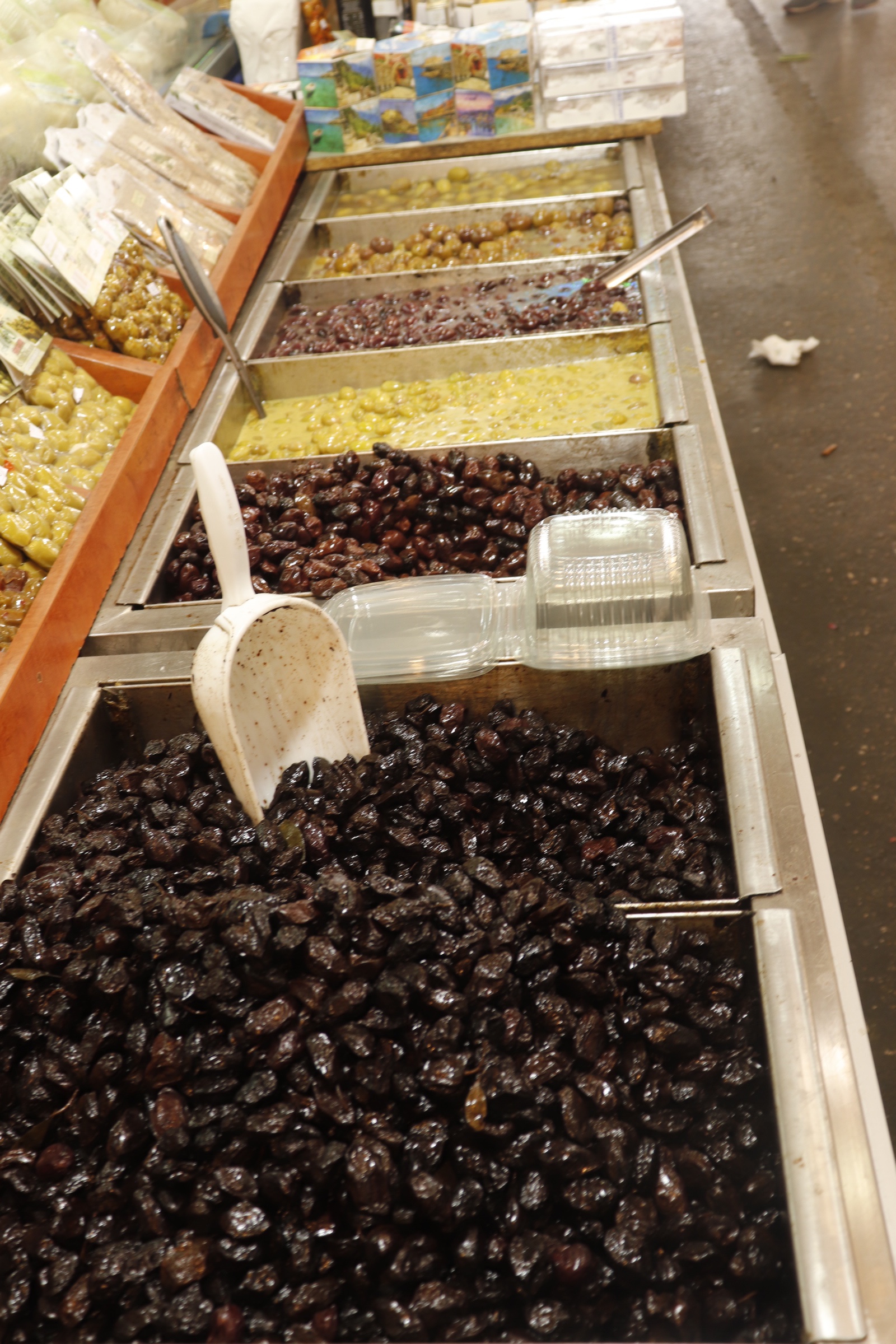
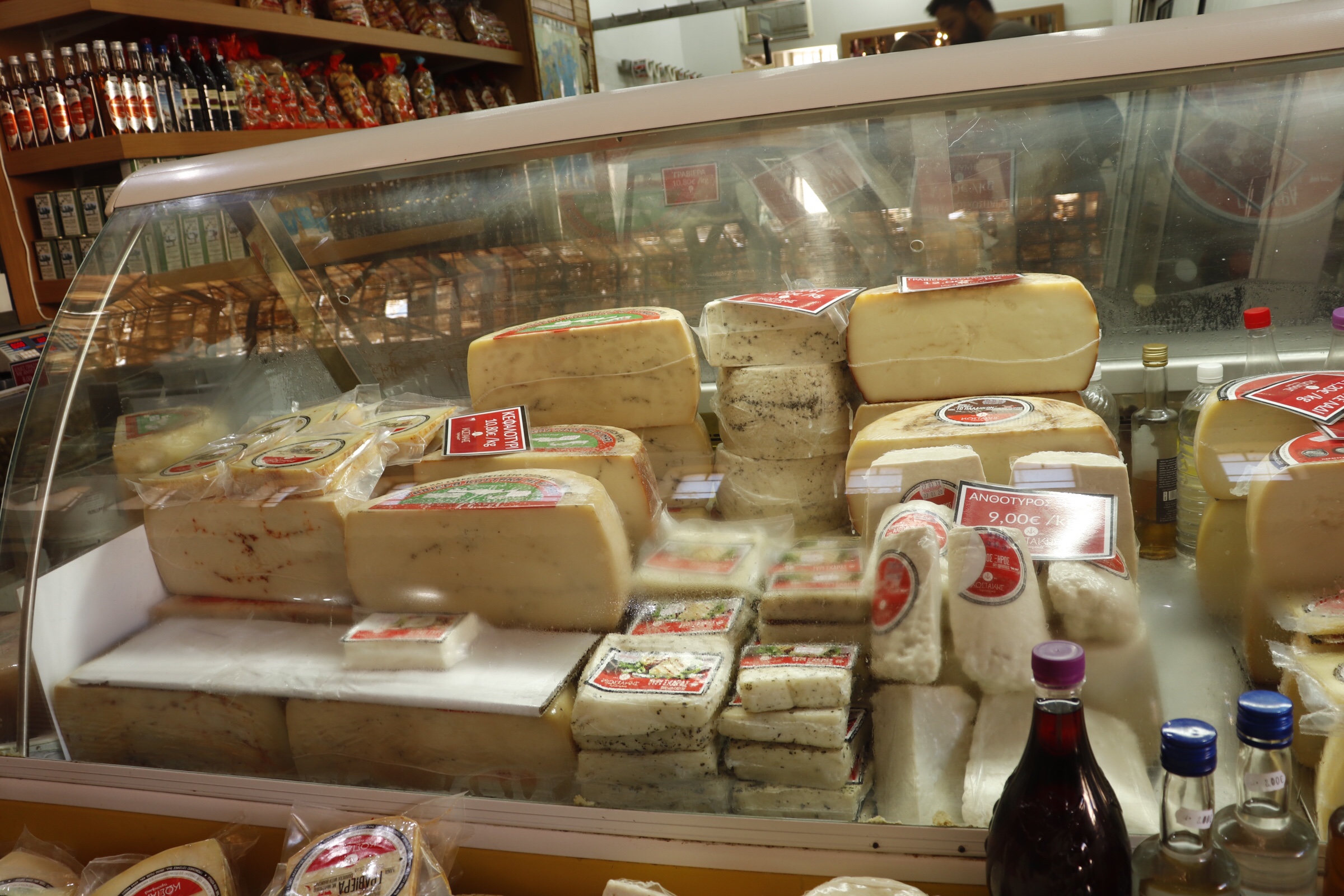
We waddled out and down the streets to the old Central Market. Nasos left us here to wander while he fetched the car to return us to the ship. We all agreed that this had been an A+ experience.

Central Market
Herbs
Olives
Cheeses

Back on the ship we all vowed not to eat another thing that day! Tom and I retreated to our stateroom to touch base with the girls, read and relax. An hour or so later I went in search of the jigsaw puzzle and amused myself for some time.

In the evening we took several (much needed) laps on the deck as we watched the sun dip into the sea. At 8 we went to the theater for a fun musical salute to Queen and Freddy Mercury. A stop for a glass of wine and some great people watching before bed.

Tomorrow, Cephalonia.

Santorini, Greece

The plan was to queue up at 6:30 a.m. to get tickets for the first tenders. This is the first time we ever had to tender on a cruise and were not quite sure of the logistics. However, I woke still feeling not great, so we took another couple of hours sleep. Then after an Aleve, a shower and breakfast we were ready to head to Santorini. The ship was in port for twelve hours (7 a.m. to 7 p.m.) so we felt comfortable using the time to do our own exploration vs. a planned excursion.

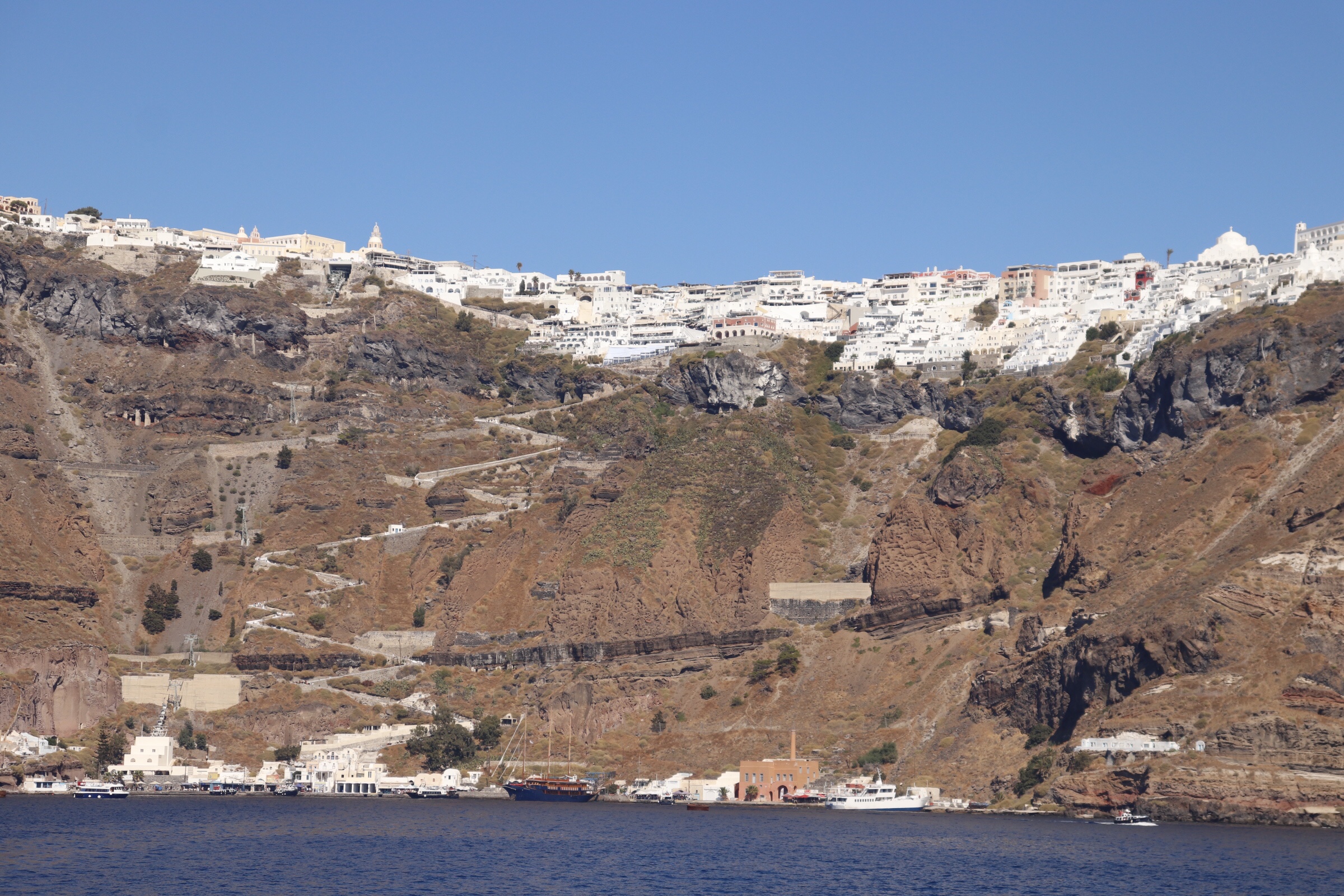
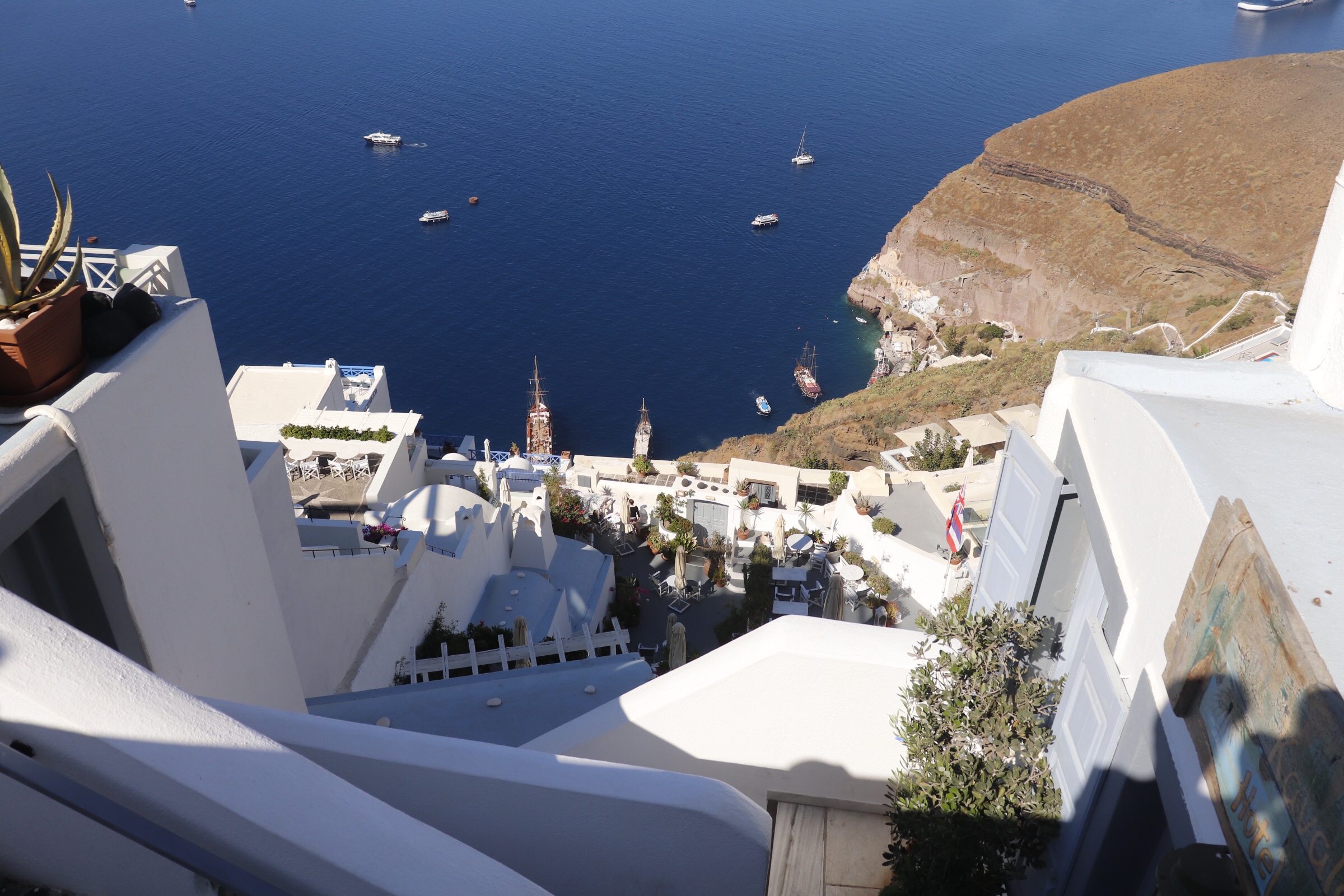
Santorini is part of the Cyclades group of islands and sits on a caldera from a long ago volcanic eruption. The towns sit perched atop steep cliffs (a result of the volcanic activity). From the port you can either walk

You can see the road up (middle left)

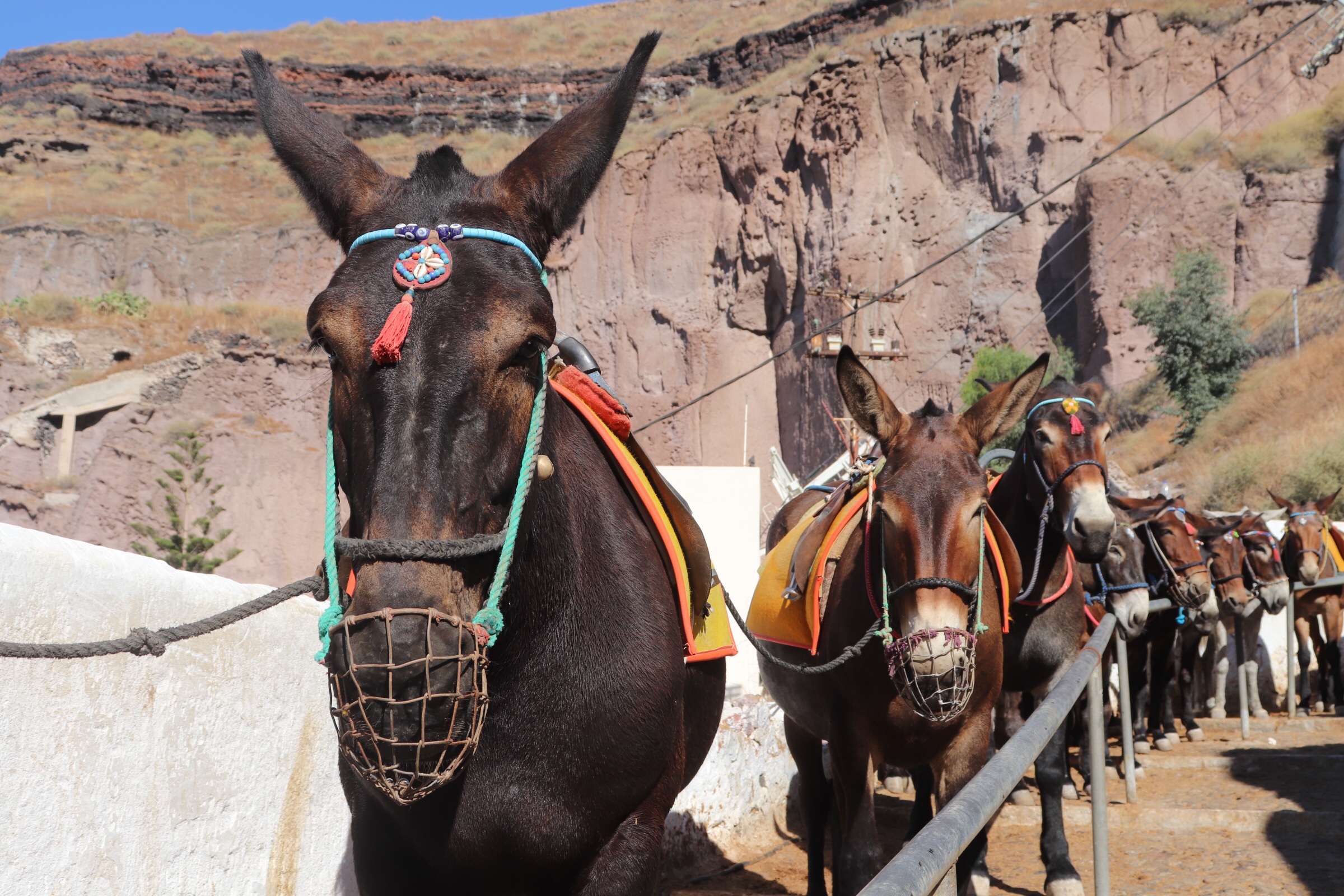
Take a donkey

Waiting for a customer

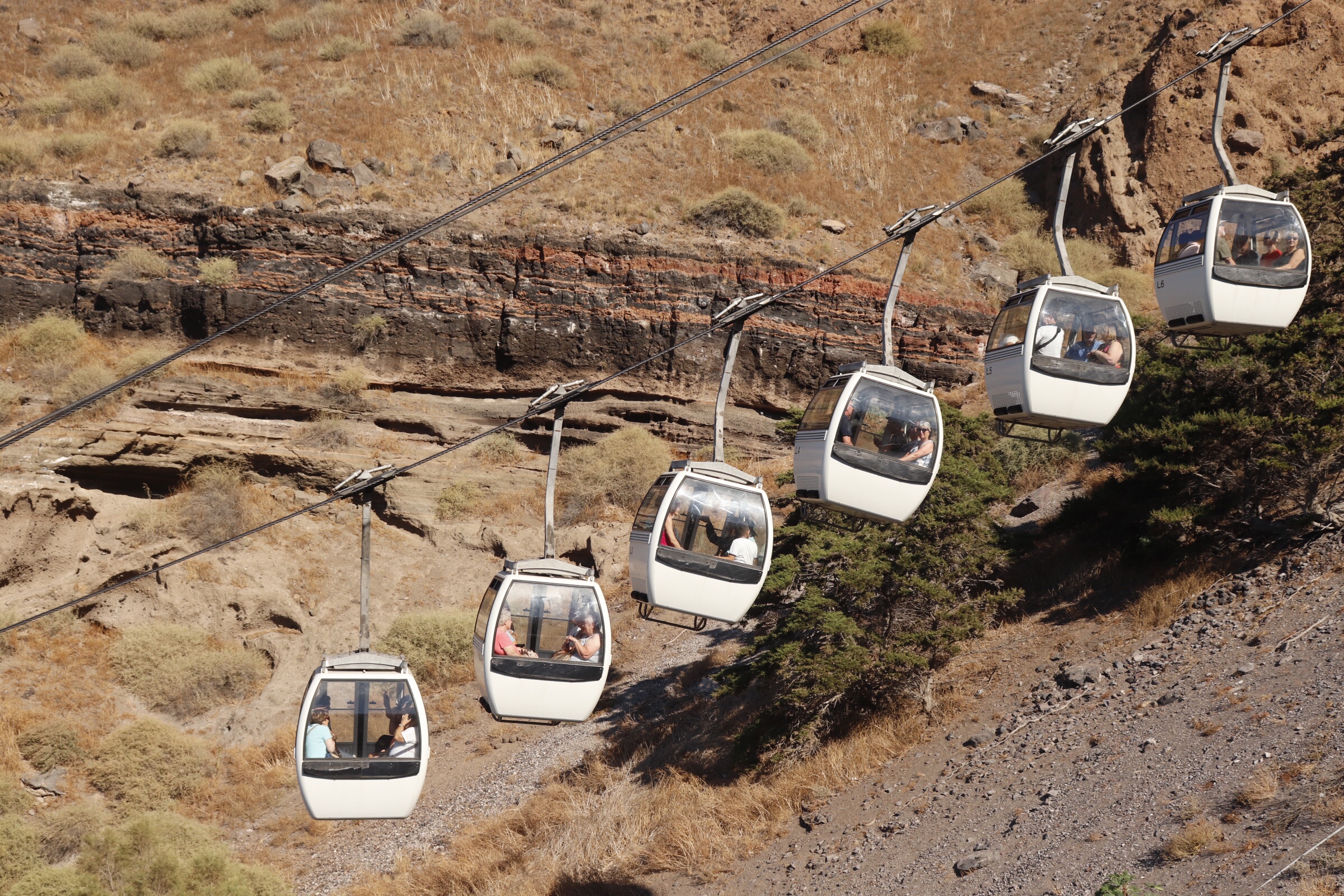
Or ride the cable car

Not Tom’s thing!!

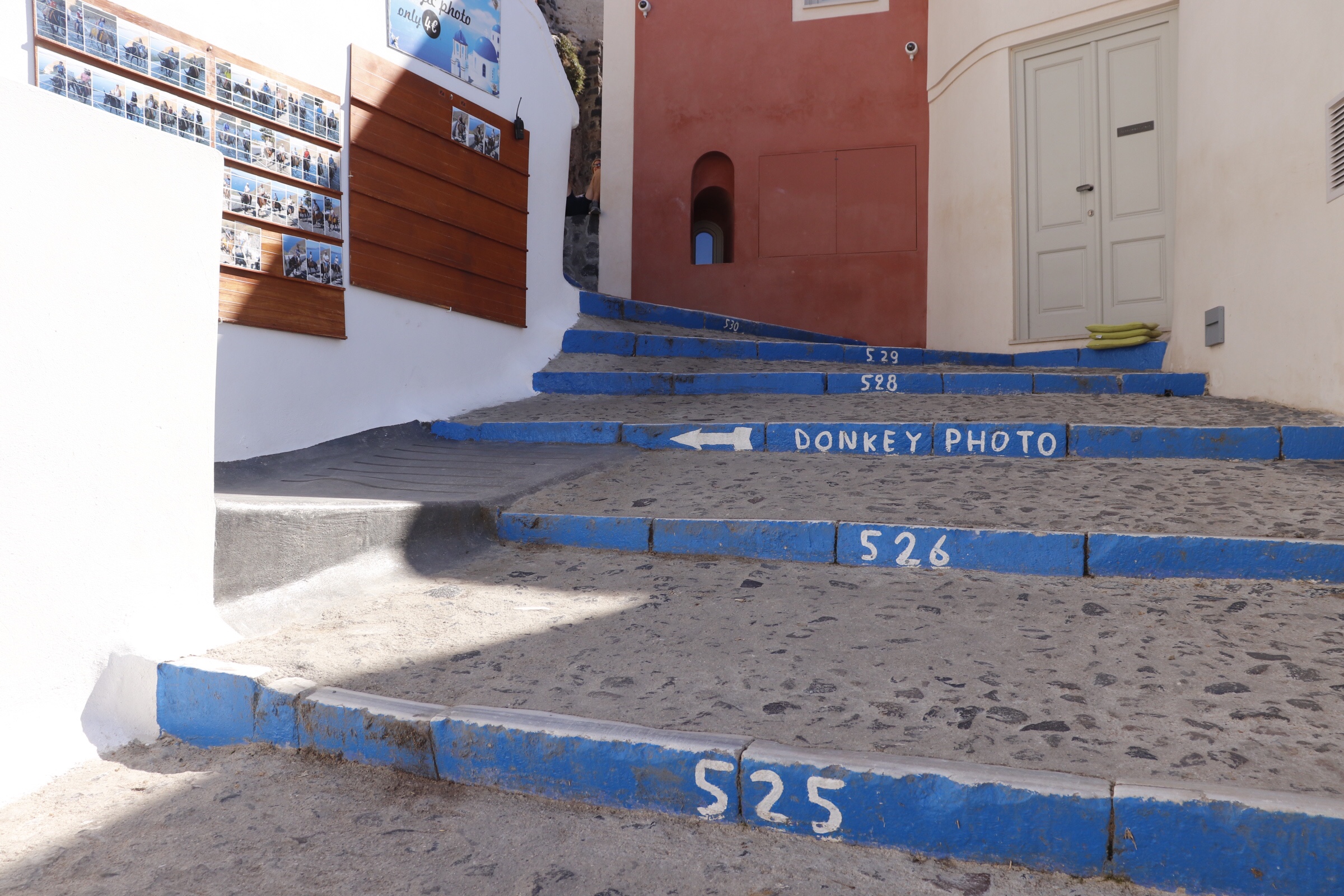
We chose to walk! We passed the donkey ‘vendors’ along the way chanting “donkey up?” The path was a long, switchback road with an easy grade. As you neared the top they began numbering the steps so you knew how far you’d climbed!

Counting your steps!

Fira was alive with tourists (we were one of three cruise ships in port today) but lovely none the less. Clean, bright white buildings with blue trim, and happy locals dependent on the tourism greeted us. We wandered the streets poking in shops and churches and admiring the view from atop the cliffs. We inquired about the local bus to Oia, the other town that caps the ridge with the iconic blue domed buildings. We were directed to the local bus station that also was jammed with tourists.

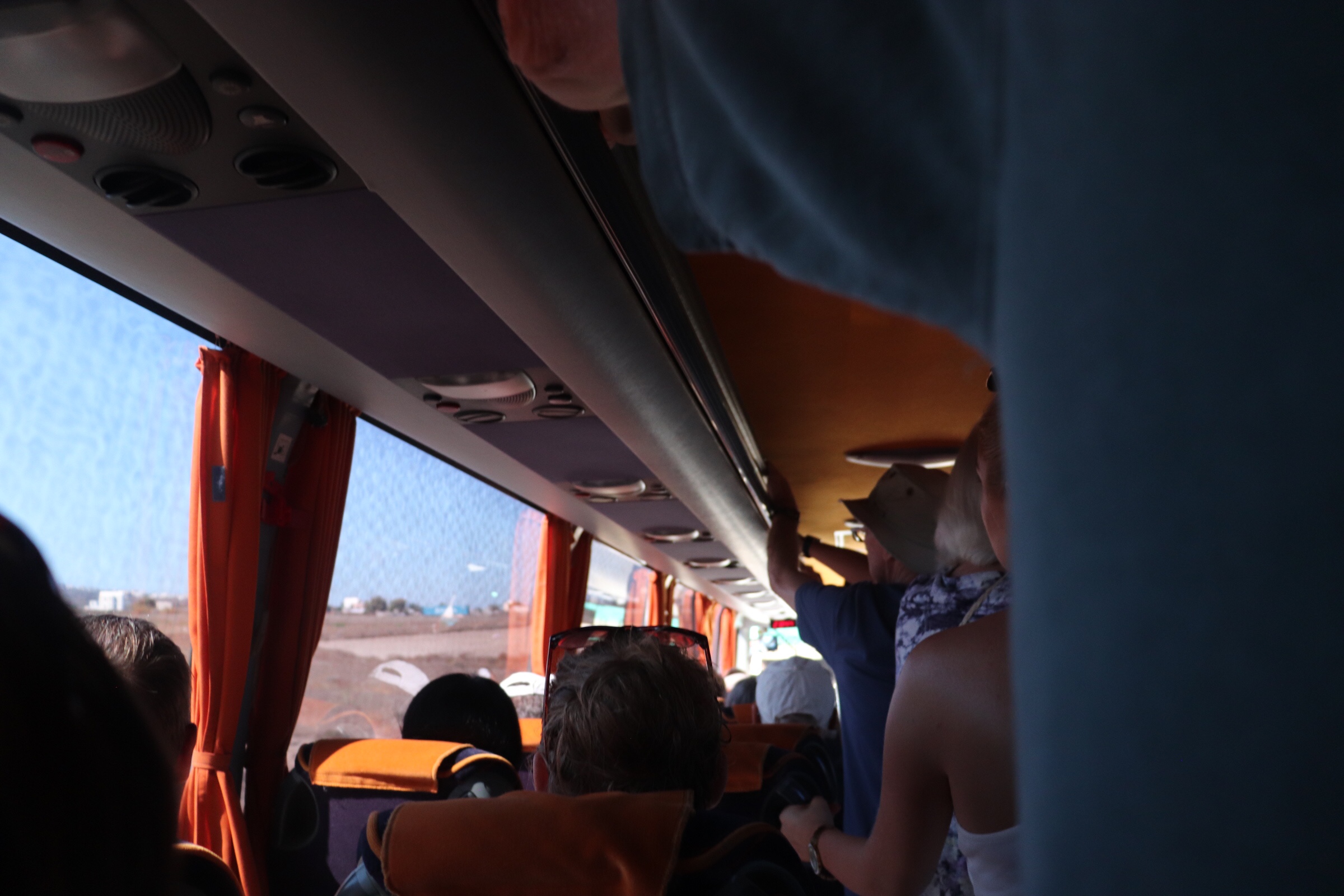
The bus to Oia arrived. Departure was delayed while the driver jumped off for a smoke and his assistant loaded us on like cattle. When all of the seats were taken, the last 20 or so of us stood in the aisle for the 15 minute ride to Oia! Tickets were purchased on the bus, so the assistant maneuvered herself down the aisle collecting money and dispensing tickets.

We were in the aisle

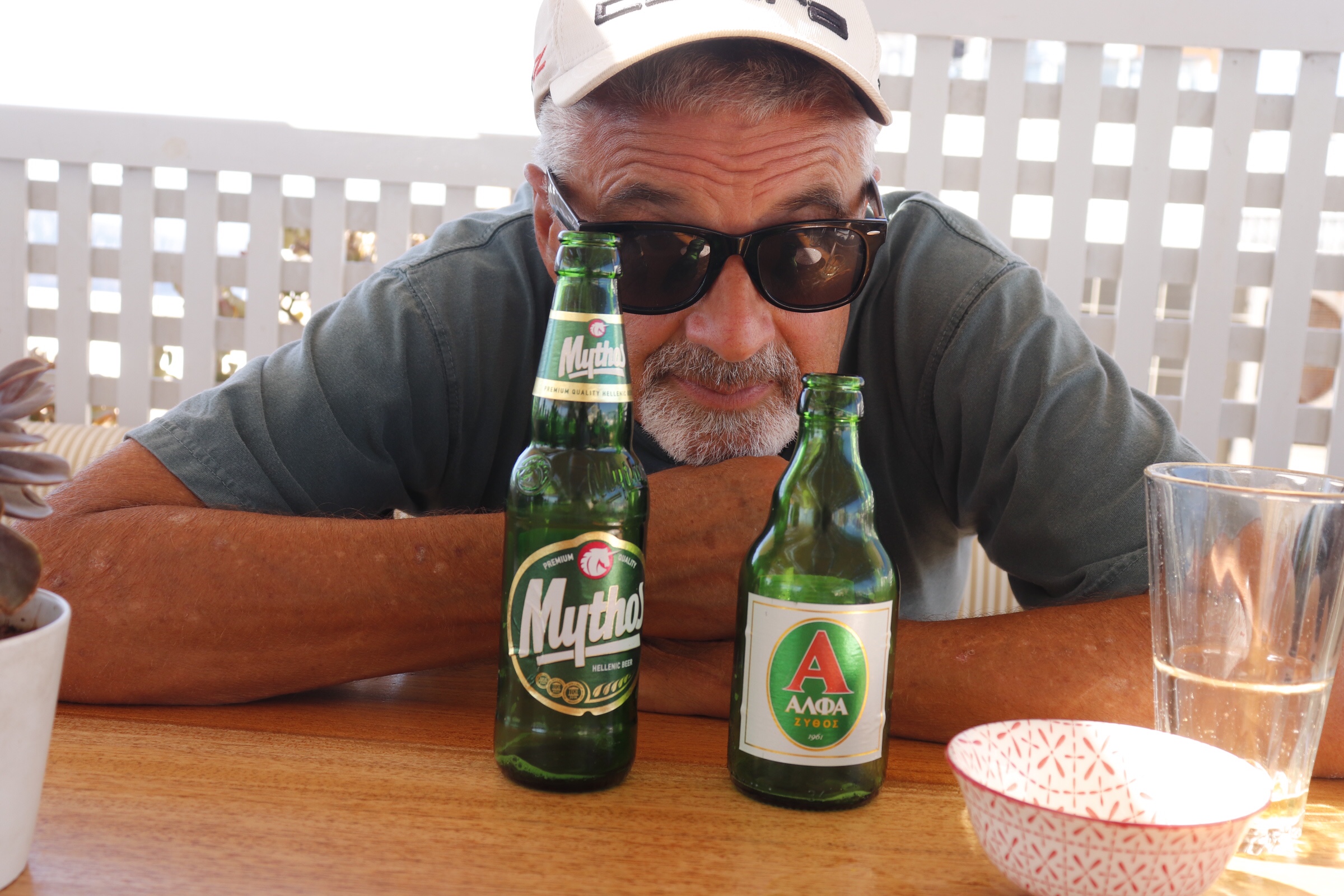
We arrived in Oia to more crowds but quickly moved on to quieter streets and locations. The weather was perfect – – – clear skies and temperatures in the mid 70’s and a lovely breeze. Still, all of the climbing and bus jockeying called for a cold Greek beer 🍺!! We found a lovely tavern with a rooftop terrace and enjoyed the time off of our feet and the cold refreshment.

Nothing like a cold beer!

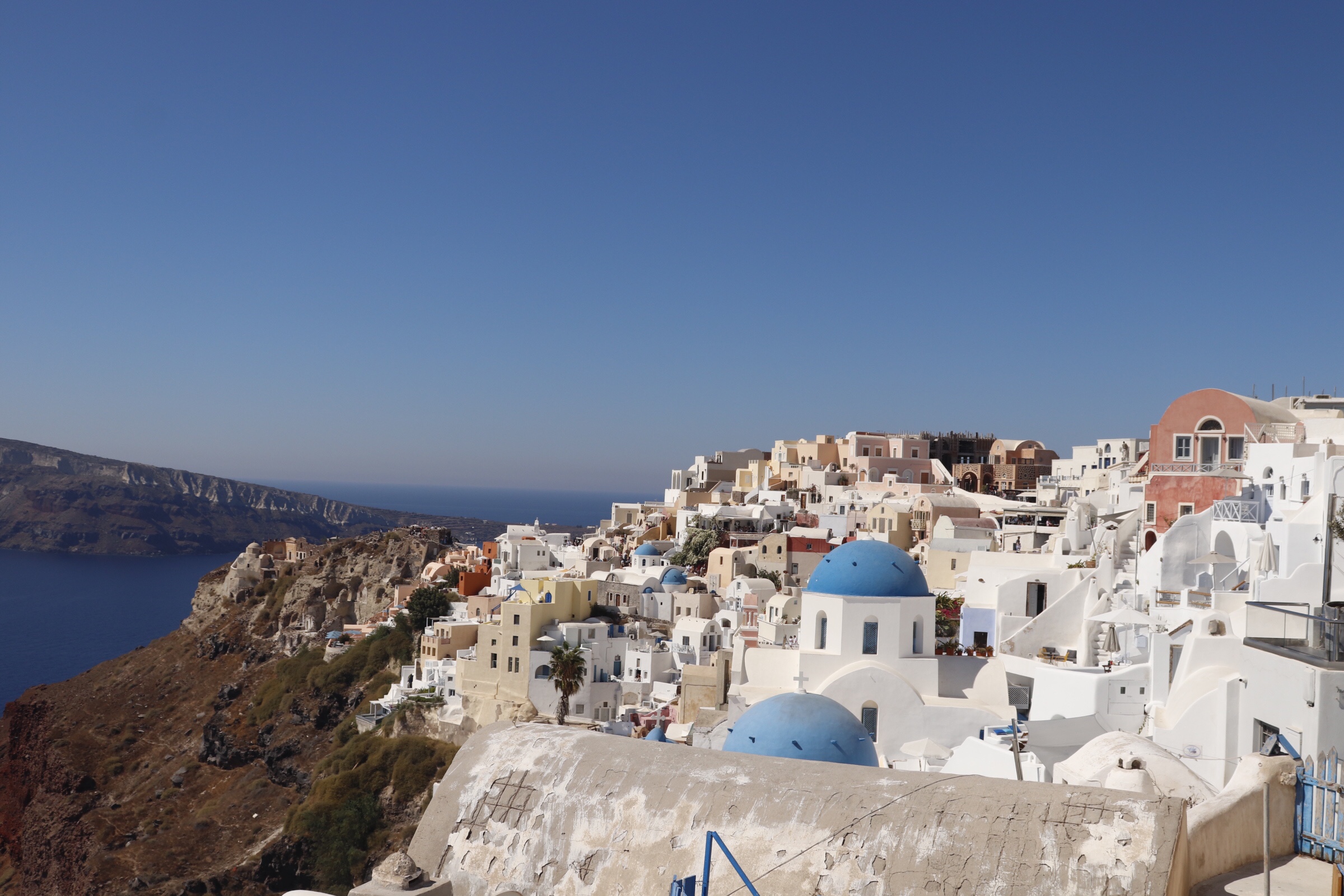
Refreshed and revived we went in search of some photo ops before returning to the return bus location. Except for the classic Greek architecture, the landscape was much like Southern California. Bougainvillea and Oleander dotted the otherwise parched, late season land. You wonder how much rain they get.

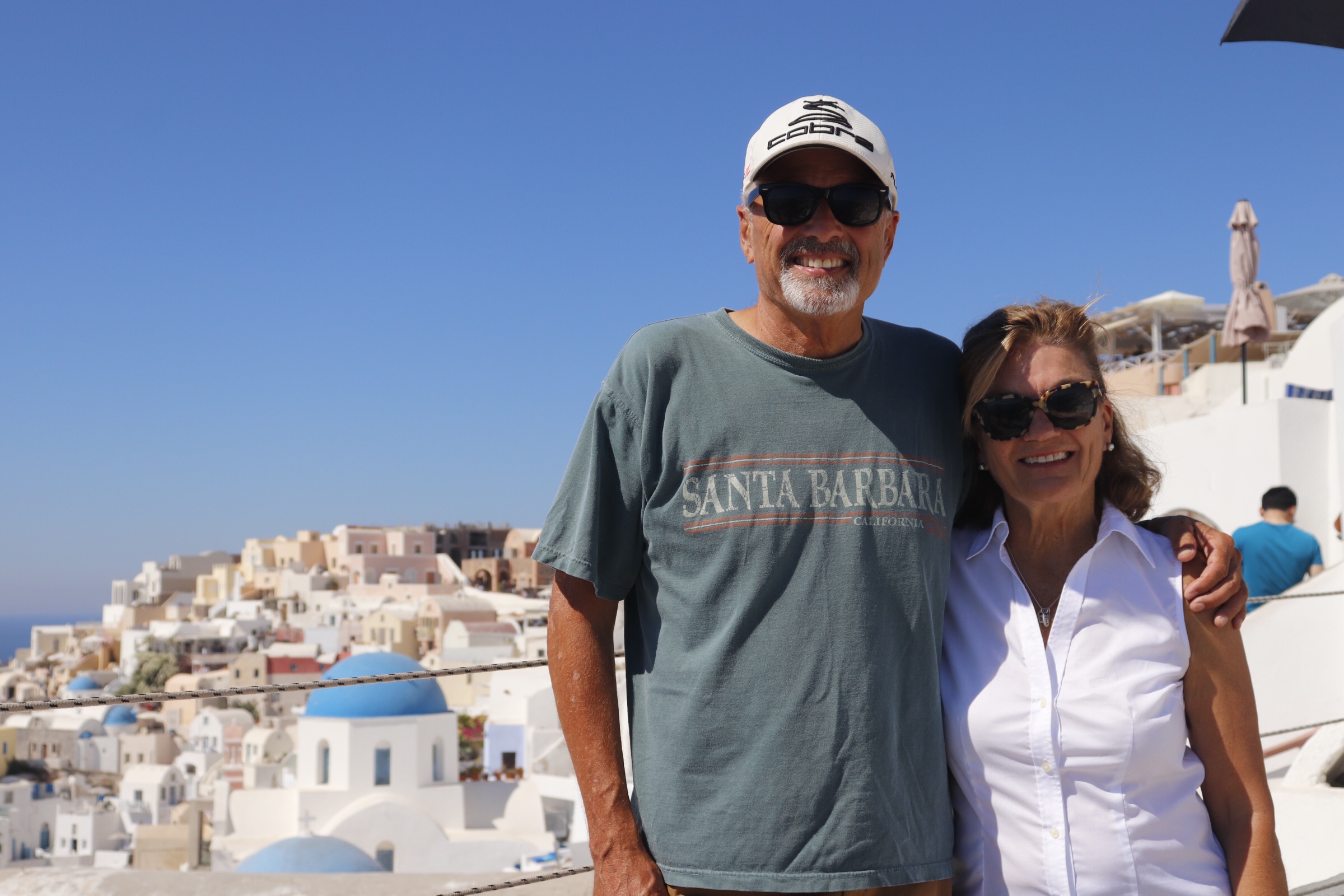
The ‘money shot’
And we were there!

We lined up for the return bus and were early enough in line to be rewarded with a seat for the return trip! Once back in Fira we headed down the same path to the port and waited for the tender. The fresh air and the exercise were just what I needed to put me back on my feet.

View to the port from Fira

Another lovely dinner in our dining room, a stroll around the upper decks and a few pieces in the jigsaw puzzle before heading back to the stateroom. We sailed at 7 p.m. and will arrive in Chania, Crete in the morning.

Design a site like this with WordPress.com
Get started